
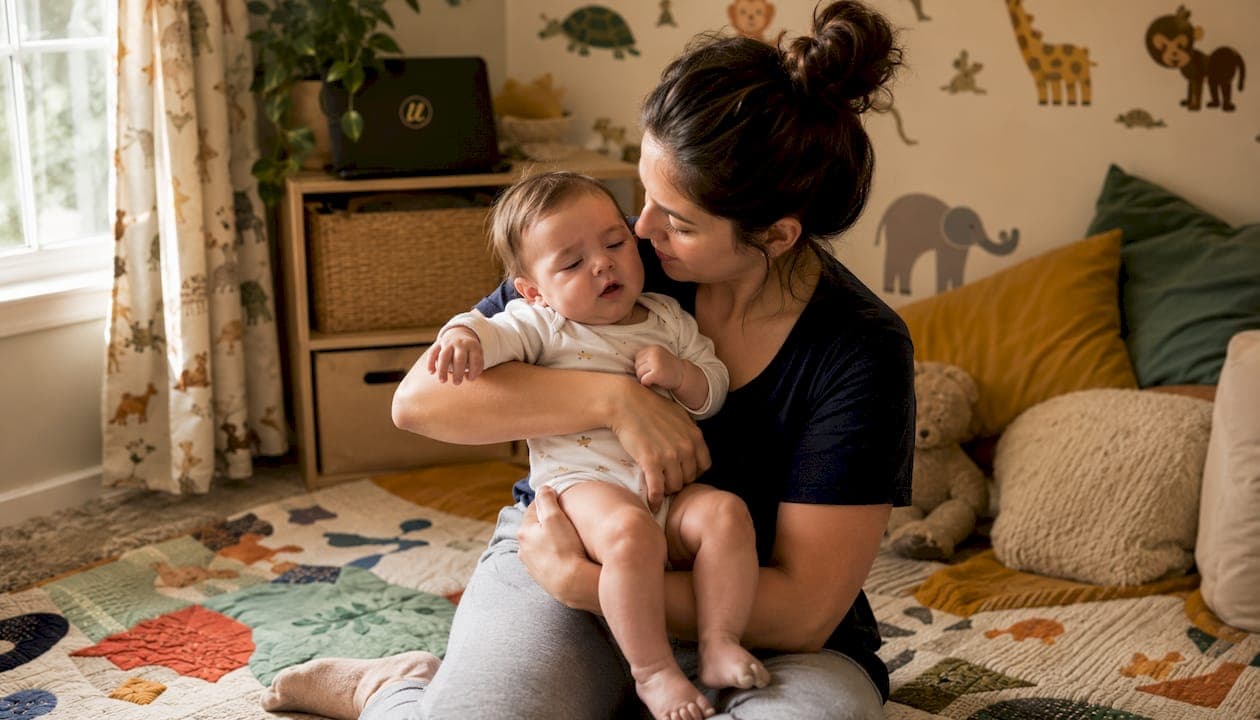
What are the signs of 11-month sleep regression?

Your baby was sleeping beautifully. Then, almost overnight, bedtime became a battle, naps disappeared, and the nights turned fragmented. You're not imagining it, and you're definitely not doing anything wrong.
The most common 11-month sleep regression signs include:
- Increased night wakings after weeks of solid sleep
- Nap refusal or shortened naps, especially the second nap of the day
- Bedtime resistance and crying when you leave the room
- Early morning waking, often before 6:00 AM
- Clinginess and agitation at sleep times that wasn't there before
- Standing in the crib and being unable to settle back down
These disruptions are temporary and tied directly to your baby's developmental growth. Sleep researchers note that sleep disruptions at 11 months are not a true biological regression in the strict sense. They reflect a collision of physical milestones, emotional development, and nap schedule shifts. Most experts agree there is no universally defined '11-month sleep regression,' but disruptions at this age are common and have identifiable causes. Understanding what's driving the chaos makes it much easier to respond with confidence rather than panic.
Why does sleep fall apart at 11 months?
Several forces converge at this age, and they tend to hit all at once.
- Motor milestones. Pulling to stand, cruising along furniture, and early walking attempts flood your baby's brain with new neural activity. The urge to practice these skills doesn't switch off at bedtime, which is why many babies stand up the moment you put them down.
- Separation anxiety peaks. Around 11 months, babies fully grasp that you exist when you leave the room, and they want you back. Separation anxiety is a hallmark of healthy emotional development, but it makes bedtime and night wakings significantly harder.
- Nap schedule pressure. Some babies are finishing the transition from three naps to two around this age. Others are starting to feel the strain of two naps but aren't yet ready to drop one. Either way, the timing of sleep windows gets disrupted.
- Cognitive leaps. Your baby is imitating gestures, recognizing words like "mama" and "dada," and becoming aware of their own independence. That heightened awareness makes settling down genuinely harder.
- Teething and hunger. These aren't the primary drivers, but they can amplify everything else. A baby who isn't eating enough during the day may wake at night seeking more, and teething discomfort tends to feel worse with fewer daytime distractions.
Understanding the interplay between milestones and sleep helps you respond to each cause rather than treating all wakings the same way.
How long does the 11-month sleep disruption last?
Most parents see improvement within 2–4 weeks with consistent routines in place. That timeline can feel long in the middle of the night, but it's genuinely reassuring compared to some earlier regressions.
- Typical duration: 2–4 weeks as your baby adjusts to new skills and schedule shifts.
- When to reassess: If sleep disturbances persist beyond 3–7 days of consistent routine without any improvement, it's worth reviewing the schedule or ruling out a medical cause.
- One bad night is not a pattern. A single rough night is just data. Three to seven consecutive rough nights form a pattern worth addressing.
Temperament plays a real role here. Babies who are naturally more sensitive or who are hitting multiple milestones simultaneously may take longer to stabilize. That's normal, not a sign that something is wrong.
How does sleep regression affect naps and nighttime sleep?
The impact shows up differently during the day and at night, and knowing what to expect in each helps you plan.
- Nap refusal or shortened naps. The second nap is usually the first casualty. Your baby may spend the entire nap window standing in the crib rather than sleeping. Some babies take longer naps to compensate for broken nights, but longer daytime sleep doesn't reliably fix nighttime disruptions.
- The crib stand-off. Many 11-month-olds can pull themselves to standing but haven't yet mastered sitting back down safely. They end up stuck upright, frustrated, and crying, which pulls you back in and reinforces the waking cycle.
- Frequent night wakings. Babies who were sleeping through the night may suddenly wake two, three, or more times. Separation anxiety is a common driver, with babies calling out the moment they surface from a light sleep cycle and realize you're not there.
- Bedtime resistance. The same routine that worked for months suddenly takes much longer. Your baby may cry when you leave, resettle, then cry again.
- Early morning waking. Waking before 6:00 AM and being unable to resettle often signals that the overall sleep schedule needs a small adjustment, either in nap timing or total daytime sleep.
Fragmented sleep cycles at night are common during this phase. The good news is that baby sleep patterns at 11 months do stabilize once the underlying milestones are consolidated.
Practical strategies to manage 11-month sleep challenges
You can't fast-forward through this phase, but you can make it significantly more manageable.
- Hold the routine. Consistent nap and bedtime routines are your strongest tool right now. Predictability signals safety to a baby whose world suddenly feels very big and stimulating.
- Don't drop the second nap yet. Most experts caution against dropping to one nap before 14–15 months. Nap refusal at 11 months is almost always a temporary strike, not a readiness signal. Dropping too early creates chronic overtiredness that worsens night sleep.
- Give physical practice time during the day. Let your baby practice pulling to stand and cruising on safe surfaces during waking hours. The more they practice while you're watching, the less urgently their brain fires those pathways at 2:00 AM.
- Keep night responses brief and low-key. When your baby wakes at night, a quiet reassurance and a gentle pat on the back is enough. Respond calmly without turning the interaction into playtime or a full feeding unless hunger is genuinely the cause.
- Lower the crib mattress. If you haven't moved it to the lowest setting, do it now. Once a baby can pull to stand, the risk of a crib exit increases.
- Use a sleep sack instead of loose blankets. The American Academy of Pediatrics recommends no loose bedding until at least 12 months. A sleep sack keeps your baby warm and safe without the tangle risk.
- Practice brief separations during the day. Step out of the room for a moment and come back. Doing this repeatedly during waking hours helps your baby learn that your absence is temporary, which eases bedtime anxiety.
- Introduce a transitional object. A small, safe stuffed animal or lovey can provide comfort when you're not in the room. Many babies this age respond well to having something familiar to hold.
Pro Tip: When your baby stands in the crib at night, wait a minute or two before going in. Babies who are given a brief window often figure out how to settle themselves back down. Immediate intervention, while well-intentioned, can accidentally teach them that standing equals a parent visit.
For parents managing sleep consistency during developmental leaps, the same principle applies: boring, predictable responses at night are more effective than varied or stimulating ones.

How much sleep does an 11-month-old actually need?
Knowing the target helps you spot when something is genuinely off versus when your baby is just having a rough patch.
- Nighttime sleep: Most 11-month-olds need 11–12 hours of overnight sleep.
- Daytime naps: Two naps totaling 2.5–3.5 hours of daytime sleep is the healthy range.
- Wake windows: The gap between naps is typically 2.5–3.75 hours. Too short, and your baby won't be tired enough to nap. Too long, and overtiredness makes settling harder.
- Total daily sleep: According to Nemours KidsHealth, most babies aged 8–12 months should sleep 12–16 hours per day, including nighttime and naps combined.
Premature nap dropping is one of the most common mistakes at this age. When the second nap disappears too early, the resulting overtiredness creates a cycle of false starts at bedtime, more night wakings, and earlier morning waking. Holding steady on two naps until your baby is biologically ready, usually around 14–15 months, protects the overall sleep architecture.
What does the research say about 11-month sleep disruptions?
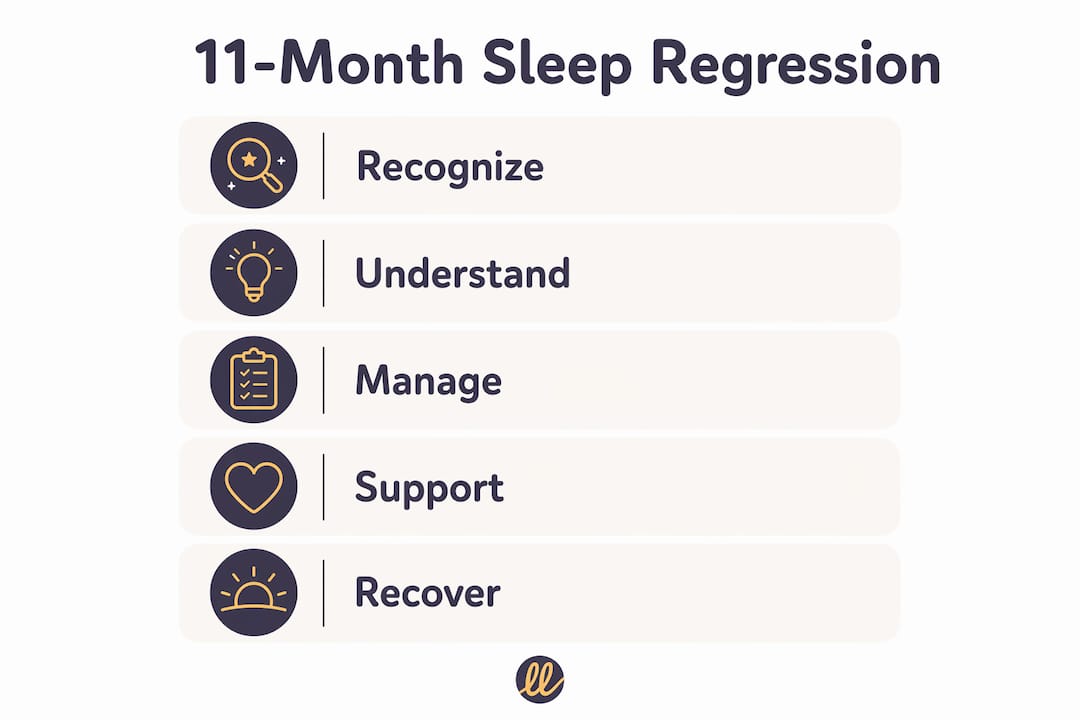
The term "sleep regression" is actually a bit of a misnomer at this age. Sleep researchers don't list 11 months among the universally recognized biological regressions, which are anchored at 4 months and 18 months. What parents experience is real disruption, but it reflects developmental progression, not a step backward.
The disruptions coincide with motor skill milestones and a peak in separation anxiety, both of which are signs of healthy neurological development. Reframing the experience this way doesn't make the sleepless nights easier in the moment, but it does shift the emotional weight of them. Your baby isn't broken. Their brain is working overtime.
Sleep disruptions at 11 months typically resolve within 2–4 weeks under consistent management, with persistent issues after 3–7 days of routine suggesting a schedule review or medical check.
The crib stand-off behavior is a good example of this reframe in action. Babies who repeatedly stand and cry aren't being defiant. They've mastered the upward movement but haven't yet developed the motor control to sit back down safely. It's a neurological gap, not a behavioral one, and it closes on its own as the skill matures.
Pro Tip: If your baby gets stuck standing in the crib, you can gently guide their hands to the rail and help them practice bending their knees to sit. Doing this a few times during the day, not just at night, helps build the muscle memory faster.
Mellow's approach to this phase is built on exactly this kind of evidence-based reframing. Rather than reactive troubleshooting, the goal is to prepare parents ahead of these shifts so the disruptions feel expected rather than alarming. Knowing what's coming, and why, is genuinely half the battle. You can explore age-specific guidance for this stage to stay ahead of what's next.
How sleep disruption affects your baby's behavior and development
Poor sleep doesn't stay contained to the night. When your 11-month-old isn't getting enough restorative sleep, the effects show up clearly during waking hours.
Overtired babies tend to be more emotionally reactive. You'll notice more crying, more frustration at small obstacles, and a shorter window before a full meltdown. This isn't a personality shift. It's a direct consequence of fragmented sleep cycles and insufficient deep sleep, which is when the brain consolidates the very motor and cognitive skills driving the disruption in the first place.
There's also a feeding connection. Babies who are overtired often eat less efficiently during the day, which can increase nighttime hunger and create a cycle that's hard to break without addressing the sleep side first.
Developmentally, the disruption is temporary. The skills your baby is practicing, standing, cruising, language recognition, emotional awareness, are all on track. Sleep will stabilize once those skills are consolidated. What parents can do in the meantime is protect the conditions for good sleep: consistent schedules, a calm sleep environment, and responses at night that don't accidentally reward waking.
Key Takeaways
The 11-month sleep disruption is a temporary developmental phase, not a true regression, and it typically resolves within 2–4 weeks with consistent routines and age-appropriate nap schedules.
| Point | Details |
|---|---|
| Recognize the signs | Night wakings, nap refusal, bedtime resistance, and early waking are the core signs at this age. |
| Know the duration | Disruptions typically last 2–4 weeks; patterns persisting beyond 3–7 days warrant a schedule review. |
| Hold the two-nap schedule | Most babies aren't ready for one nap until 14–15 months; dropping early worsens overtiredness. |
| Sleep needs stay consistent | Aim for 11–12 hours of night sleep plus 2.5–3.5 hours of daytime naps across two naps. |
| Respond calmly at night | Brief, low-stimulation reassurance without play or feeding helps babies learn to resettle independently. |
Mellow helps you stay ahead of every sleep shift

Sleep disruptions at 11 months are hard, but they're also predictable. Mellow is built to prepare you before these phases hit, not after you've already spent three nights wondering what went wrong. With age-specific guidance, developmental milestone tracking, and practical sleep strategies tailored to your baby's stage, you get the tools to respond with confidence instead of guesswork.
If your baby is in the thick of this phase right now, Mellow's 11–14 month guidance covers exactly what you're navigating, including what comes next so you're never caught off guard again.