

If your 20-month-old is fighting naps, you are not alone, and you are not doing anything wrong. Nap resistance at this age is one of the most common sleep struggles parents face, and it almost always traces back to a predictable mix of developmental leaps, separation anxiety, and nap timing that has drifted slightly off. The good news: this phase is usually temporary, and a few targeted adjustments can make a real difference within days.
Here is where to start right now:
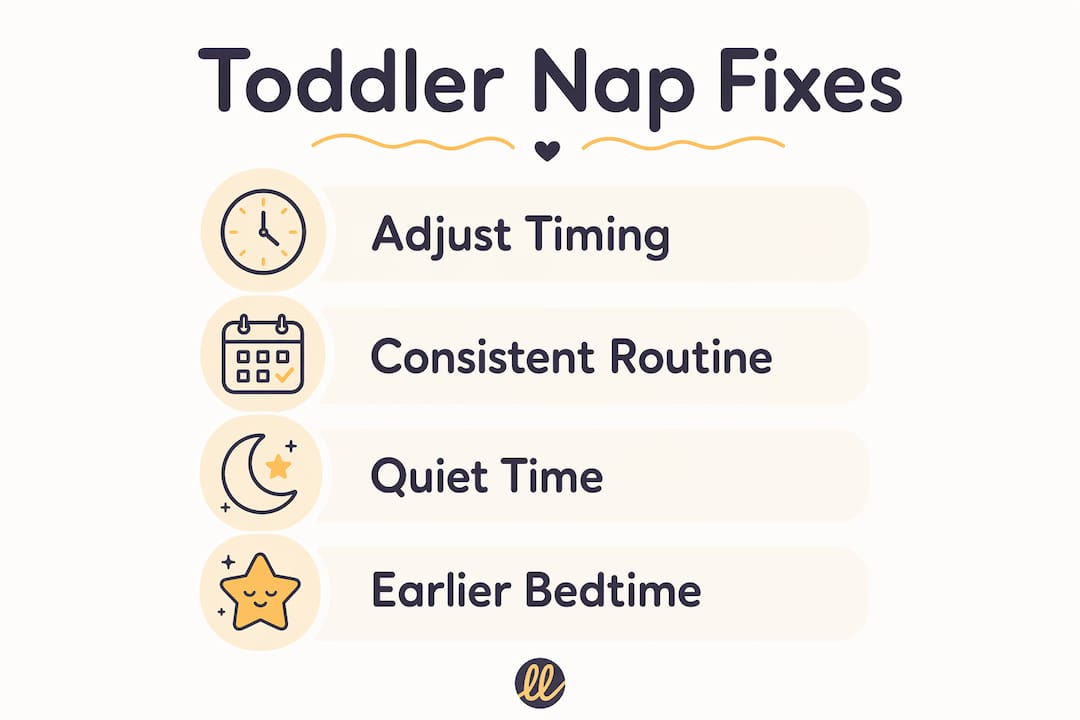
- Move the nap earlier. If your toddler is resisting, try shifting nap time 30 minutes earlier than usual.
- Keep the pre-nap routine consistent. A short, predictable wind-down sequence signals sleep is coming, even on hard days.
- Offer quiet time if sleep does not happen. Books and soft toys in a calm space for 30–60 minutes still give your child meaningful rest.
- Move bedtime earlier on missed-nap days. Skipping a nap without adjusting bedtime builds overtiredness fast.
- Stay calm and consistent. Your toddler reads your energy. A steady, warm response shortens the resistance phase.
Is the 20-month sleep regression actually real?
Yes, and pediatric sleep experts take it seriously. While it does not appear on every official milestone chart, the 18–20 month period is well-recognized as a time when cognitive and emotional growth temporarily disrupts sleep patterns. Your toddler is processing language explosions, a growing sense of self, and a sharper awareness of the world around them. That mental activity does not switch off at nap time.
The signs are specific and recognizable. Nap refusal that comes out of nowhere, bedtime battles that drag on longer than usual, and night wakings that had stopped months ago are all classic markers. Some toddlers also become clingier during the day, which feeds directly into bedtime and nap resistance.
Separation anxiety peaks around this age and directly disrupts sleep. According to Nemours KidsHealth, toddlers between 1 and 2 years old need about 11–14 hours of sleep per day, including daytime naps, and separation anxiety is one of the primary forces working against that total. When your child cries at nap time, they are not being defiant. They genuinely do not want to lose sight of you.
The regression itself is driven by imagination surging alongside emotional awareness. Your toddler can now picture you leaving the room, and that image is enough to spike their distress. Predictable routines and calm reassurance are the most effective tools for getting through it, not stricter rules or longer battles at the crib.
Why your toddler is fighting naps: the real causes
Nap resistance at 20 months rarely has a single cause. More often, two or three factors stack on top of each other, making the problem feel bigger than any one fix can solve.
The most common culprits include:
- Developmental leaps. Cognitive growth around 18–20 months is intense. Your toddler is acquiring language, testing cause and effect, and building a stronger sense of identity. That mental stimulation makes it genuinely harder to wind down.
- Separation anxiety. Predictable routines and reassurance are the most effective response, because anxiety at this age is neurologically real, not a behavior choice.
- The cortisol "second wind." When a toddler misses their optimal sleep window, the body releases cortisol to compensate. That hormone surge makes them look wired and energetic, which parents often misread as a sign the child is not tired. They are exhausted. The cortisol is masking it.
- Nap timing that is off. Putting your toddler down too early means their sleep drive is not strong enough yet. Too late, and the second wind has already kicked in. Both scenarios produce resistance.
- Overtiredness. A toddler who has been running on too little sleep for several days becomes harder to settle, not easier. St. Louis Children's Hospital notes that overtired children have a much harder time falling asleep and tend to be crabbier throughout the day.
- Testing independence. At 20 months, toddlers are actively exploring what they can control. Refusing a nap is one of the clearest ways to assert that control.
- Environmental factors. Noise, light, a room that is too warm, or a nap environment that changed recently can all disrupt the settling process.
Pro Tip: Try shifting nap time in 15-minute increments rather than making a big jump. Small adjustments help you find the exact window where your toddler settles most easily, without overshooting into overtiredness.
Timing is the factor parents most often overlook. A toddler who fights naps at 1:00 PM might go down without a fuss at 12:30 PM. The window can be that narrow, especially during a developmental leap when sleep pressure builds and dissipates faster than usual.

How long does nap resistance last at this age?
Most nap resistance phases at 20 months last roughly 2–3 weeks, though some toddlers push through it faster and others take a month. The key distinction parents need to make is between a temporary resistance phase and genuine nap readiness, because those two situations call for very different responses.
| Sign | What it likely means | Suggested response |
|---|---|---|
| Sudden nap refusal after months of good napping | Temporary regression or timing issue | Adjust timing, maintain routine |
| Nap resistance lasting more than a month | May need schedule review | Consult pediatrician or sleep consultant |
| Child is cranky, clingy, or overtired without nap | Still needs the nap | Push through with quiet time |
| Child skips nap but stays cheerful all day | May be approaching nap readiness | Experiment with quiet time instead |
| Night wakings increase alongside nap refusal | Overtiredness cycle | Move bedtime earlier, protect nap |
| Nap refusal paired with new developmental skill | Developmental leap | Maintain routine, expect resolution |
Most toddlers still need a daily nap between ages 2 and 3, with the average nap drop occurring between 3 and 3.5 years. A 20-month-old refusing naps is almost always in a temporary resistance phase, not signaling that naps are done.
The transition from two naps to one typically happens around 15–18 months. By 20 months, most toddlers are already on a single afternoon nap, per Nemours KidsHealth. If your child is still on two naps and fighting both, consolidating to one is worth trying. If they are already on one and fighting it, the issue is almost certainly timing, overtiredness, or a developmental phase rather than true nap readiness.
Seek a pediatric consultation if nap resistance is accompanied by significant behavior changes, persistent night terrors, or if the pattern lasts well beyond a month with no improvement despite consistent adjustments.
4 practical strategies to help your toddler nap
1. Adjust nap timing earlier
The single most effective fix for a toddler who suddenly starts fighting naps is moving the nap earlier, not later. When the cortisol surge hits, your child will appear energized and resistant. Waiting it out only makes settling harder. Try pulling the nap earlier than your current time and hold that schedule consistently for several days before evaluating whether it is working.
2. Maintain a consistent pre-nap routine
A predictable wind-down sequence tells your toddler's nervous system that sleep is coming. Consistent nap routines with simple, repeated steps help toddlers feel secure and more willing to settle independently. The routine does not need to be long. A diaper change, closing the curtains, one short book, and a song can be enough. What matters is that it happens in the same order every day, because predictability is what creates the sense of safety your toddler needs to let go.

3. Introduce quiet time when naps fail
On days when sleep simply will not come, quiet time is your best alternative. Set up a calm space with a few books or soft toys and keep your toddler there for 30–60 minutes. Even without actual sleep, that rest period reduces the overtiredness that builds through the afternoon. Start with shorter sessions and expand the duration gradually over several weeks, since gradual introduction helps toddlers cooperate rather than resist. For more guidance on making this transition work, Mellow's resource on transitioning to quiet time walks through the process step by step.
4. Move bedtime earlier when a nap is missed
A missed nap without a bedtime adjustment is a recipe for a rough night. Overtiredness makes it harder to fall asleep, not easier, so waiting until the usual bedtime after a napless afternoon tends to backfire. Shift bedtime 30–45 minutes earlier on days when the nap does not happen. This breaks the overtired cycle and usually results in a more settled night and a better nap the following day. Pairing this with a calming toddler bedtime routine makes the earlier wind-down feel natural rather than abrupt.
What sleep experts say about toddler nap resistance
Pediatricians and sleep consultants consistently point to two factors that determine whether a nap resistance phase resolves quickly or drags on: the consistency of the routine and how parents respond to separation anxiety at sleep time.
Reassurance and predictable routines are the most effective tools during separation anxiety-driven nap resistance. Nemours KidsHealth emphasizes that toddlers who experience predictable, calm sleep rituals are better equipped to settle independently, even when anxiety is running high.
The physiological piece matters too. The cortisol "second wind" is a real biological event, not a parenting failure. When a toddler misses their sleep window, the body responds by releasing cortisol to sustain wakefulness. That surge can last 30–60 minutes, during which settling becomes genuinely difficult. Recognizing this pattern shifts the response from frustration to strategy: catch the window before the surge, and nap resistance drops considerably.
Expert guidance also highlights what quiet time accomplishes beyond simple rest. Even when a toddler does not sleep, a calm, low-stimulation period reduces cortisol levels and prevents the afternoon meltdowns that come from running on empty. St. Louis Children's Hospital recommends creating a quiet period with books, puzzles, or soft music as part of a healthy daily rhythm for toddlers.
Key principles sleep experts agree on:
- Routine consistency outperforms any single technique. A mediocre routine done every day beats a perfect one done occasionally.
- Leaving while your child is still awake builds independent sleep skills. St. Louis Children's Hospital specifically recommends this so toddlers learn to fall asleep without needing a parent present.
- Checking in calmly and briefly is more effective than staying until sleep. Returning after 10 minutes with quiet praise, then leaving again, teaches your toddler that you are nearby without reinforcing the resistance.
- Overtired toddlers need an earlier bedtime, not a later one. This runs counter to instinct but is one of the most consistent findings in pediatric sleep guidance.
- Nap resistance during travel or schedule disruptions is normal. Planning around your toddler's sleep window, even on outings, helps protect the nap. If you are managing naps around family activities or day trips, thinking through nap timing on outings can prevent a single disrupted day from cascading into a longer resistance phase.
The reassurance piece is worth sitting with. When your toddler cries at nap time, the instinct is to either stay until they sleep or leave quickly to avoid escalating the distress. Neither extreme tends to work as well as a warm, brief check-in approach. You acknowledge the feeling, you stay calm, and you leave with a clear, gentle message that you will be back. Over time, that pattern builds the trust your toddler needs to settle on their own.
Mellow can help you stay ahead of what comes next

Nap resistance at 20 months is one of the most common challenges parents bring to Mellow, and it rarely arrives alone. Developmental leaps, sleep regressions, and shifting routines tend to cluster together in the second year of life. Mellow's 15–24 month guidance is built specifically for this stage, giving you age-matched strategies before the next change catches you off guard.
Instead of searching for answers after a rough week of missed naps, Mellow prepares you ahead of each milestone so you know what to expect and what to do. The platform combines evidence-based sleep tools, developmental tracking, and practical daily guidance in one place, designed for parents who want confident answers, not generic advice.
Key Takeaways
A 20-month-old fighting naps is almost always in a temporary developmental phase, not signaling that naps are finished, and consistent timing adjustments resolve most cases within 2–3 weeks.
| Point | Details |
|---|---|
| Nap resistance is developmentally normal | At 20 months, cognitive leaps and separation anxiety are the most common drivers of nap refusal. |
| Timing is the most overlooked fix | Moving nap time 30–45 minutes earlier often resolves resistance caused by the cortisol second wind. |
| Quiet time replaces, not eliminates, rest | A 30–60 minute calm period with books or soft toys reduces overtiredness even without sleep. |
| Earlier bedtime protects nighttime sleep | On missed-nap days, shifting bedtime 30–45 minutes earlier breaks the overtired cycle. |
| Most toddlers still need naps past age 2 | The average nap drop age is between 3 and 3.5 years; 20-month refusal is usually a phase. |