
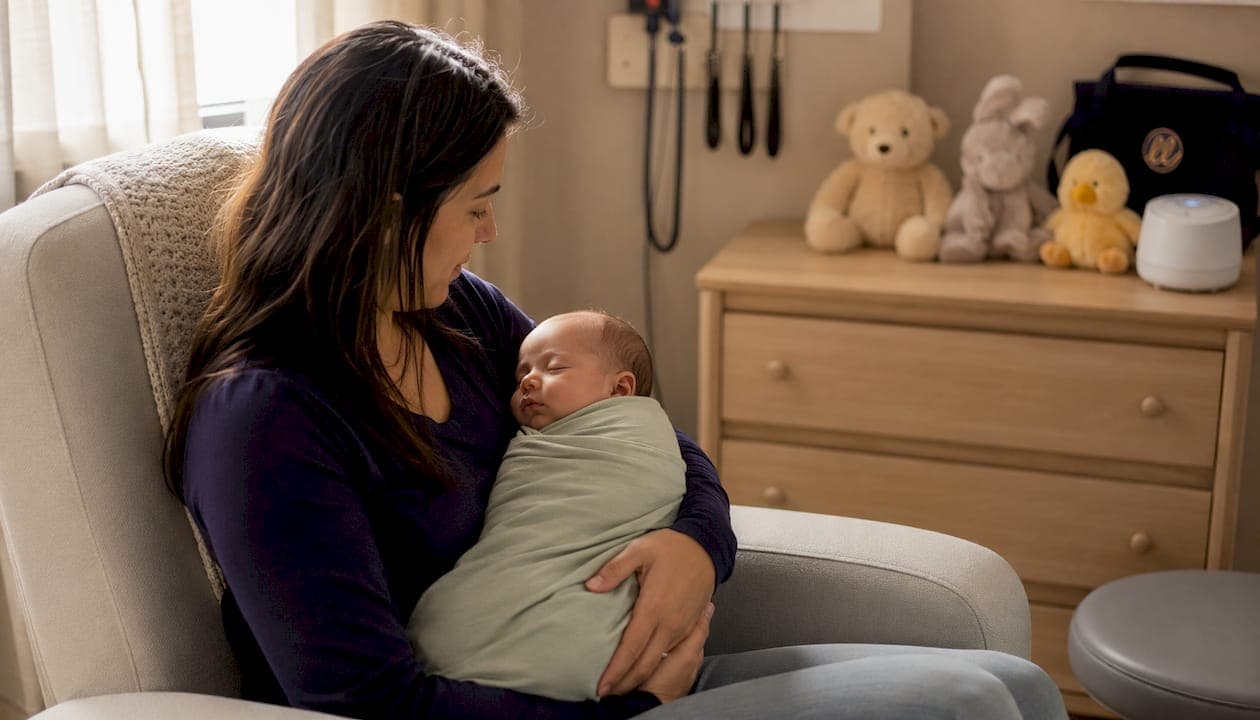
Your 5 month old crying in sleep is almost always normal, and the most common reasons come down to three things: natural sleep cycle transitions, physical discomfort like gas or early teething, and the rapid developmental changes happening at this exact age. Most of the time, no intervention is needed at all.
Here is what you will typically see at this stage:
- Sleep cycle transitions: Babies cycle between active (light) and quiet (deep) sleep roughly every 40–50 minutes, and brief cries or whimpers at those transition points are completely normal.
- Hunger: At 5 months, many babies still need a nighttime feeding, especially if they have been asleep for several hours.
- Gas and digestive discomfort: An immature digestive system makes even normal gas feel dramatic for your baby.
- Early teething: Teething behaviors can start before the first tooth actually breaks through, causing low-grade discomfort during sleep.
- Overtiredness: A baby who missed a nap or went to bed too late will often cry more during the night, not less.
- Environmental factors: Room temperature, noise, or light levels can all pull a baby into lighter sleep and trigger crying.
- Normal active sleep sounds: Grunting, whimpering, and brief cries during active sleep do not mean your baby is in distress.
The key distinction to hold onto: a few whimpers that stop on their own are part of healthy sleep. Escalating cries, especially paired with other symptoms, are the signal to step in.
Why does a 5-month-old cry during sleep cycles?
Sleep at 5 months is genuinely different from adult sleep, and understanding that difference makes nighttime crying far less alarming. Infant sleep cycles last about 40–50 minutes, compared to the 90-minute cycles adults experience. At the end of each cycle, your baby briefly surfaces into light sleep before either settling back down or waking fully. That surfacing moment is when you hear the whimper, the brief cry, or the restless squirming.
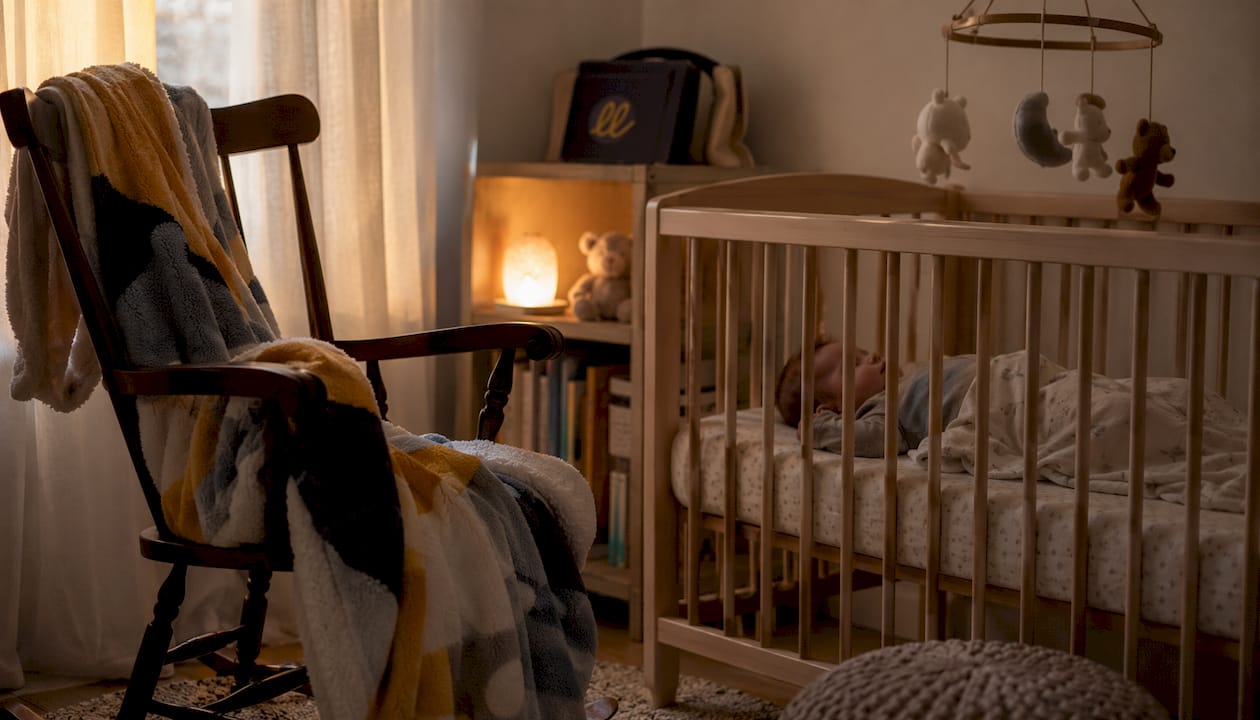
Active sleep, sometimes called REM sleep, takes up a larger share of an infant's total sleep time than it does for adults. During active sleep, your baby's eyes may flutter, their limbs may twitch, and they may make sounds that seem distressed but are simply part of normal brain activity. Intervening during active sleep can actually break the cycle and cause a full waking that would not have happened otherwise.
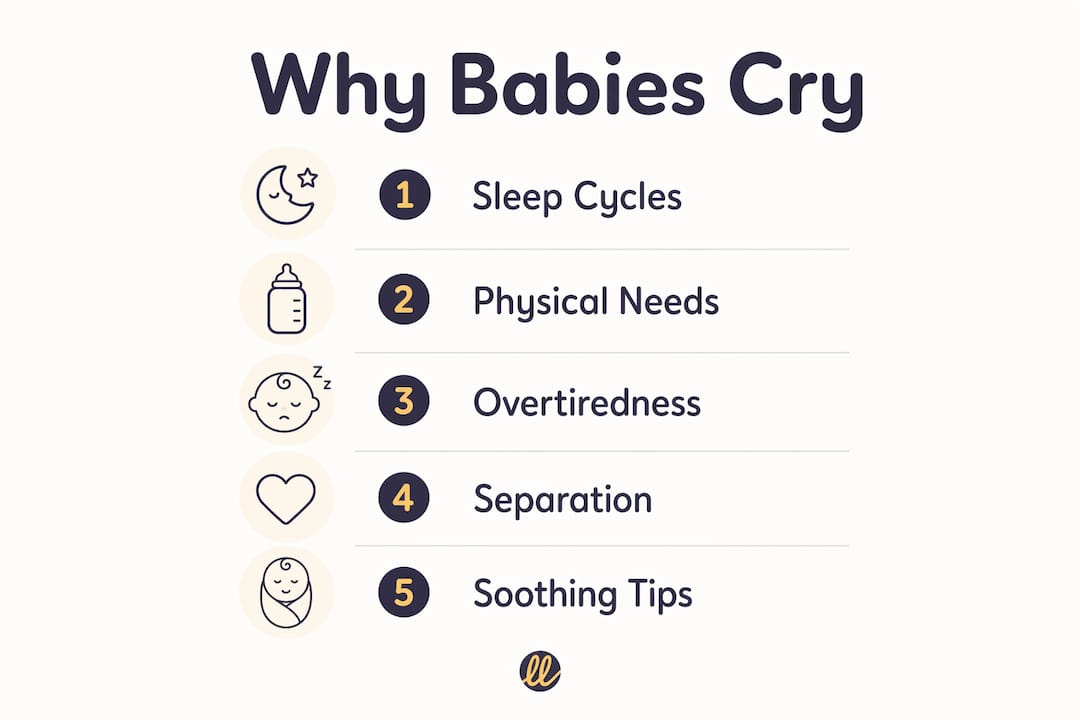
Overtiredness is a less obvious but equally important driver of nighttime crying. When a baby misses a nap or stays awake too long before bed, cortisol levels rise, making it harder to fall into deep sleep and easier to cry at every transition. Overtired babies have more difficulty moving through sleep cycles smoothly, which means more crying episodes through the night, not fewer.
Physical discomfort rounds out the picture. Gas, hunger, reflux, and early teething all have one thing in common: they tend to surface when your baby is in lighter sleep and cannot distract themselves the way they can when awake. Active teething in particular tends to cause more intense crying and more frequent awakenings than the low-level discomfort of pre-eruption.
Key sleep and discomfort factors at 5 months:
- Short sleep cycles mean frequent light-sleep windows where crying is most likely
- Active sleep produces normal sounds that mimic distress
- Overtiredness from skipped naps raises nighttime crying frequency
- Gas and digestive discomfort peak during lighter sleep phases
- Early teething can begin before any tooth is visible
- Hunger remains a legitimate cause, especially after longer sleep stretches
- Room temperature outside the 68–72°F comfort range can disrupt sleep
Pro Tip: If your baby cries briefly and then goes quiet within a minute or two, that is almost certainly a normal sleep cycle transition. Wait and watch before going in.
Could nightmares or separation anxiety be causing the crying?
True nightmares and night terrors are rare at 5 months. Both require a level of cognitive and emotional development that most infants have not yet reached. Night terrors, in particular, are far more common in toddlers and preschool-age children. If your baby cries during sleep right now, the cause is almost certainly physical or related to sleep cycle mechanics, not a frightening dream.
That said, early signs of separation anxiety do begin to emerge around this age. You may notice your baby crying more when you leave the room during the day, or waking and crying in a way that calms almost immediately when you appear. This is developmentally appropriate and actually a healthy sign that your baby recognizes you as their safe person.
"Some babies may call out or cry in the middle of the night, then calm down when a parent enters the room. This is due to separation anxiety, a normal stage of development that happens during this time." — Nemours KidsHealth
The practical difference between active sleep crying and emotional distress is worth knowing. Active sleep cries tend to be brief, irregular, and self-resolving. Cries linked to separation anxiety or genuine discomfort tend to escalate when you do not respond and settle quickly when you do.
Common parental questions about nighttime emotional crying:
Does my 5-month-old have nightmares? Almost certainly not. The cognitive processing required for true nightmares develops later in toddlerhood.
Is separation anxiety normal at this age? Yes. Recognizing a caregiver as distinct from others is a healthy developmental milestone, and mild nighttime anxiety is part of that process.
Should I always go in when my baby cries at night? Not necessarily. Waiting a minute or two to see if the crying resolves on its own helps you distinguish a sleep cycle transition from genuine distress, and it gives your baby a chance to practice settling.
When should you call the pediatrician about nighttime crying?
Most nighttime crying at 5 months does not require a doctor's visit. But some patterns do warrant a call, and knowing the difference protects your baby and your peace of mind. Trusting your instincts matters here: if something feels off, it probably deserves a closer look.
Reach out to your pediatrician if you notice any of the following:
- Fever alongside crying: Any fever in a 5-month-old warrants prompt medical attention.
- High-pitched or unusual crying: A cry that sounds different from your baby's normal cry, especially one that is sharp, shrill, or inconsolable, can signal pain or neurological distress.
- Breathing difficulties: Labored breathing, noisy breathing, or pauses in breathing during sleep require immediate evaluation.
- Inconsolable crying: If your baby cannot be soothed after 20–30 minutes of consistent effort, something beyond a normal sleep transition is likely happening.
- Signs of pain: Arching the back, pulling at ears, or rigid body posture during crying can indicate reflux, ear infection, or other physical causes.
- Crying that is getting worse over time: A gradual escalation in nighttime crying frequency or intensity, especially paired with daytime fussiness, is worth discussing with your child's doctor.
- Weight concerns or feeding changes: If your baby is crying more and also feeding less or losing weight, contact your pediatrician without delay.
If crying intensifies or persists alongside any physical symptoms, do not wait to see if it resolves on its own. You know your baby. A change in their baseline cry pattern is always worth a conversation with your healthcare provider.
Proven ways to soothe a 5-month-old crying during sleep
The most effective soothing approach at 5 months starts with one counterintuitive step: wait. Give your baby 1–2 minutes before going in. Many nighttime cries at this age resolve on their own as your baby moves through a sleep cycle transition. Rushing in immediately can fully wake a baby who was about to settle back down.
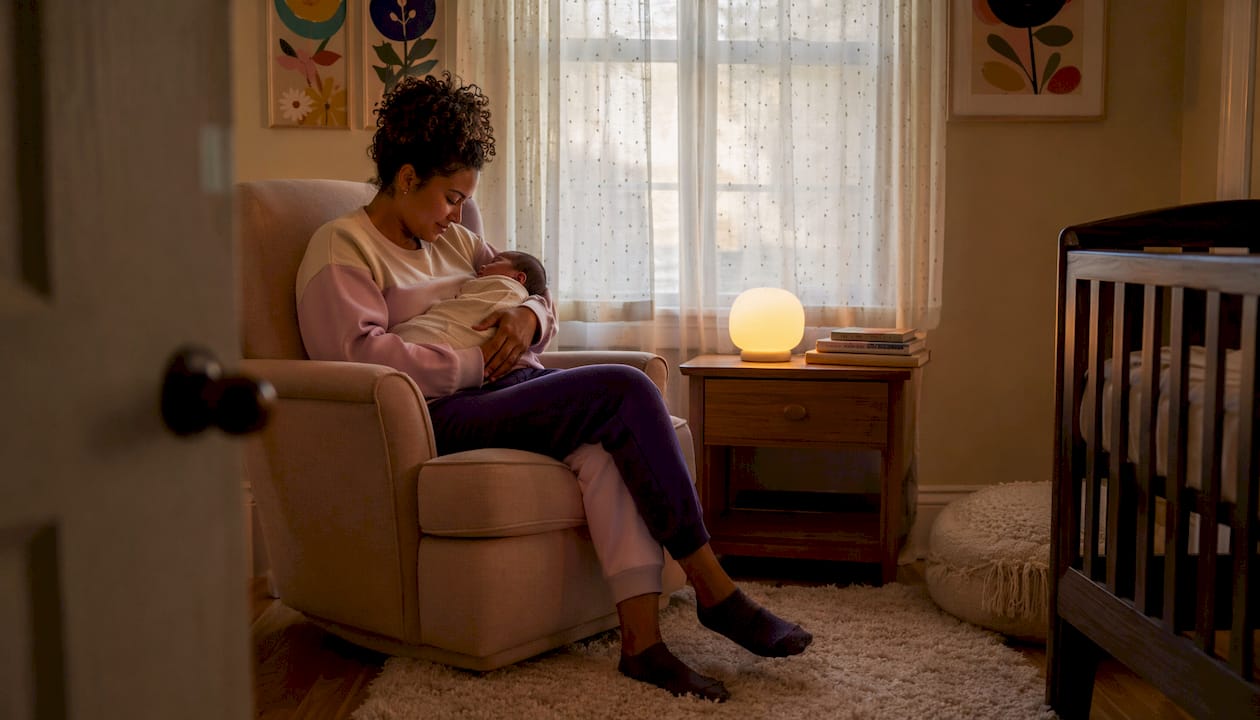
When you do go in, keep the environment as sleep-conducive as possible. Soothing touch, quiet sounds, and comfortable temperatures help babies settle back to sleep without triggering full alertness. Keep the lights off or very dim, speak in a low, calm voice, and avoid picking your baby up unless the crying is escalating.
Expert guidance from Nemours KidsHealth suggests soothing your baby briefly without lifting them from the crib, then stepping back to give them space to settle. If the crying continues, repeat the reassurance. This approach teaches your baby that you are present and responsive while also giving them the opportunity to develop self-soothing skills.
Practical soothing steps for nighttime crying:
- Wait 1–2 minutes before responding to assess whether the cry is self-resolving
- Enter the room calmly, keeping lights off and your voice low
- Offer a gentle hand on the chest or back without picking your baby up
- Use white noise or a soft shushing sound to mimic the womb environment
- If hunger is likely (long stretch since last feeding), offer a feeding quietly and without stimulation
- For suspected gas discomfort, try gentle bicycle leg movements or a warm bath earlier in the evening
- If teething is a factor, ask your pediatrician about safe pain relief options before using anything
A consistent bedtime routine is one of the most reliable ways to reduce nighttime crying over time. A predictable sequence of bath, feeding, and quiet time signals to your baby's nervous system that sleep is coming, which makes the transition into deep sleep smoother and the sleep cycles more stable.
Pro Tip: Put your baby down drowsy but awake whenever possible. A baby who falls asleep independently is far more likely to resettle on their own when they surface between sleep cycles.
How Mellow helps you understand your baby's sleep at 5 months
At 5 months, your baby is in the middle of one of the most active developmental windows of their first year. Growth spurts and motor skill developments at this age, including rolling and increased physical awareness, can increase fussiness and nighttime waking in ways that feel sudden and confusing. Sleep cycle length and composition are also evolving rapidly at this stage, which directly influences how often and how intensely your baby cries during the night.
What makes this period particularly tricky is that the changes are happening faster than most parenting resources can keep up with. A strategy that worked at 3 months may stop working at 5 months, not because you are doing anything wrong, but because your baby's sleep architecture is genuinely different now.
"Close parental observation and response adjusted to cry severity help promote healthy emotional development. Parents are encouraged to trust instincts and respond lovingly without excessive intervention during typical sleep cycle crying." — Mellow Kids
Mellow takes a proactive approach to exactly this kind of transition. Rather than waiting for parents to reach a point of exhaustion and confusion, Mellow's guidance is built around anticipating what is coming next, including the sleep regressions, developmental leaps, and behavioral shifts that tend to cluster around 5 months. The 5–7 month stage on Mellow covers the specific sleep and development changes your baby is going through right now, with evidence-based strategies tailored to this exact window.
What Mellow recommends for 5-month sleep support:
- Track sleep and wake windows daily to catch overtiredness before it compounds
- Watch for developmental milestones like rolling that may disrupt sleep temporarily
- Use age-appropriate wake windows (typically 2–2.5 hours at this age) to time naps and bedtime
- Understand the difference between a sleep regression and a persistent sleep problem
- Build a consistent pre-sleep routine that your baby can begin to anticipate
- Learn your baby's individual tired cues before overtiredness sets in
Understanding baby sleep patterns and developmental milestones at this age is not just reassuring. It gives you a framework for making decisions at 2 AM when you are tired and your baby is crying and you genuinely do not know what to do next.
Taking care of yourself when your baby cries at night
Nighttime crying is hard on parents in a way that is difficult to fully explain until you are living it. Sleep deprivation compounds everything: your patience, your judgment, your emotional resilience. Acknowledging that this is genuinely difficult is not a sign of weakness. It is an honest starting point.
One of the most useful shifts you can make is separating your emotional response from your practical response. Your baby crying does not mean you have failed. It means your baby is communicating the only way they know how, and your job is to respond calmly and consistently, not perfectly. Parental soothing that balances responsiveness with space for self-soothing actually supports better sleep continuity over time, which means your calm, measured responses tonight are building something real.
Sharing the nighttime load with a partner, if you have one, makes a measurable difference. Even one longer sleep stretch every few nights can reset your baseline enough to function better during the day. If you are parenting alone, leaning on a trusted friend, family member, or postpartum support resource for daytime relief is not optional. It is necessary.
There are many reasons babies cry at night, and most of them are temporary. The 5-month stage, with its sleep cycle changes and developmental leaps, does not last forever. Knowing that the disruption has a shape and an end point can make it easier to move through without losing yourself in it.
If you find yourself feeling persistently overwhelmed, anxious, or unable to cope, please talk to your own doctor. Postpartum mood changes can surface well beyond the newborn stage, and getting support for yourself is one of the most direct ways to support your baby.
Key Takeaways
A 5-month-old crying during sleep is almost always caused by normal sleep cycle transitions, physical discomfort, or developmental changes rather than anything requiring alarm.
| Point | Details |
|---|---|
| Sleep cycles drive most crying | Infant sleep cycles last 40–50 minutes; brief cries at transitions are normal and usually self-resolve. |
| Wait before responding | Giving your baby 1–2 minutes lets you distinguish a cycle transition from genuine distress. |
| Overtiredness worsens crying | Skipped naps and late bedtimes increase nighttime crying; consistent wake windows help prevent this. |
| Know when to call the doctor | Fever, high-pitched crying, breathing difficulties, or inconsolable crying warrant prompt pediatric contact. |
| Parental wellbeing matters | Sharing the nighttime load and seeking support when overwhelmed directly benefits your baby's care. |