

Sleep regression at 5 months is defined as a temporary disruption in a baby's sleep patterns caused by rapid developmental changes and maturing sleep cycles. Many parents are caught off guard because their baby was sleeping well, and then suddenly is not. 5-month-olds typically need 12–16 hours of sleep per day, split between nighttime sleep and naps. When that pattern breaks down without warning, it signals that your baby's brain and body are doing important work. Recognizing the 5 month sleep regression signs early gives you the clarity to respond with confidence instead of panic.
What are the common 5 month sleep regression signs?
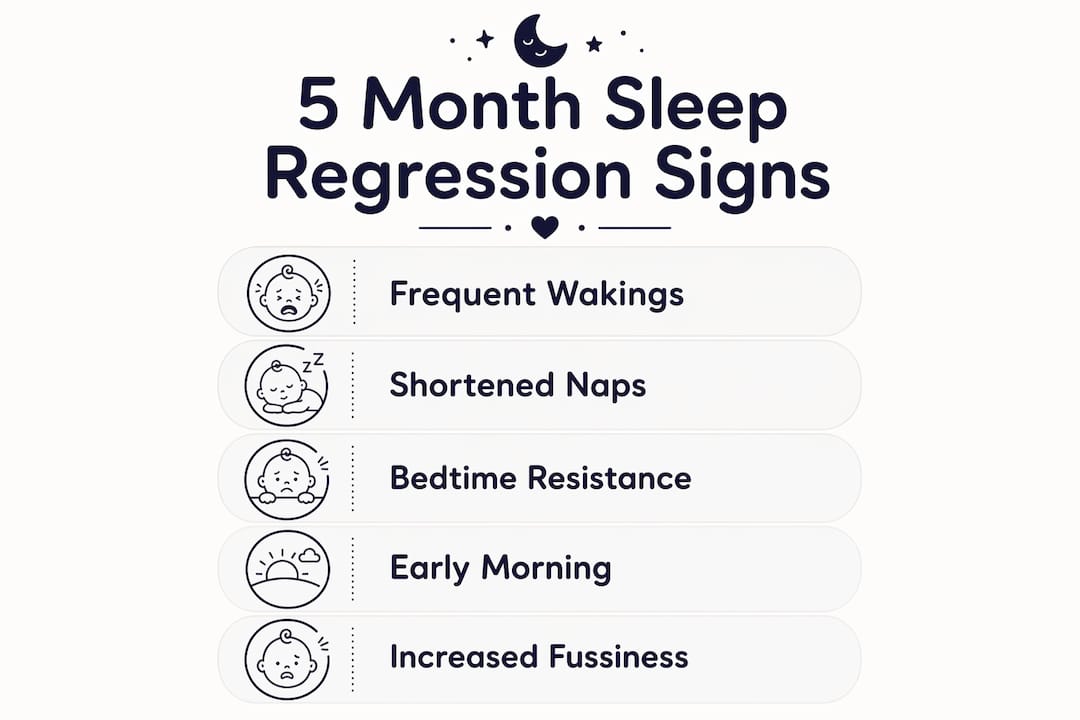
The most reliable signal is a sudden change after a period of predictable sleep. Signs of sleep regression include more frequent night wakings, shorter naps, fussiness, bedtime resistance, and early morning awakenings. These changes appear abruptly, which is what separates regression from a gradual developmental shift. If your baby was sleeping in longer stretches and now wakes every 45–90 minutes, that pattern fits.
Here are the most common signs to watch for:
- Frequent night wakings. Your baby wakes multiple times per night and struggles to fall back asleep without help.
- Short or skipped naps. Naps that used to last 45–60 minutes now end after 20–30 minutes, or your baby refuses to nap at all.
- Increased fussiness. Your baby is more irritable around sleep times, especially in the late afternoon and evening.
- Bedtime resistance. A baby who used to settle easily now cries, arches their back, or fights being put down.
- Early morning waking. Your baby wakes at 4:30 AM or 5:00 AM and cannot resettle, cutting the night short.
- Clinginess. Your baby wants to be held constantly and becomes distressed when you leave the room.
Pro Tip: Keep a simple sleep log for three to five days. Note wake times, nap lengths, and night wakings. A clear pattern helps you confirm regression versus illness or a growth spurt.
The key distinction is timing. These signs appear after a period of relatively stable sleep, not gradually over weeks. That sudden shift is the clearest indicator that a developmental phase, not a feeding or health issue, is driving the change.

Why does the 5 month sleep regression happen?
The core cause is biological. Sleep cycles mature around 4–5 months, shifting from newborn patterns to more adult-like cycles with lighter stages. That means your baby now surfaces between sleep cycles the way adults do. The difference is that adults know how to roll over and fall back asleep. A 5-month-old has not yet learned that skill.
Several developmental forces converge at this age:
- Maturing sleep architecture. Babies begin cycling through light and deep sleep more frequently. Each transition is a potential waking point.
- Rolling and physical milestones. Many babies learn to roll around 4–5 months. The excitement of a new motor skill activates the nervous system, making it harder to settle.
- Increased environmental awareness. Your baby now notices sounds, light, and movement more acutely. A door closing or a light turning on can trigger a full waking.
- Emerging circadian rhythm. The internal body clock is still developing at 5 months. Irregular light exposure or inconsistent schedules can disrupt the sleep-wake cycle.
- Teething and hunger. Teething discomfort and hunger are common physical reasons for night wakings at this stage. Teething pain can create crying periods that interrupt otherwise normal sleep cycles.
Understanding these causes matters because it changes how you respond. You are not fixing a problem. You are supporting a brain that is growing fast. That reframe reduces the urge to try every new technique you read about online, which actually makes things worse.
How to support your baby through sleep regression at 5 months
Consistency is the single most effective tool you have. Switching between rocking, feeding, and patting every hour creates sleep association confusion and slows adaptation. Pick one response method for night wakings and stick with it for at least five to seven nights before evaluating whether it is working.
Here are the strategies that make the biggest difference:
- Protect the bedtime routine. A consistent wind-down sequence, such as bath, feed, and a short song, signals to your baby that sleep is coming. Predictability is calming for a nervous system that is on high alert.
- Watch wake windows carefully. Wake windows of about 2–2.5 hours are appropriate for most 5-month-olds. Keeping your baby awake longer to "tire them out" backfires. Overtired babies have more difficulty settling and staying asleep.
- Create a low-stimulation sleep environment. Blackout curtains, white noise, and a cool room temperature reduce the sensory triggers that cause light-sleep wakings.
- Respond consistently at night. Choose a response style, whether that is immediate comfort, a brief pause before responding, or a gradual approach, and apply it the same way each time.
- Avoid introducing new sleep associations. If your baby did not need to be nursed to sleep before regression, avoid starting now. New associations become habits that outlast the regression itself.
- Support self-soothing gently. Give your baby a moment to fuss before rushing in. A brief pause lets them practice settling, which is a skill they need to develop.
Pro Tip: Build healthy sleep routines before the regression hits. Babies with established routines adapt faster because the predictability of the routine itself is reassuring.
The goal is not perfect sleep every night. The goal is a consistent environment and response so your baby's nervous system learns what to expect. That learning is what ends the regression.
When should you seek professional advice about your baby's sleep changes?
Most 5 month sleep changes resolve within a few weeks. Sleep regressions typically last a few days to a few weeks before patterns normalize. When disruptions extend well beyond that window or come with other symptoms, a pediatric consultation is the right step.
Watch for these specific situations:
- Disruptions lasting more than six weeks. If sleep has not improved at all after six weeks of consistent routines, speak with your pediatrician.
- Excessive or inconsolable crying. Crying that cannot be soothed and lasts for extended periods may signal pain, reflux, or another medical issue.
- Feeding difficulties. If your baby is refusing feeds or showing signs of poor weight gain alongside sleep disruption, that combination warrants evaluation.
- Developmental concerns. If you notice your baby is not reaching expected milestones, such as making eye contact, responding to sounds, or showing social engagement, bring those observations to your doctor.
When you do see your pediatrician, bring your sleep log. Document wake times, nap lengths, feeding times, and any unusual behaviors. A week of clear records gives your provider far more useful information than a general description of "bad sleep." That specificity leads to faster, more accurate guidance.
Key Takeaways
Recognizing 5 month sleep regression signs early and responding with consistent routines is the most effective way to help your baby adapt and return to stable sleep.
| Point | Details |
|---|---|
| Sleep needs at 5 months | Babies need 12–16 hours of total sleep, split between nighttime and naps. |
| Core regression signs | Frequent night wakings, short naps, fussiness, and bedtime resistance signal regression. |
| Biological cause | Maturing sleep cycles create more waking points as babies shift to adult-like sleep patterns. |
| Consistency is key | Sticking to one response method for 5–7 nights reduces confusion and speeds adaptation. |
| When to call the doctor | Disruptions lasting beyond six weeks or paired with feeding issues need pediatric review. |
What I've learned from watching parents navigate this phase
Parents who struggle most during the 5-month regression share one common pattern. They keep changing their approach. They try rocking one night, feeding the next, and a new technique by the third night. Each switch resets the clock on adaptation. The baby never gets the chance to learn because the rules keep changing.
What I have seen work, consistently, is the opposite. Parents who pick a response method and hold it for at least a week see results. Not perfect results. But real, measurable improvement. The baby starts to anticipate what comes next, and that predictability is calming in a way that no single technique can replicate.
The emotional piece is just as real. Sleep deprivation at this stage is genuinely hard. You are not being dramatic when you feel like you cannot function. Acknowledging that without guilt is part of getting through it. The regression is temporary. It does not reflect your parenting. It reflects a brain that is developing exactly as it should.
The parents I have seen come through this phase with the least distress are the ones who focused on understanding sleep patterns rather than fixing them overnight. That shift in expectation changes everything.
— Mauricio
Sleep support built for this exact stage
Knowing the signs is one thing. Having a plan ready before your baby hits the next phase is another.

Mellow is built for exactly this kind of moment. The Mellow Kids app gives parents age-specific guidance that anticipates developmental changes before they arrive, so you are never caught off guard. For parents moving through the 5-month phase and looking ahead, the 5–7 months guidance covers what comes next in sleep development and how to stay ahead of it. Mellow also offers practical mini guides on sleep and developmental milestones you can use alongside your daily routine. Proactive preparation makes the hard nights easier to handle.
FAQ
What are the main signs of the 5 month sleep regression?
The main signs are sudden frequent night wakings, shorter naps, bedtime resistance, early morning waking, and increased fussiness. These changes appear abruptly after a period of more stable sleep.
How long does the 5 month sleep regression last?
Sleep regressions typically last a few days to a few weeks before patterns normalize. Disruptions lasting beyond six weeks warrant a conversation with your pediatrician.
Is there an official 5 month sleep regression?
There is no officially named 5-month sleep regression, but many babies experience significant sleep disruptions at this age due to maturing sleep cycles and new developmental milestones like rolling.
How do I handle sleep regression without creating bad habits?
Pick one consistent response method for night wakings and apply it the same way each night. Avoid introducing new sleep associations, such as nursing to sleep, that your baby did not rely on before the regression.
When should I worry about my baby's sleep changes at 5 months?
Seek pediatric advice if disruptions last more than six weeks, if your baby shows inconsolable crying, feeding difficulties, or if you have concerns about developmental milestones.