
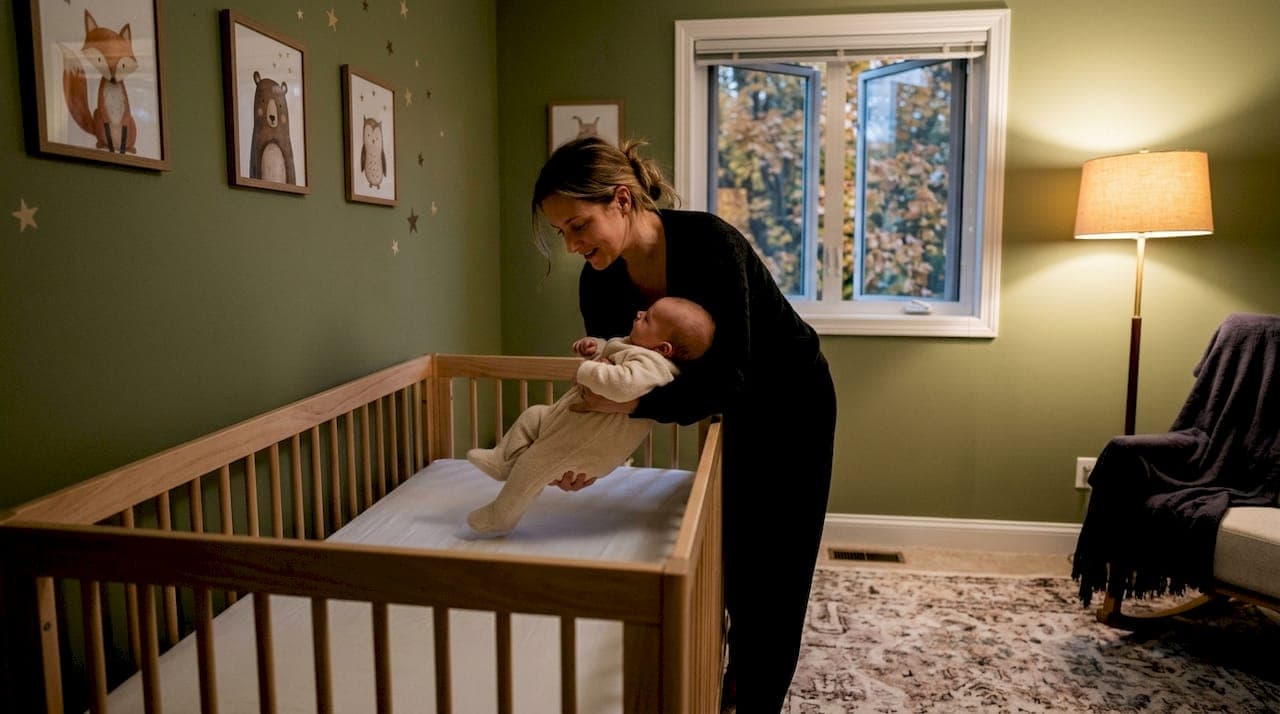
Moving from co-sleeping to sleep training is defined as the process of shifting your baby from sharing a sleep surface with you to falling asleep independently in their own space. This transition is achievable at any age with a gradual, consistent approach that respects your baby's developmental stage. The American Academy of Pediatrics recommends room sharing with a separate crib as the safest first step away from bed-sharing, ideally for the first year of life. Techniques like gradual fading, graduated extinction, and the pick-up-put-down method each offer a structured path forward. The key is choosing the method that fits your family, not the one that sounds most popular.
What are the most effective methods for transitioning from co-sleeping to sleep training?
The three most widely used approaches for moving from co-sleeping to independent sleep are gradual fading, graduated extinction, and the pick-up-put-down method. Each works differently, and choosing the right method depends far more on your family's values and your baby's temperament than on any single expert's preference.
Here is a clear breakdown of each method:
- Gradual fading: You slowly reduce your physical presence at bedtime over days or weeks. For example, you start by lying next to your baby, then sitting up, then moving to a chair, then to the doorway. This works well for parents who want minimal crying and a slow, steady shift.
- Graduated extinction (also called the Ferber method): You place your baby in the crib drowsy but awake, leave the room, and return at set intervals to offer brief reassurance. Intervals typically start at 3, 5, and 10 minutes, increasing over subsequent nights. This method suits babies over 5–6 months who have some capacity for self-soothing.
- Pick-up-put-down: You pick your baby up when they cry, soothe them until calm, then place them back in the crib. This is best suited for infants under 5–6 months. It requires patience because it can take many repetitions per night before the baby settles.
Age readiness matters. Most pediatric sleep experts agree that babies are developmentally ready for formal sleep training between 4 and 6 months, when they can begin to consolidate sleep cycles. Before that window, gradual, responsive approaches are more appropriate than structured extinction methods.
Pro Tip: If your baby is highly sensitive or easily overstimulated, gradual fading tends to produce less distress than extinction-based methods. If you are a parent who struggles with hearing prolonged crying, pick a method you can follow consistently for at least two weeks. Consistency matters more than the specific technique.

How do you prepare the sleep environment for a smooth transition?
The sleep environment shapes how quickly your baby adapts to independent sleep. A few deliberate changes to the room and routine make a significant difference.
Start with placement. The American Academy of Pediatrics recommends room sharing with a separate crib as the first step away from bed-sharing. Keeping the crib in your room initially reduces the abruptness of the change for both you and your baby.
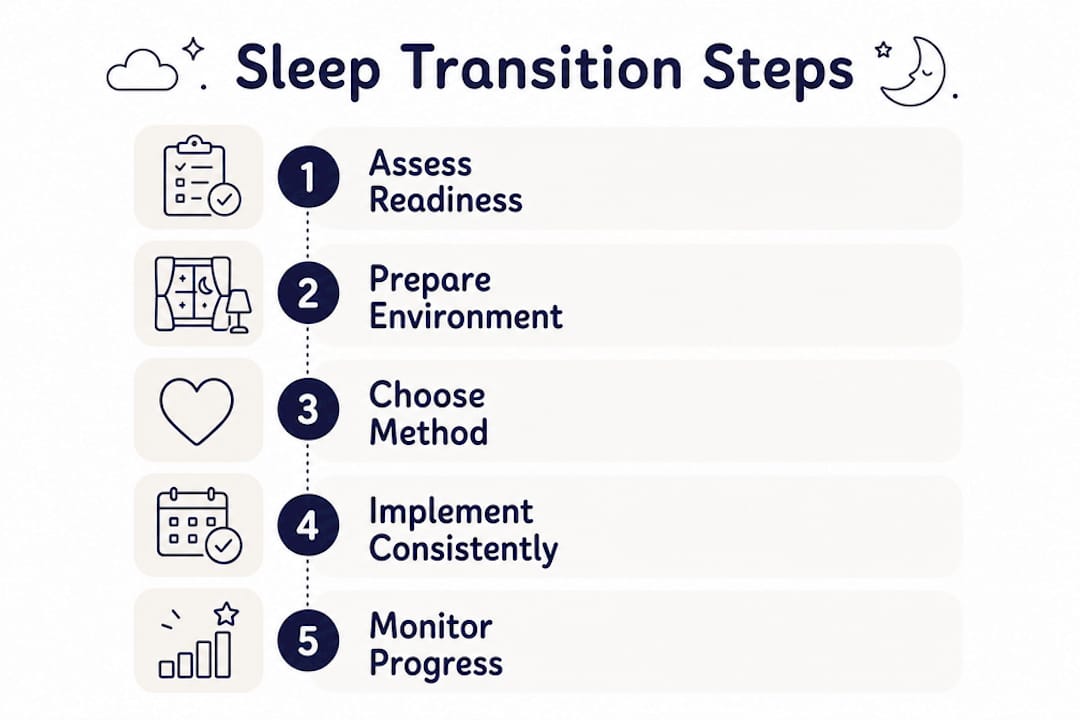
A sidecar crib setup is one of the most underused tools in this transition. You attach the crib to the side of your adult bed with one rail removed, creating a connected but separate sleep space. This reduces micro-wakings and parental fatigue by giving your baby physical closeness without full bed-sharing. Once your baby sleeps well in the sidecar position, you gradually move the crib further away.
Here is a step-by-step routine to build before sleep training begins:
- Set a consistent bedtime within a 15-minute window each night. Predictability signals the brain that sleep is coming.
- Create a short pre-sleep sequence of 20–30 minutes: bath, feeding, a brief book or song, then lights out. The same order every night builds a reliable cue.
- Introduce low-stimulation sleep aids. White noise mimics the womb environment and masks household sounds. A sleep sack provides warmth and snugness without loose bedding.
- Place your baby drowsy but awake. This is the single most important habit to build. A baby who falls asleep in your arms will expect the same conditions when they wake between sleep cycles at 2:00 AM.
Pro Tip: Try a scent transfer technique. Sleep with a small muslin cloth for one to two nights, then place it near your baby's head in the crib. Your familiar scent provides comfort without your physical presence. Many parents report this shortens the protest period noticeably in the first few nights.
Can you sleep train while still co-sleeping?
Sleep training and co-sleeping are not mutually exclusive. You can sleep train while co-sleeping by introducing intentional structure and consistent cues within your current setup before making any physical change to the sleep space.
The most important factor is safety. If you continue bed-sharing during the transition period, the setup must meet these standards:
- Use a firm, flat mattress with no soft bedding, pillows, or duvets near the baby.
- Only one adult should share the sleep surface.
- The baby sleeps on their back at all times.
- No alcohol, sedating medications, or extreme fatigue for the co-sleeping adult.
Within a safe co-sleeping setup, you can begin reducing stimulation at sleep time. Independent sleep develops by replacing high-contact sleep associations, like nursing or rocking to full sleep, with lower-stimulation cues like a consistent phrase, a hand on the chest, or white noise. You are not withdrawing affection. You are shifting the cue your baby uses to fall asleep.
Commitment to a consistent routine is what drives progress here. Parents who alternate between full contact one night and full separation the next slow their baby's adaptation significantly. Pick one approach and hold it for at least a week before evaluating results.
How long does the transition take, and what should you expect?
The transition from co-sleeping to independent sleep typically takes 2–6 weeks with staged progress. Faster extinction-based methods often show noticeable improvement by night three. Gradual methods take longer but tend to produce less distress along the way.
Common challenges parents face include:
- The 3:00 AM reactive move. This is the most common mistake. Your baby wakes, you are exhausted, and you bring them into your bed. Reactive night moves confuse infants and reset progress. Set your sleep arrangement from the start of the night and hold it.
- Sleep regressions. At 4 months, 8–10 months, and around 12 months, babies go through developmental sleep changes that disrupt even well-established patterns. Expect a temporary setback and stay consistent.
- Inconsistency between caregivers. If one parent responds differently than the other, the baby receives mixed signals. Align on the plan before you start.
Pro Tip: Start the transition during a period of low family stress, not during travel, illness, or a major life change. A stable two-week window gives the method its best chance. If progress stalls completely after three weeks, consider consulting a certified pediatric sleep coach for a personalized assessment.
Knowing when to start sleep training for naps versus nights also matters. Experts recommend beginning with naps in the crib for 3–5 days before extending the approach to nighttime. Naps are lower stakes and help your baby practice the new skill with less pressure.
Key Takeaways
The most effective path from co-sleeping to sleep training combines a consistent method, a prepared sleep environment, and realistic expectations about a 2–6 week timeline.
| Point | Details |
|---|---|
| Choose a method that fits your family | Gradual fading, graduated extinction, and pick-up-put-down each suit different temperaments and parenting styles. |
| Prepare the environment first | A sidecar crib, white noise, and a consistent bedtime routine reduce resistance before formal training begins. |
| Safety standards apply during co-sleeping | Firm mattress, back-sleeping, no soft bedding, and one adult co-sleeper are non-negotiable during any transition period. |
| Avoid reactive night moves | Moving your baby back to your bed at 3:00 AM resets progress and increases confusion for your infant. |
| Expect 2–6 weeks of staged progress | Faster methods show results by night three; gradual methods take longer but are gentler on sensitive babies. |
What I have learned from watching families make this transition
Parents come to this transition carrying a lot of guilt. They worry that sleep training means abandoning their baby, or that co-sleeping has "ruined" their child's ability to sleep alone. Neither is true. Independent sleep is a skill developed over time, not a fixed trait your baby either has or lacks.
What I have seen work consistently is not a specific method. It is the parent's ability to stay calm and steady when the baby protests. Babies read your energy. If you approach the crib with dread, your baby feels that. If you approach it with quiet confidence, the message shifts.
The binary framing of "cry it out versus no cry" limits what families think is available to them. The real spectrum of sleep training methods is much wider, and most families land somewhere in the middle. The method matters less than your consistency and your willingness to give it enough time to work.
Give yourself permission to adjust. If a method feels genuinely wrong for your family after a full week, change it. But give each approach a real trial before deciding it has failed. Three nights is not enough data.
— Mauricio
How Mellow helps parents through sleep transitions
Navigating the shift from co-sleeping to independent sleep is easier when you have guidance that matches your baby's exact age and stage.

Mellow builds its programs around where your baby is right now, not generic advice that applies to every age at once. Parents of babies in the 8–10 month window get targeted support for the specific sleep regressions and developmental shifts that happen at that stage. Parents of older babies can access the 11–14 month program for continued guidance as independence grows. Mellow's approach is proactive. You get the strategy before the hard nights arrive, not after you are already exhausted and second-guessing yourself.
FAQ
What age is best to start sleep training after co-sleeping?
Most pediatric experts recommend starting sleep training between 4 and 6 months, when babies develop the capacity to begin self-soothing. Starting with nap training in the crib for 3–5 days before tackling nights makes the process more manageable.
Does sleep training harm the bond between parent and baby?
Sleep training does not damage attachment. Research consistently shows that teaching independent sleep reduces stimulation at sleep time without withdrawing parental affection, and that well-rested babies and parents have stronger daytime interactions.
How do I handle night wakings during the transition?
Set your sleep arrangement from the start of the night and hold it consistently. Reactive moves, such as bringing your baby to your bed after a 3:00 AM waking, reset progress and increase confusion for your infant.
Can I use a sidecar crib while sleep training?
Yes. A sidecar crib setup is one of the most effective transitional tools available. It gives your baby physical closeness while establishing a clear, separate sleep space, which reduces micro-wakings and parental fatigue during the adjustment period.
What if my baby regresses after making progress?
Sleep regressions at 4 months, 8–10 months, and 12 months are normal and temporary. Stay consistent with your routine and method through the regression. Progress typically resumes within one to two weeks once the developmental shift passes.