
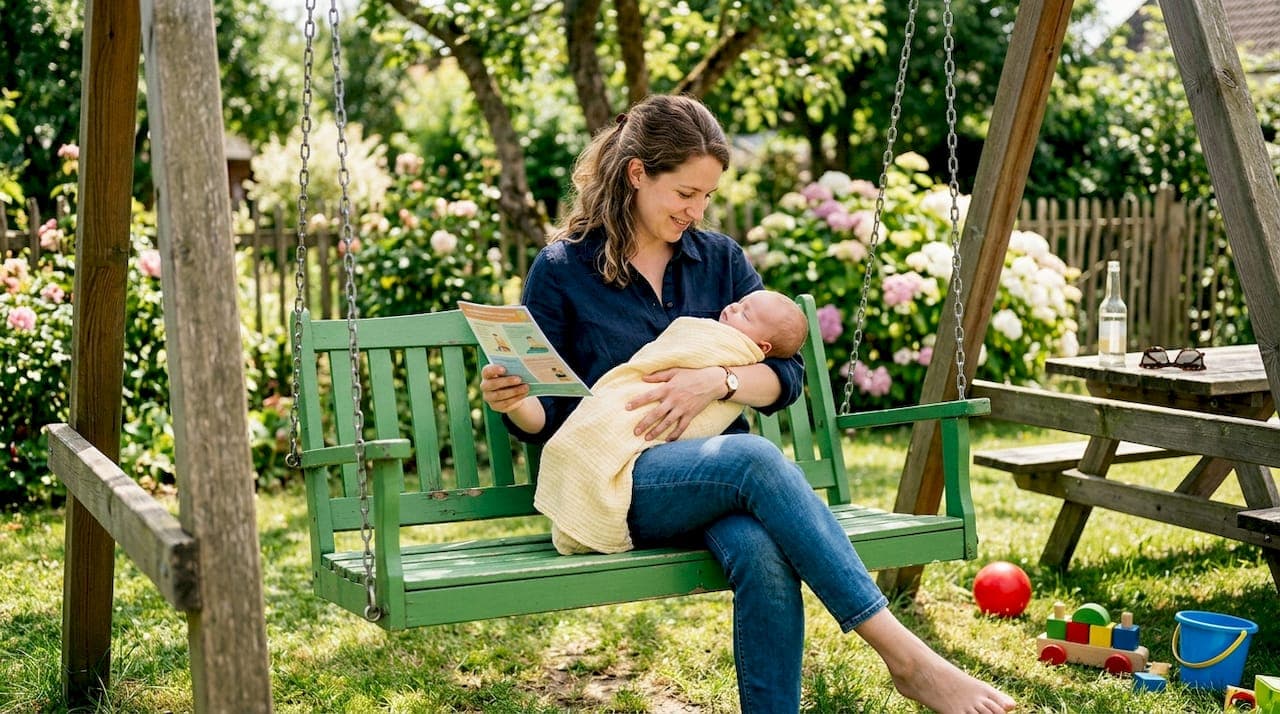
Sleep training naps is the process of teaching your baby to fall asleep independently during the day, without rocking, feeding, or contact as a sleep prop. Daytime sleep is not optional for infant development. Naps support neurological growth, emotional regulation, and nighttime sleep quality. The American Academy of Pediatrics recommends that infants get adequate total sleep across 24 hours, and daytime naps count significantly toward that goal. Most parents find that learning how to sleep train naps is harder than nighttime training, but the right timing and method make it very achievable.
When should you start nap training?
Nap training works best between 4 and 6 months, once nighttime sleep begins to stabilize. Before 4 months, babies lack the neurological maturity to self-settle consistently. Starting too early leads to frustration for both parent and baby, with little lasting progress.
At 4 months, most infants take 3–4 naps daily with wake windows of 90–120 minutes and total sleep around 15–15.5 hours per 24 hours. By 6 months, naps typically consolidate to 2–3 per day with longer wake windows. Watching for developmental readiness signs matters more than hitting an exact date.
| Age | Naps per day | Typical wake window | Total daily sleep |
|---|---|---|---|
| 4 months | 3–4 | 90–120 minutes | 15–15.5 hours |
| 5–6 months | 3 | 1.5–2 hours | 14–15 hours |
| 7–9 months | 2–3 | 2–3 hours | 13–14 hours |
| 10–12 months | 2 | 3–4 hours | 12–14 hours |
Common signs that a nap transition is coming include fighting naps, taking longer to fall asleep, or waking earlier in the morning after a previously solid night. These are signals to adjust the schedule, not to abandon training. Tracking sleep patterns by age helps you stay ahead of these shifts.
How to set up the right sleep environment
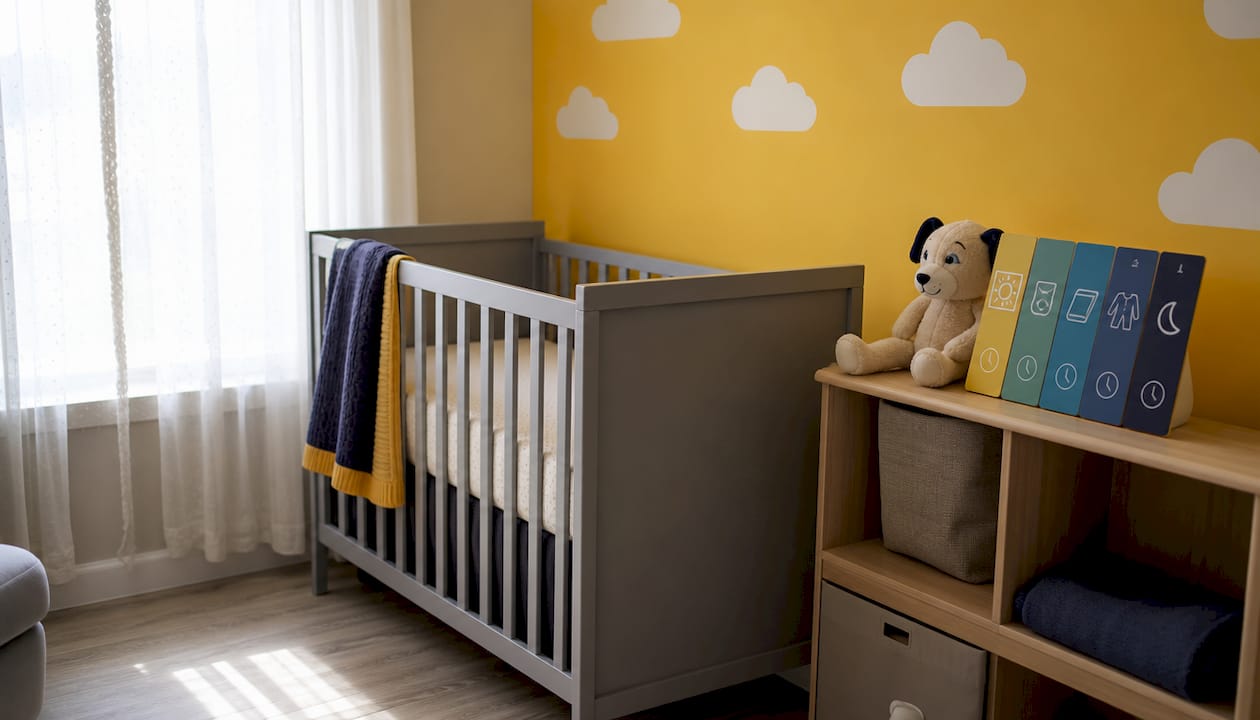
The sleep environment is the foundation of every successful nap. A dark room with blackout curtains tells your baby's brain that sleep time has arrived, even at noon. White noise masks household sounds and creates a consistent audio cue that nap time is different from playtime.
Safe sleep guidelines call for a firm mattress, back sleeping, and no loose bedding in the crib. The ideal room temperature sits between 68°F and 72°F. These conditions reduce arousal and support deeper, longer naps.
A consistent pre-nap routine signals the shift from active to restful. Keep it short, around 10 minutes, and repeat the same sequence every time:
- Dim the lights and close the curtains
- Change the diaper
- Offer a brief cuddle or quiet song
- Place baby in the crib drowsy but still awake
Pro Tip: Put your baby down while still slightly awake, not fully asleep. This teaches self-soothing, which is the core skill behind every successful nap training method.
Explore Mellow's pre-nap routine guide for a step-by-step breakdown of what works at each age.
What are the most effective nap training methods?
Several evidence-based nap training techniques exist, and none of them is universally best. The right method depends on your baby's temperament and your family's comfort level.
- Ferber method (graduated extinction): Place baby down awake, leave the room, and return at timed intervals to offer brief reassurance. Intervals increase gradually over days. Works well for babies 6 months and older.
- Chair method (gradual withdrawal): Sit beside the crib until baby sleeps, then move your chair slightly farther away each day. Slower than Ferber but gentler for sensitive babies.
- Fading method: Gradually reduce the amount of assistance you provide at sleep onset. If you currently rock to sleep, switch to patting, then to a hand on the chest, then to nothing.
- Pick Up/Put Down: Pick baby up when crying, soothe briefly, then put back down awake. Repeat until baby sleeps. Works best under 6 months.
- No Cry method: Focus on gradually shifting associations without any crying. Slowest method but suits families who prefer zero crying.
The Nap Drill, developed by pediatric sleep expert Marc Weissbluth, applies specifically to daytime sleep for babies 6 months and older. It involves placing baby drowsy but awake, using timed check-ins, and treating the late afternoon nap as a no-cry nap to protect bedtime.
| Method | Best age | Crying involved | Speed of results |
|---|---|---|---|
| Ferber | 6+ months | Moderate | 1–2 weeks |
| Chair | 5+ months | Low to moderate | 2–4 weeks |
| Fading | 4+ months | Minimal | 3–6 weeks |
| Pick Up/Put Down | Under 6 months | Low | 2–4 weeks |
| No Cry | Any age | None | 4–8 weeks |
Pro Tip: Log every nap attempt, duration, and wake time for at least two weeks. Patterns in the data tell you whether the method is working or whether the timing needs adjusting.
Nap training requires consistent daily practice for at least 2 weeks before you can fairly evaluate progress. Limit each nap attempt to 60 minutes. If baby does not sleep within that window, end the nap opportunity and try again at the next appropriate wake window.
Why is your baby fighting naps?
Nap refusals and short naps are the most common frustrations parents face. Nap quality depends on prior night sleep quality, biological nap rhythm, and timing relative to that rhythm. Poor night sleep raises arousal levels, which directly disrupts daytime naps. Fixing night sleep often improves naps as a side effect.
Short naps of 30–45 minutes reflect one complete sleep cycle. This is developmentally normal in younger infants. When a nap ends at the 30-minute mark, give baby 5–10 minutes to resettle independently before going in. Over 2–4 weeks of consistent practice, many babies learn to connect sleep cycles and nap longer.
Overtired babies produce cortisol, the stress hormone, which makes settling harder, not easier. Missing the optimal sleep window by even 15–20 minutes can turn a smooth nap into a 45-minute battle. Watch for sleepy cues like eye rubbing, yawning, and reduced activity, and act on them quickly.
Common nap problems and their fixes:
- Nap refusal: Check whether the wake window is too short or too long. Adjust by 15-minute increments.
- Short naps: Allow independent resettling for 5–10 minutes before intervening. Consistency builds the skill.
- Late nap disrupting bedtime: Cap the third nap by 4:00 PM and keep it brief, under 45 minutes.
- Nap regression: Expect temporary disruption during developmental leaps. Hold the routine and it will pass.
- Overtiredness cycle: Missed sleep windows raise cortisol and make the next nap harder. Prioritize catching the window, even if it means cutting an activity short.
Read Mellow's guide on short nap strategies for age-specific approaches to extending nap duration.
How do you transition from contact naps to crib naps?
Contact naps, where baby sleeps on a parent's chest or in arms, are a valid and nurturing choice. Contact naps often last 90 minutes because the warmth and movement support deeper sleep. The trade-off is that they require a parent to stay still for the entire nap, which is not always sustainable.
Crib naps start shorter, often around 30 minutes, but lengthen over 2–4 weeks as baby builds independent sleep skills. The transition works best when you start with the first nap of the day. Babies are least overtired at that point, which makes independent settling easier. Once the first nap succeeds consistently in the crib, move to the second nap.
Signs that baby is ready to try crib naps include settling more easily after night wakings, showing less protest when put down, and reaching the 4-to-6-month developmental window. Consistency matters most once you begin. Alternating between contact and crib naps during the transition slows progress significantly.
Pro Tip: If you need to keep one contact nap for your own sanity, keep it. Your mental health is part of the equation. A parent who is rested and calm is more effective at every other nap than a parent who is burned out from rigid adherence to a plan.
For parents managing naps outside the home, Mellow's guide on daycare sleep challenges covers how to maintain consistency across different caregiving environments.
Key Takeaways
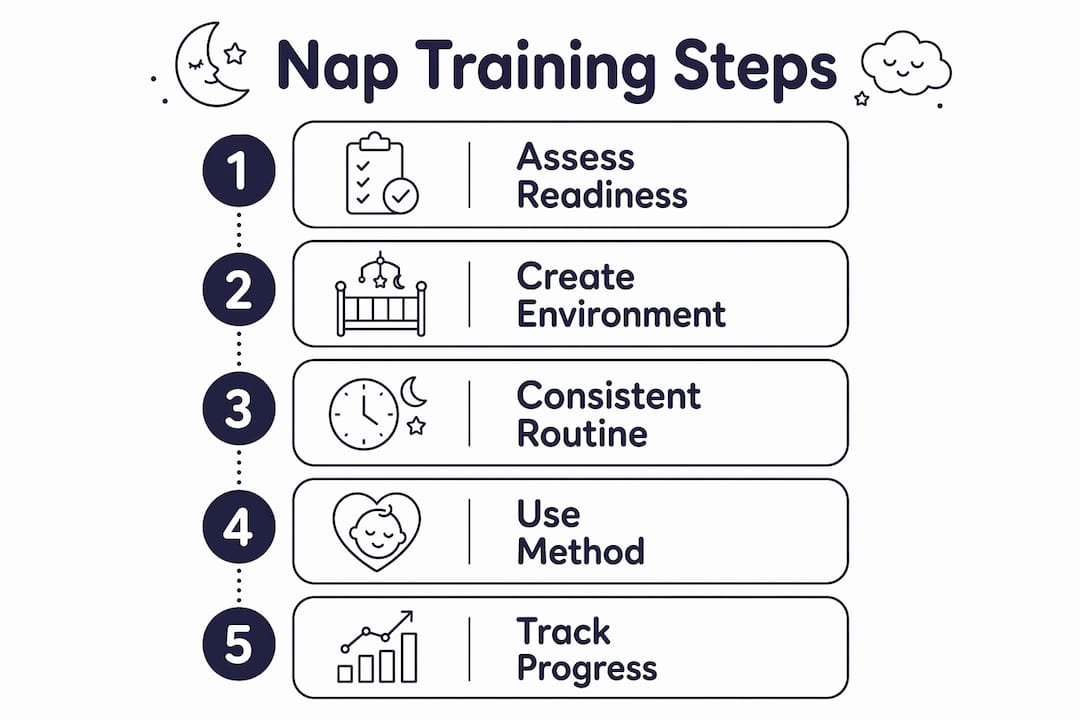
Successful nap training combines developmental timing, a consistent sleep environment, and a method matched to your baby's temperament, practiced daily for at least two weeks.
| Point | Details |
|---|---|
| Start at the right age | Begin nap training between 4 and 6 months when nighttime sleep stabilizes. |
| Set the environment first | Use blackout curtains, white noise, and a room temperature of 68°F–72°F before starting any method. |
| Match the method to your baby | Choose Ferber, Fading, Chair, or No Cry based on temperament and your comfort with crying. |
| Watch the wake window | Missing the optimal sleep window by 15–20 minutes triggers cortisol and makes naps harder. |
| Give it two weeks | Evaluate any nap training method only after at least 14 days of consistent daily practice. |
What I've learned from working with parents on nap training
Parents come to nap training expecting a clear formula. What they find is that naps are genuinely harder than nighttime sleep. Daytime sleep drive is lower than nighttime sleep pressure, which means babies have less biological pull toward napping. That is not a parenting failure. It is physiology.
The parents who see the fastest progress are not the ones using the "best" method. They are the ones who pick one method and hold it consistently, even on the hard days. Switching methods every three days resets the learning curve every time.
I also want to name something that rarely appears in sleep guides: your own exhaustion matters. A parent running on no sleep makes worse decisions, feels more guilt, and is less able to read their baby's cues. Nap training is not just about the baby. It is about creating a rhythm that works for the whole family.
Progress is not linear. A week of great naps followed by three days of chaos is normal, especially around developmental leaps. Hold the routine, adjust the timing if needed, and trust that the skill is building even when it does not look like it.
— Mauricio
Mellow Kids: support built around your baby's stage
Nap training is not a one-size-fits-all process, and the right guidance changes as your baby grows.

Mellow offers age-specific sleep and development resources built around where your baby actually is right now. Parents of babies aged 8–10 months can access targeted nap training support that accounts for the two-nap schedule and the developmental changes happening at that stage. For babies approaching the one-nap transition, the 11–14 month guide walks you through timing, signs, and what to expect. The Mellow mini-guides break complex sleep topics into short, practical steps you can apply the same day. When you have a clear picture of what is developmentally normal for your baby's age, nap training feels far less like guesswork and far more like a plan.
FAQ
When should I start nap training my baby?
Nap training is best started between 4 and 6 months, once nighttime sleep begins to stabilize. Starting before 4 months is generally ineffective because infants lack the neurological maturity to self-settle consistently.
What is the crib hour method for nap training?
The crib hour method involves placing baby in the crib for a set period, typically 60 minutes, regardless of whether they sleep. It teaches babies to associate the crib with rest and gives them time to practice self-settling without intervention.
Why are my baby's naps only 30 minutes long?
Short naps of 30–45 minutes reflect one sleep cycle, which is developmentally normal. Allowing baby 5–10 minutes to resettle independently after waking, consistently over 2–4 weeks, helps many babies learn to connect sleep cycles and nap longer.
How long does nap training take to work?
Most nap training methods require at least two weeks of consistent daily practice before you can evaluate whether they are working. Switching methods before that point resets the learning process.
Does fixing night sleep help with nap training?
Poor night sleep raises arousal levels and directly disrupts daytime naps. Improving nighttime sleep quality often makes nap training easier as a direct result.