
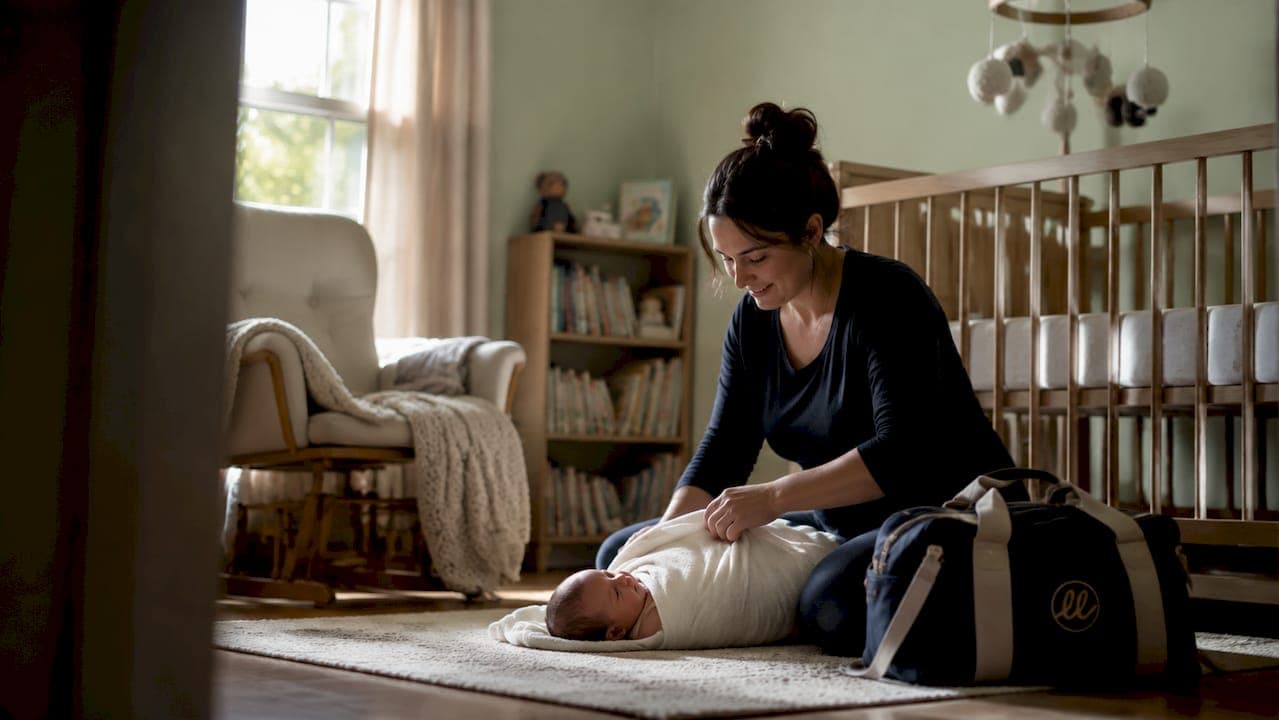
For newborns in the first weeks of life, a swaddle is the right choice. Once your baby starts attempting to roll, even before they succeed, switch to a properly fitted sleep sack immediately. That single milestone is the most important safety trigger you'll encounter in your baby's first year of sleep.
Two things you can do tonight: if your baby is a newborn, use a safe swaddle technique with arms snug and hips loose. If you've noticed any rocking, pushing up, or arm-breaking-free behavior, skip the swaddle and move to a sleeveless sleep sack. The American Academy of Pediatrics (AAP) is clear that no loose blankets belong in a crib during the first year, and rolling attempts, which can appear as early as 2 months, are the signal to stop swaddling before an accident occurs.
Table of Contents
- What are the AAP safe-sleep rules every parent needs to follow?
- What is a swaddle, and when should you use one?
- What is a sleep sack, and why is it the safer long-term choice?
- Swaddle vs sleep sack: a side-by-side comparison
- When should you stop swaddling and switch to a sleep sack?
- How to swaddle safely: a step-by-step guide
- How to pick, fit, and layer a sleep sack correctly
- What are the main safety risks, and how do you reduce them?
- How Mellow helps you navigate the swaddle-to-sleep-sack transition
- Key Takeaways
What are the AAP safe-sleep rules every parent needs to follow?
The AAP's safe-sleep guidelines are the foundation for every sleepwear decision you'll make in your baby's first year. Getting these right matters more than any specific product choice.
- Back to sleep, every time. Place your baby on their back for every nap and every night sleep.
- No loose bedding in the crib. Blankets, pillows, bumpers, and stuffed animals all pose suffocation risks for infants under 12 months.
- Use a sleep sack instead of a blanket. A wearable blanket keeps your baby warm without creating loose fabric in the sleep space.
- Keep the room between 68–72°F. This range reduces overheating risk, which is linked to SIDS.
- Choose the right TOG and layers. TOG (Thermal Overall Grade) tells you how warm a sleep sack is. Match it to your room temperature and dress baby in one light layer underneath.
- Stop swaddling at the first sign of rolling attempts. This is not optional. A swaddled baby who rolls face-down cannot push up to breathe.
"Sleep sacks provide a safe alternative to loose blankets and support the hip-friendly 'M' position that pediatric guidelines recommend for healthy infant development." — AAP safe-sleep guidance via Healthy Children
Safe sleep for newborns covers the full crib setup checklist if you want to go deeper on the environment side.
What is a swaddle, and when should you use one?
A swaddle is a snug wrap that keeps a newborn's arms restrained close to their body, mimicking the tight, contained feeling of the womb. That snugness is the whole point: it suppresses the Moro (startle) reflex, which is the involuntary arm-flinging response that wakes newborns from light sleep. Swaddling, when done correctly, can calm infants and help them fall asleep faster and sleep in longer stretches during the early weeks.
Common swaddle formats:
- Flat muslin blanket. The classic option. Breathable, flexible, and inexpensive, but requires practice to wrap correctly.
- Pre-shaped swaddle blankets. Velcro or snap closures make these easier to use consistently, especially at 3 AM.
- Zip swaddles. Fully enclosed with a zipper, these are fast and secure but offer less flexibility in fit.
- Swaddles with torso bands. A middle-ground design that keeps arms in while allowing some hip freedom. Good for babies who escape flat wraps.
The typical window for swaddling is birth through the first 2–4 months, though the stop date is driven by development, not the calendar.
Pro Tip: After about 2 weeks, start practicing daytime naps with one arm out. This gradual exposure makes the eventual transition to a sleep sack much smoother and reduces the sleep disruption that often comes with a sudden change.
What is a sleep sack, and why is it the safer long-term choice?
A sleep sack, also called a wearable blanket, is a sleeveless garment that zips or snaps around your baby and replaces the need for any loose bedding. Unlike a swaddle, it leaves the arms completely free and the legs in a roomy pouch that allows natural movement. Sleep sacks are as safe as, if not safer than, other bedding for reducing SIDS risk when used properly, according to Cleveland Clinic.
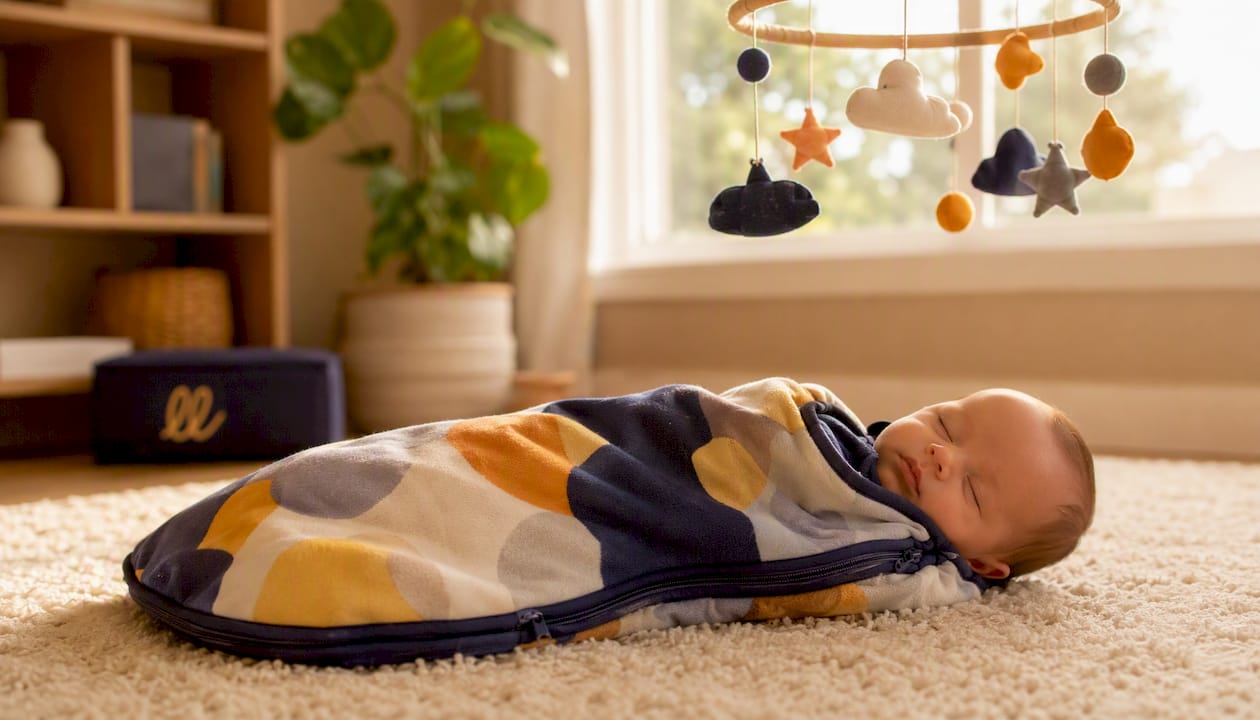
The sleeveless, baggy lower design supports what pediatric experts call the "M" leg position, where the knees are bent and spread apart, which is healthier for hip development than a tightly wrapped swaddle. Sleep sacks are available in sizes that fit infants up to about 36 pounds and 40 inches, meaning many families use them well into toddlerhood.
Features worth looking for:
- Sleeveless design to allow free arm movement
- Correct sizing so the neck opening isn't large enough for baby to slip inside
- Secure closures (zippers or snaps that baby can't undo)
- Appropriate TOG rating matched to your room temperature
- Hip-friendly lower pouch with enough room for leg movement
- Transition-style options with removable arm panels for the swaddle-to-sack switch
One practical note: many sleep sacks now come in "transition" styles that offer an arms-in option for babies who aren't quite ready to go fully arms-free. These can be a helpful middle step.
Swaddle vs sleep sack: a side-by-side comparison
| Dimension | Swaddle | Sleep Sack |
|---|---|---|
| Safety (suffocation/rolling) | Safe for non-rolling newborns; dangerous once rolling attempts begin | Safe for all ages; no rolling risk since arms are free |
| Recommended age/stage | Birth through first rolling attempts (typically 2–4 months) | From birth through toddlerhood (up to ~36 lbs / 40 in) |
| Mobility and hip positioning | Arms restrained; hips must stay loose or hip dysplasia risk increases | Full arm and leg freedom; supports healthy "M" hip position |
| Thermoregulation (TOG/layers) | Warmth depends on fabric and wrap tightness; harder to adjust | TOG-rated options make layering predictable; easy to adjust |
| Ease of use (diaper changes) | Requires full re-wrap after changes | Bottom zip or snap allows quick diaper access |
| Sleep benefits | Suppresses startle reflex; can extend sleep in early weeks | Maintains warmth and comfort; no startle benefit but no restriction |
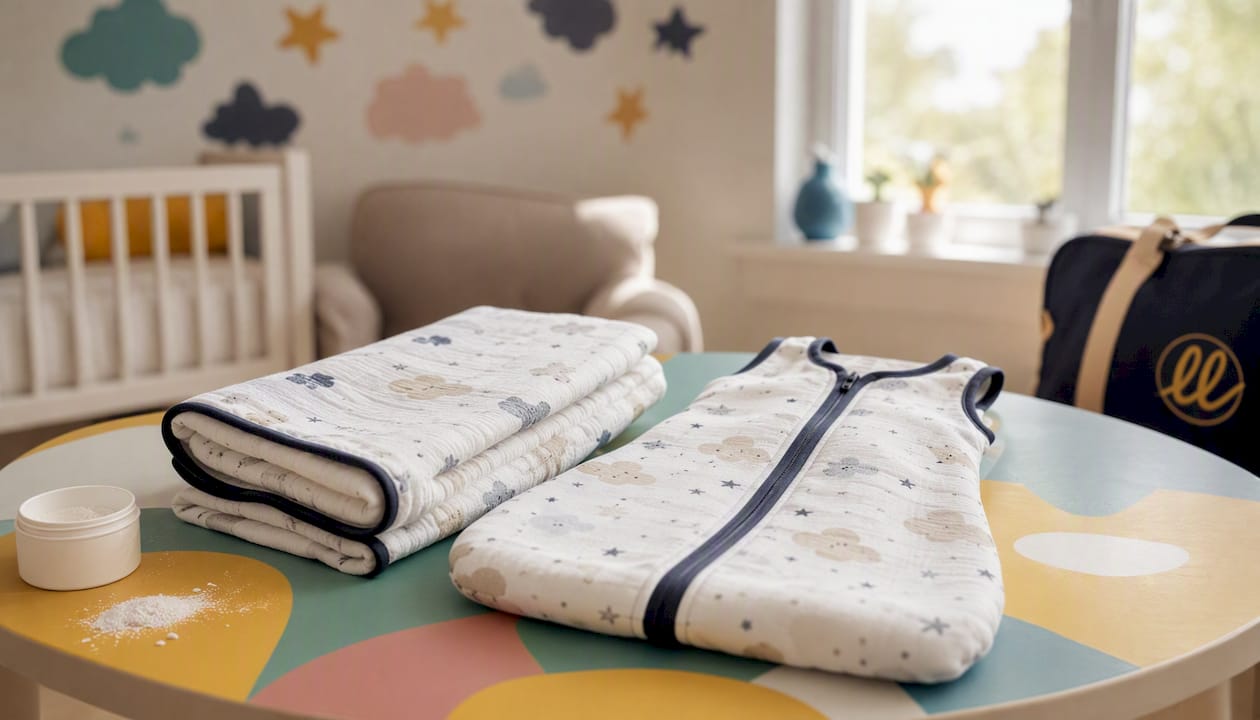
Bottom line by stage: Use a swaddle from birth until your baby shows any sign of attempting to roll. Switch to a sleep sack at that point, and continue using one through infancy and into toddlerhood as long as it fits correctly.
When should you stop swaddling and switch to a sleep sack?
The rule is simple, even if the timing feels uncertain: stop swaddling the moment your baby attempts to roll, not after they succeed. Rolling attempts can appear as early as 2 months, and a baby who rolls face-down while swaddled cannot push up to reposition. That's the risk.
"The critical sign to stop swaddling is a baby's attempt to roll — earlier than full rolling — so parents must watch for early cues like rocking, pushing up, or bringing arms across the body." — Pathways.org
Most families make this transition somewhere between 2 and 4 months, but some babies show rolling cues earlier and some later. Individual variation is normal. What matters is watching your specific baby, not the date on the calendar.
Readiness checklist for tonight:
- Is baby rocking side to side during tummy time or in the crib?
- Is baby pushing up with arms or legs against the swaddle?
- Is baby consistently breaking one or both arms free?
- Has baby rolled even once, in any direction?
If you checked any of these, move to a sleep sack tonight. You don't need to wait for a pediatrician appointment to make this call.
Transition approaches that work:
- One arm out, then both. Leave one arm free for a few nights, then free both. This gradual approach eases the startle reflex adjustment.
- Transitional swaddle products. Designs with removable arm panels let you move from fully swaddled to arms-out in stages.
- Direct switch. If rolling attempts are present, go straight to a sleep sack. Don't delay for a gradual approach when safety is the concern.
Transitioning away from swaddling has a detailed walkthrough of each approach with real-parent examples if you want more support through this change.
How to swaddle safely: a step-by-step guide
Safe swaddling technique matters as much as timing. A wrap that's too tight around the hips or too loose around the torso creates its own risks.
- Lay the blanket in a diamond shape and fold the top corner down about 6 inches.
- Place baby face-up with their neck at the folded edge. Head and neck should remain completely clear of the fabric.
- Bring one side across the body and tuck it snugly under baby's opposite side. Arms should be at the sides or slightly bent, not forced straight down.
- Fold the bottom up over baby's feet, leaving enough room for the legs to bend and spread. You should be able to fit two fingers between the fabric and baby's hips.
- Bring the remaining side across and tuck it securely. The wrap should be snug at the chest but never tight enough to restrict breathing.
- Check the fit. You should be able to slide a flat hand between the swaddle and baby's chest. Hips should move freely inside the wrap.
Safety checks before putting baby down:
- Hips can bend and spread (no straight-leg wrapping)
- Chest rises and falls freely
- Face is fully clear of fabric
- Room temperature is in the 68–72°F range
- Baby is on their back
If baby escapes the swaddle repeatedly, that's a sign the wrap isn't working for them, and it may also be a rolling readiness cue. Don't re-swaddle tighter. Either try a pre-shaped swaddle with secure closures, or move to a sleep sack.
Pro Tip: Practice daytime naps with one arm out starting around 2 weeks of age. Babies who get regular arms-out experience during the day adjust much more easily when the full transition comes.
How to pick, fit, and layer a sleep sack correctly
Fit is the most important safety factor with a sleep sack. A sack that's too large creates the same loose-fabric risk as a blanket.
Fit checklist:
- Shoulder seams sit at or near the shoulders, not drooping down the arms
- Neck opening is snug enough that baby cannot slip down inside
- Length allows feet to reach the bottom without bunching excess fabric
- Lower pouch is roomy enough for legs to bend and kick freely
Layering by room temperature:
At 68–72°F (the AAP-recommended range), a 1.0 TOG sleep sack over a single cotton onesie is typically appropriate. TOG ratings help parents choose the right warmth level: a higher TOG means more insulation, so a 2.5 TOG sack in a warmer room risks overheating. Cotton and bamboo fabrics breathe well for moderate temperatures; wool or fleece options suit cooler rooms. Check room temperature and sleepwear guidance for your specific setup at baby's room temperature and sleepwear.
Features to avoid:
- Weighted sleep sacks. Weighted options have been discontinued at some retailers and are not recommended by pediatric experts because they inhibit free movement and present safety concerns.
- Hip-restrictive lower pouches. The bottom of the sack should be wide enough for the "M" leg position.
- Top-only zippers that make nighttime diaper changes difficult. A bottom-up zipper is far more practical.
Pro Tip: When in doubt about sizing, size up rather than down. A slightly long sack is safer than one where the neck opening is too wide. Just check that feet don't get lost in excess fabric.
What are the main safety risks, and how do you reduce them?
Understanding the specific risks tied to each option helps you make confident decisions rather than anxious ones.
Swaddle risks and how to reduce them:
- Rolling while arms are restrained. The most serious risk. Reduce it by stopping swaddling at the first sign of rolling attempts, not after successful rolling.
- Hip dysplasia from tight wrapping. Always leave hips loose enough to bend and spread. The two-finger test at the hip is non-negotiable.
- Overheating. A tightly wrapped baby in a warm room can overheat quickly. Keep the room at 68–72°F and use a breathable fabric like muslin.
Sleep sack risks and how to reduce them:
- Incorrect fit. A too-large neck opening is the primary concern. Check fit at every size transition.
- Overheating from too-high a TOG. Match TOG to room temperature and dress baby in minimal layers underneath.
- Weighted or restrictive designs. Pediatric experts advise against weighted sleep sacks because they inhibit free movement. Stick to standard, sleeveless designs.
The AAP's evidence base for safe-sleep recommendations confirms that sleep sacks are a safer alternative to loose blankets and that the "less is best" principle applies to all sleep apparel. Minimal, sleeveless, well-fitted sleepwear is the consistent recommendation.
How Mellow helps you navigate the swaddle-to-sleep-sack transition
Knowing the rules is one thing. Knowing when your baby is ready is another, and that's where personalized guidance makes a real difference.
Mellow tracks the developmental milestones that matter for sleep, including rolling readiness indicators, so you're not guessing. The platform offers:
- Milestone tracking that flags rolling-readiness cues before they become safety concerns
- Age-specific sleepwear guidance matched to your baby's current stage
- TOG-aware layering tips tied to your room temperature
- Transition checklists you can run through at bedtime, not just read about once
Pro Tip: Use Mellow's baby sleep patterns and developmental milestones resource to understand how rolling fits into the broader developmental picture, so the transition feels like a milestone to celebrate, not a problem to solve.
Key Takeaways
A swaddle is right for newborns; a sleep sack is the safer choice the moment rolling attempts appear, and it stays the right choice through toddlerhood.
| Point | Details |
|---|---|
| Swaddle window | Use from birth until baby shows rolling attempts, typically between 2 and 4 months. |
| Stop-swaddling trigger | Rolling attempts, not successful rolling, are the safety signal to switch immediately. |
| Sleep sack safety | Sleep sacks are as safe as, if not safer than, other bedding and replace loose blankets for the full first year. |
| TOG and fit | Match TOG to room temperature (68–72°F ideal) and check fit at every size transition. |
| Mellow guidance | Mellow tracks rolling milestones and provides personalized transition checklists so you know when your baby is ready. |
The transition is a milestone, not a crisis
Every parent I hear from worries they're moving too fast or waiting too long. The truth is that the swaddle-to-sleep-sack transition doesn't have a single right date. What it has is a single right trigger: rolling attempts. Some babies show those cues at 8 weeks. Others don't until 4 months. Both are completely normal.
What I'd push back on is the idea that a gradual transition is always better. When rolling attempts are present, the direct switch to a sleep sack is the safer call, even if it means a rougher night or two. A few nights of disrupted sleep is a reasonable trade for removing a genuine safety risk. The startle reflex that the swaddle was suppressing also naturally diminishes over these same weeks, so most babies adjust faster than their parents expect.
Trust your observations of your own baby over any rigid timeline. And if you're unsure what you're seeing, that's exactly the kind of question Mellow's evidence-based resources are built to help you answer.
Mellow makes the transition easier for your family
Knowing when to switch from a swaddle to a sleep sack is clearer when you have milestone tracking working for you in real time. Mellow gives parents of newborns through 2-year-olds a personalized, proactive plan: rolling-readiness indicators, age-specific sleepwear guidance, and TOG-aware layering tips that update as your baby grows.
If your baby is approaching the transition window or you're already seeing rolling cues, Mellow's sleep challenges resources walk you through the exact steps for a smoother switch, with support available when you need it. Start with the Mellow Kids app to get a tailored plan built around your baby's current stage.
Useful sources
- AAP Safe Sleep Guide — Healthy Children: The primary reference for safe-sleep rules, including the no-loose-blankets rule and back-to-sleep guidance.
- When To Use Swaddles and Sleep Sacks — Pathways: Clear guidance on the rolling-attempt trigger and transition timing.