

At 10 weeks, the right move is gentle sleep shaping, not formal sleep training. Focus on consistent routines and drowsy-but-awake practice rather than any behavioral extinction method. That single shift in framing will make the next few months feel much more manageable.
Here is what you can do tonight, right now:
- Dim the lights 30 minutes before you want your baby to sleep.
- Swaddle snugly (arms in, legs free to bend) if your baby isn't showing signs of rolling.
- Turn on white noise at a consistent, low volume.
- Place your baby in the crib or bassinet drowsy but awake, not fully asleep in your arms.
- Keep nighttime interactions quiet and minimal — feed, change if needed, and settle back down without stimulation.
Tonight's 3-step safety checklist:
- Place baby on their back on a firm, flat surface with no loose bedding, pillows, or soft objects. The AAP-backed safe sleep guidelines apply to every sleep, day and night.
- Keep the room at a comfortable temperature recommended for infants.
- If your baby fusses after placement, give them 1–2 minutes to settle before responding — this brief pause is where the learning begins.
That's it. You don't need a complicated system tonight. You need consistency, safety, and a little patience with yourself.
Table of Contents
- Is 10 weeks too early for sleep training?
- What are realistic goals for a 10-week-old's sleep?
- Gentle methods you can practice with your 10-week-old
- Sample daily schedule for a 10-week-old
- How to handle night feeds safely at 10 weeks
- Safe sleep rules and when to call your pediatrician
- Common challenges at 10 weeks and how to fix them
- How long before you see progress?
- Mellow's evidence-based approach for the early months
- Key Takeaways
- The part most sleep advice gets wrong
- Mellow is built for exactly this stage
- Further reading and authoritative sources
Is 10 weeks too early for sleep training?
The short answer: yes, if you mean formal behavioral sleep training. No, if you mean beginning to shape healthy sleep habits.
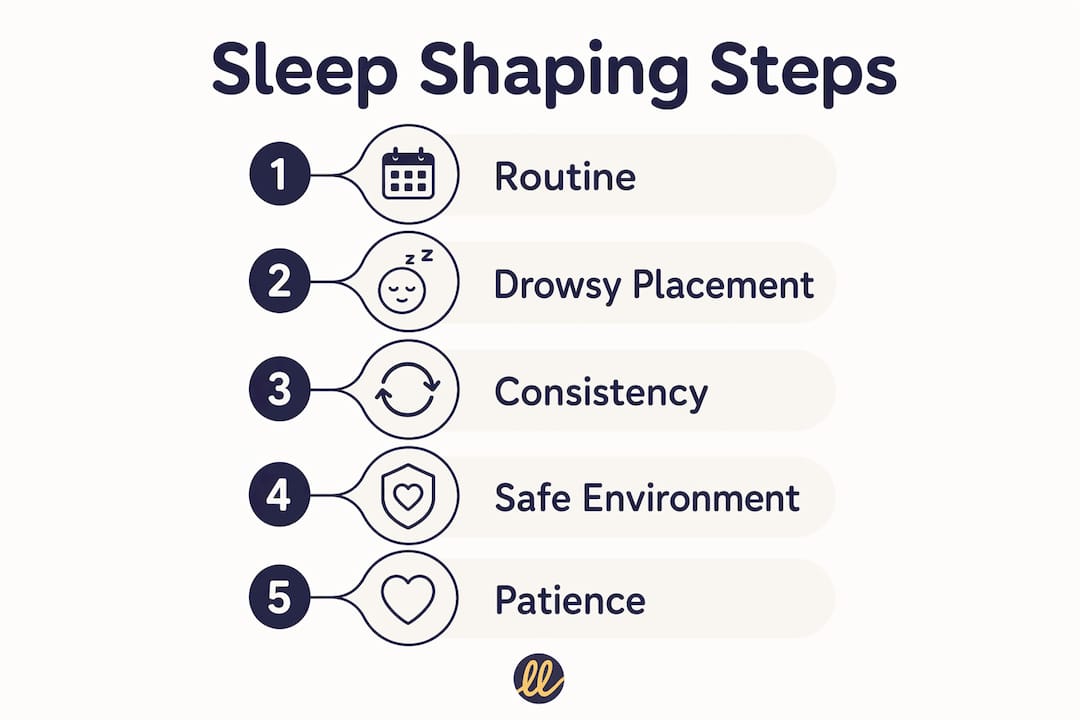
Your baby's sleep at 10 weeks is driven almost entirely by biology. Their circadian rhythm, the hormonal cycle that tells us when to feel sleepy or alert, is still developing. Hunger drives most wakings, not habit. The brain simply isn't ready to self-soothe through distress the way a 5-month-old can. Pediatric consensus, including guidance from the American Academy of Pediatrics and Blueberry Pediatrics, is clear: formal behavioral methods like Cry-It-Out or the Ferber method are generally not recommended before 4 months of age. Most behavioral sleep-training research focuses on babies 6 months and older.
What is appropriate right now is what pediatricians call "sleep shaping." Think of it as laying the groundwork: predictable rhythms, consistent cues, and gentle practice. You're not teaching your baby to sleep through the night. You're teaching them that sleep is safe and predictable, which is exactly the right foundation.
Understanding how early brain development affects sleep helps you stop fighting biology and start working with it.
When to call your pediatrician before starting any sleep routine:
- Your baby has not regained birth weight or is gaining slowly.
- Your baby sleeps more than 18–19 hours a day and is difficult to rouse for feeds.
- You notice signs of reflux: frequent arching, spitting up after most feeds, or inconsolable crying after eating.
- Your baby has pauses in breathing during sleep.
Pro Tip: If your baby was born premature, adjust all developmental expectations to their corrected age, not their birth age. A 10-week-old born 4 weeks early is developmentally closer to 6 weeks.
What are realistic goals for a 10-week-old's sleep?
Set the right target and you'll feel progress instead of failure. Here are concrete, age-appropriate goals to aim for over the next few weeks.
Goal 1: A consistent bedtime routine. Even a 4-step routine (wipe/bath, feed, swaddle, quiet song) practiced at roughly the same time each evening begins to signal "sleep is coming." A short bedtime routine can be established as early as 6–8 weeks.
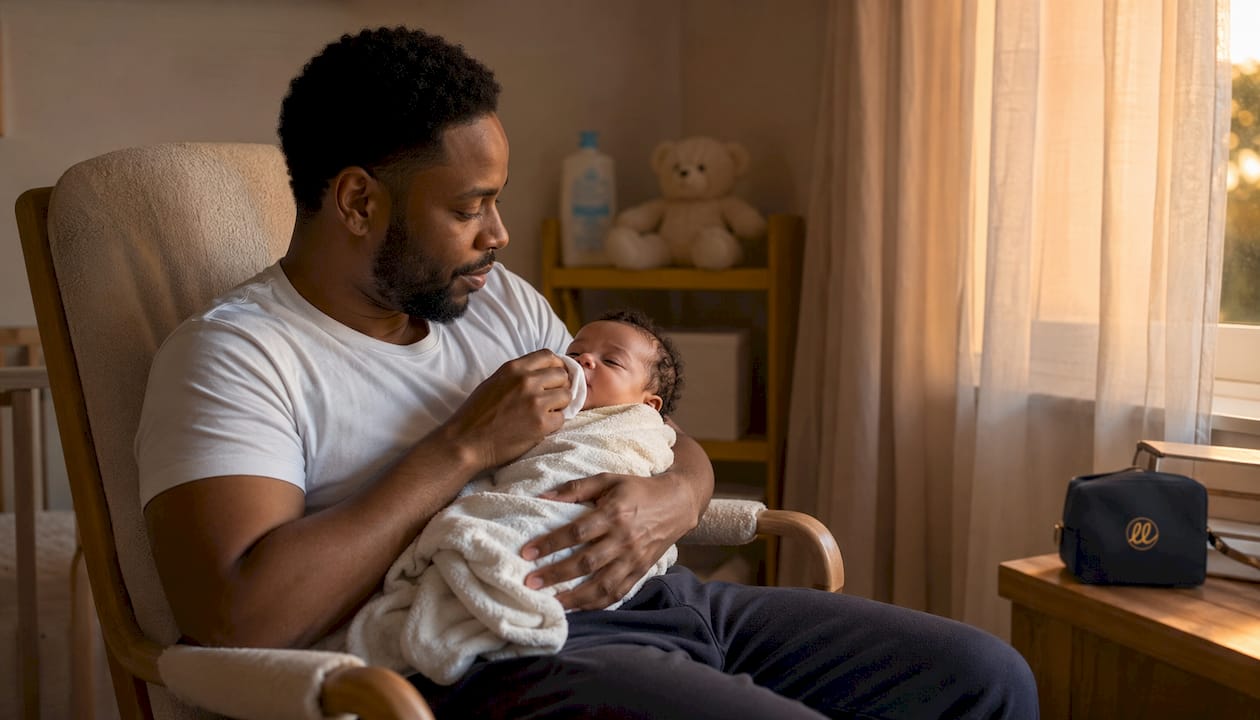
Goal 2: At least one drowsy-but-awake placement per day. You don't need every sleep to be independent. One successful drowsy placement per day is meaningful practice.
Goal 3: A first long night stretch. Clinically, "sleeping through the night" for an infant means a single continuous stretch of about 5–6 hours, not 10–12 hours. That's the milestone worth celebrating at this age.
Weekly progress check (keep it simple):
- How many times did you attempt a drowsy-but-awake placement? (Aim for at least once daily.)
- What was the longest uninterrupted night stretch this week?
- Is your baby gaining weight and producing enough wet diapers? (6+ per day is a healthy sign.)
- Did you complete the bedtime routine at least 5 out of 7 nights?
Progress at 10 weeks looks like small, incremental shifts. A night stretch that grows from 2 hours to 3.5 hours over two weeks is real progress, even if it doesn't feel dramatic.
Gentle methods you can practice with your 10-week-old
These techniques are safe, developmentally appropriate, and backed by pediatric guidance. None of them involve leaving your baby to cry alone.
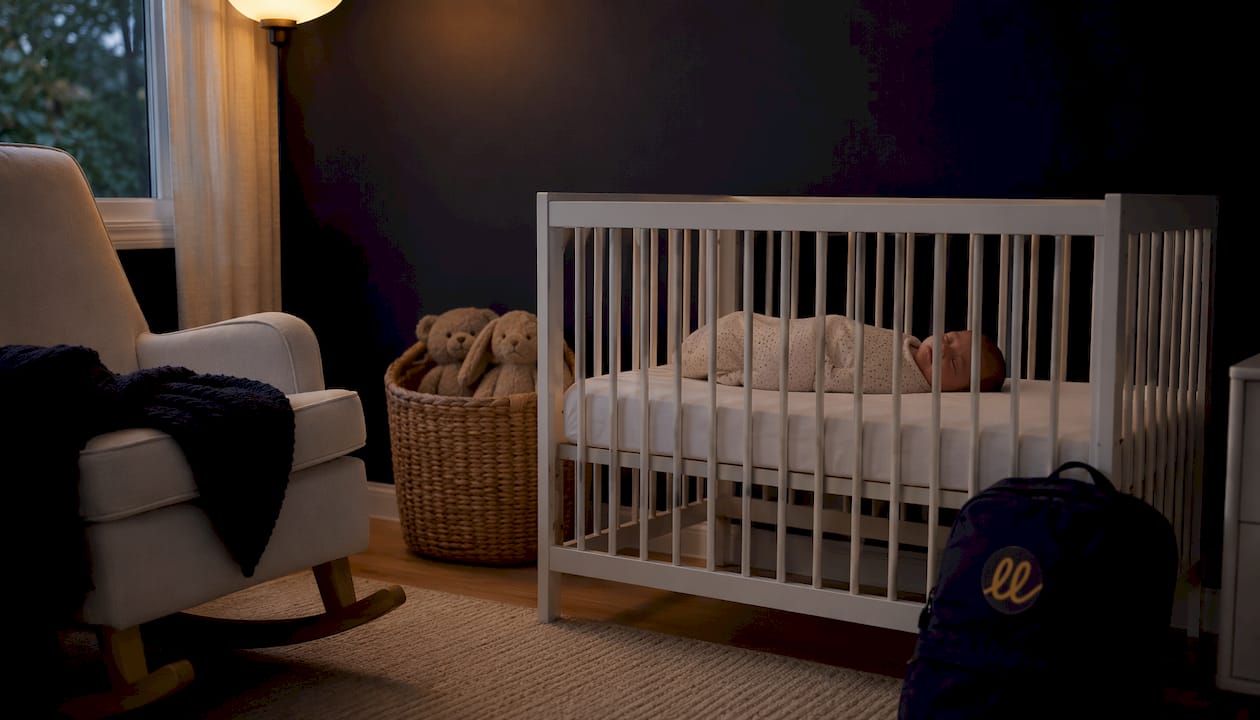
Drowsy-but-awake placement
This is the single most important skill to practice now. CHOP recommends placing babies drowsy but awake so they learn to resettle themselves, rather than always rocking them fully to sleep.
- Watch for early sleep cues: slowing movements, glassy eyes, a brief yawn, or a slight frown.
- Begin your wind-down immediately — don't wait until your baby is crying.
- Swaddle, dim the lights, and turn on white noise.
- Hold your baby until they are calm and drowsy, eyes heavy but still open.
- Place them in the crib or bassinet on their back.
- Step back and give them 1–2 minutes. If they fuss briefly, that's normal. If they escalate to full crying, pick them up, calm them, and try again.
Each attempt counts. The Sleep Foundation notes that drowsy-but-awake placement is a long-term skill that typically takes weeks of consistent practice, not an overnight fix.
Safe swaddling
- Use a thin, breathable blanket or a swaddle sleep sack designed for newborns.
- Arms should be snug against the body; legs must be free to bend and flex at the hips.
- Stop swaddling the moment your baby shows any sign of rolling, typically around 4 months.
- Never place a swaddled baby on their stomach.
Day/night cues
- Morning: Open curtains, use your normal voice, allow household sounds.
- Night: Keep lights dim, speak softly, minimize stimulation during feeds and changes.
This contrast helps your baby's circadian rhythm develop faster.
What to avoid at 10 weeks
Cry-It-Out and strict extinction methods are not appropriate at this age. Your baby's nervous system cannot yet regulate distress independently, and prolonged crying at this stage can increase stress for both of you without producing the learning these methods rely on. If you're struggling with a baby who resists sleep, these calming strategies for newborns can help you find a gentler path.
Pro Tip: White noise works best when it's continuous (not a 30-minute timer) and roughly the volume of a running shower. A sudden silence at 3 AM can wake a baby who was sleeping soundly.
Sample daily schedule for a 10-week-old
Wake windows for a 10-week-old are typically 60–90 minutes. Total daily sleep runs about 14–16 hours across naps and nighttime. The schedule below is a starting point, not a prescription — your baby's hunger cues always come first.
| Time | Activity | Notes |
|---|---|---|
| 7 AM | Wake, feed | Open curtains; use normal voice and light |
| 8–8:30 AM | Nap 1 | After ~75 min awake; aim for 45–90 min nap |
| 10 AM | Wake, feed | Playtime on mat; tummy time |
| 11–11:30 AM | Nap 2 | Watch for drowsy cues around 75 min |
| 1 PM | Wake, feed | Gentle activity, walk, or carrier time |
| 2–2:30 PM | Nap 3 | Shorter nap often fine here (30–45 min) |
| 3–3:30 PM | Wake, feed | Keep stimulation moderate |
| 4:30–5 PM | Nap 4 (catnap) | Brief catnap to bridge to bedtime |
| 5:30 PM | Wake | Begin wind-down; dim lights gradually |
| 6:30–7 PM | Bedtime routine begins | See evening checklist below |
| 7–7:30 PM | Bedtime | Drowsy-but-awake placement |
| Night | 1–3 night feeds | Feed on cue; keep interaction minimal |
Evening bedtime routine checklist:
- Wipe-down or bath (warm water, calm voice).
- Feed to drowsy (not fully asleep).
- Swaddle snugly.
- Quiet song or soft hum for 1–2 minutes.
- Place drowsy-but-awake in the crib; white noise on.
Flexibility matters. If your baby needs an extra catnap or feeds more frequently on a given day, follow their lead. The schedule is a rhythm, not a rule.
How to handle night feeds safely at 10 weeks
Most 10-week-olds still need 1–3 night feeds, and that's completely normal. Trying to eliminate night feeds before your baby is ready can interfere with weight gain and milk supply. Nutrition comes first, always.
The goal at this stage isn't fewer night feeds — it's calmer night feeds that cause the least possible sleep disruption for everyone.
Practical tips for smoother night feeds:
- Keep a dim red-tinted nightlight rather than turning on overhead lights. Red light is least disruptive to melatonin production.
- Have everything ready before you go to bed: a clean diaper, a burp cloth, and if bottle-feeding, a prepared bottle or a bottle warmer set up nearby.
- Feed, burp, and change in a quiet, low-stimulation environment. No talking beyond a soft shush.
- If your baby falls fully asleep during the feed, that's fine at this age. The drowsy-but-awake practice is for the beginning of sleep periods, not every waking.
Before you consider lengthening night stretches, confirm all of the following:
- Your pediatrician has confirmed steady weight gain.
- Your baby produces at least 6 wet diapers per day.
- Your baby is alert and feeding well during the day.
Pediatric guidance is explicit: do not routinely extend intervals between feeds before growth is well established. If you're unsure, ask your pediatrician at your next well-visit.
Pro Tip: If you're breastfeeding and considering a pacifier for settling between feeds, the Mayo Clinic suggests waiting a few weeks until breastfeeding is well established before introducing one — but once it is, research suggests pacifier use during sleep may reduce SIDS risk.
Safe sleep rules and when to call your pediatrician
No sleep plan works if the sleep environment isn't safe. These practices apply every single time your baby sleeps, day or night.
Safe sleep essentials from the AAP: Always place your baby on their back on a firm, flat surface. Keep the sleep area free of loose blankets, pillows, bumpers, and soft toys. Keep room temperature between 68°F and 72°F. Stop swaddling once your baby shows signs of rolling. Room-sharing (baby in your room, in their own sleep space) for at least the first 6 months is recommended and may reduce the risk of SIDS.
A safe sleep environment is the non-negotiable foundation of any sleep-shaping plan. Everything else builds on top of it.
Call your pediatrician if you notice:
- Poor or stalled weight gain.
- Persistent excessive sleepiness (baby is hard to rouse for feeds).
- Recurrent inconsolable crying that doesn't respond to feeding, changing, or comfort.
- Frequent arching of the back, gagging, or distress after feeds (possible reflux or feeding issue).
- Any pauses or irregularities in breathing during sleep.
These are not "wait and see" situations. A quick call to your pediatrician's nurse line is always the right move when something feels off.
Common challenges at 10 weeks and how to fix them
Short naps (under 30 minutes)
Short naps are developmentally normal at this age. Your baby's sleep cycles are brief, and they haven't yet learned to connect them. A few things to try:
- Check the wake window. If your baby was awake for more than 90 minutes before the nap, they may be overtired. Overtired babies produce stress hormones that make it harder to fall and stay asleep, so earlier is usually better.
- Try a slightly darker, quieter room with continuous white noise.
- Experiment with contact naps for one or two naps per day while practicing independent settling for others.
For more targeted strategies, gentle approaches to lengthening naps before 5 months can give you a practical starting point.
Frequent night wakings
- Rule out hunger first. At 10 weeks, most wakings are genuine hunger.
- Check the daytime feed pattern. If your baby is snacking frequently during the day (short, frequent feeds), they may not be getting full feeds, which can increase night hunger.
- Optimize the sleep environment: firm surface, white noise, appropriate room temperature, and a snug swaddle.
- Try the drowsy-but-awake placement at the start of the night more consistently.
Cluster feeding in the evening
Cluster feeding (frequent, close-together feeds in the late afternoon and evening) is normal and often peaks around 6–10 weeks. Work with it rather than against it. Let your baby cluster feed, then begin the bedtime routine after the last feed. This often produces a longer first night stretch.
When to pause and reset
Stop any new practice immediately if your baby loses weight, becomes significantly more unsettled than usual, or shows any of the medical red flags listed above. A gentle reset means returning to full feeding on demand, prioritizing comfort, and checking in with your pediatrician before trying again.
How long before you see progress?
Realistic expectations make the difference between feeling encouraged and feeling defeated.
Week 1–2: You may notice your baby settles slightly faster after a consistent bedtime routine. The routine itself is the win here, not longer sleep.
Weeks 3–6: With consistent drowsy-but-awake practice, some babies begin to show a longer first night stretch. The Sleep Foundation is clear that this skill takes weeks of consistent practice. Progress is real even when it's gradual.
Months 2–4: Naps may begin to consolidate slightly. Night stretches often lengthen as feeding biology matures. By 3–4 months, many babies sleep at least 5 hours at a stretch.
4–6 months: This is when formal sleep training methods become developmentally appropriate for most babies, if you choose to use them.
Backsliding during growth spurts is completely normal. A baby who was sleeping a 4-hour stretch may suddenly wake every 2 hours during a growth spurt or developmental leap. That's not failure — it's biology. Return to your routine, stay consistent, and the longer stretches usually come back within a few days.
The metric worth tracking right now isn't "did my baby sleep through the night." It's "am I practicing the routine consistently?" Consistency is the input you control.
Mellow's evidence-based approach for the early months
Mellow's philosophy for the 0–3 month window is straightforward: sleep shaping, not sleep training. That means building routines, practicing cues, and gradually introducing drowsy-but-awake placement, without any pressure on your baby to perform beyond their developmental capacity.
Here's the three-week practice plan Mellow recommends for parents of 10-week-olds:
Week 1: Routines and environment Focus entirely on consistency. Practice the same 4–5 step bedtime routine every night at roughly the same time. Set up the sleep environment correctly (firm surface, white noise, appropriate temperature, darkness). Don't worry about drowsy-but-awake yet — just get the routine solid.
Week 2: Drowsy-but-awake practice Begin attempting one drowsy-but-awake placement per day, ideally at the start of the first morning nap when your baby is least overtired. Track how it goes — not to judge yourself, but to notice patterns. Some days it will work; some days it won't. Both outcomes are useful information.
Week 3: Consolidate and track Aim for drowsy-but-awake placement at the start of at least two sleep periods per day. Use Mellow's wake-window reminders to catch the drowsy window before it closes. Review your tracking notes: Is the longest night stretch growing? Is the bedtime routine taking less time? These are the signals that matter.
Mellow's app supports this plan with routine templates, wake-window reminders, and feeding and diaper tracking so you can see patterns you'd otherwise miss at 3 AM. For parents who want a deeper dive into teaching independent settling, Mellow's mini-guides walk through each stage in plain language.
Pro Tip: Use Mellow's tracking feature for just 3 days before making any changes to your routine. Three days of data almost always reveals a pattern — a consistent drowsy window, a feed that's shorter than the others, a nap that's reliably short — that you can act on with confidence instead of guessing.
If you're also considering extra support at home, a newborn nanny specialist can be a practical complement to a sleep-shaping plan, especially for overnight stretches in the early weeks.
Key Takeaways
At 10 weeks, consistent sleep shaping — routines, drowsy-but-awake practice, and a safe sleep environment — is the most effective and developmentally appropriate foundation you can build.
| Point | Details |
|---|---|
| Sleep shaping, not training | Formal behavioral methods aren't appropriate before 4 months; focus on routines and drowsy-but-awake practice. |
| Tonight's checklist | Back to sleep, firm surface, 68–72°F room, white noise, and one drowsy-but-awake placement attempt. |
| Realistic milestone | "Sleeping through the night" at this age means a 5–6 hour continuous stretch, not an uninterrupted 10–12 hours. |
| Progress takes weeks | Drowsy-but-awake is a skill that develops over weeks of consistent practice — one attempt per day adds up. |
| Mellow's three-week plan | Week 1 builds the routine; Week 2 introduces drowsy placements; Week 3 consolidates and tracks progress with the Mellow app. |
The part most sleep advice gets wrong
There's a version of sleep advice that treats 10-week-olds like small 6-month-olds — just apply the method, be consistent, and results will follow. That framing sets parents up for a specific kind of exhaustion that has nothing to do with sleep deprivation. It's the exhaustion of feeling like you're failing at something you're actually doing correctly.
The truth is harder to sell but easier to live with: your baby at 10 weeks is not resisting sleep training. They are not capable of resisting sleep training. Their nervous system is running a biological program that prioritizes feeding, warmth, and proximity. Expecting behavioral learning to override that program isn't ambitious parenting — it's a mismatch between the tool and the task.
What I find genuinely encouraging about the evidence is this: the habits you build now, the consistent routine, the drowsy-but-awake practice, the calm night feeds, do carry forward. Babies who experience predictable, low-stress sleep environments in the early weeks tend to transition more smoothly into independent settling when their brains are actually ready for it. You're not wasting time. You're building the foundation that formal sleep training, if you choose it later, will stand on.
Be patient with the process. Be patient with your baby. And be patient with yourself — you're doing this at 3 AM on broken sleep, and that deserves more credit than most sleep guides give it.
Mellow is built for exactly this stage
Most sleep apps are designed for babies who are already developmentally ready for formal training. Mellow is different. The app is built around the 0–2 year window, with age-specific guidance that meets your baby where they actually are, not where a generic schedule assumes they should be.

For parents of 10-week-olds, Mellow offers routine templates matched to this exact stage, wake-window reminders that help you catch the drowsy window before it closes, and feeding and diaper tracking that gives you the data your pediatrician will ask about. The mini-guides cover sleep shaping, safe sleep, and developmental milestones in short, readable formats you can actually get through between feeds.
The app is free to start. You don't need to commit to a subscription to see whether it fits your family. Download Mellow at mellow.kids and try the three-week sleep-shaping plan tonight.
Further reading and authoritative sources
- HealthyChildren.org (AAP) — The American Academy of Pediatrics' parent-facing resource on infant sleep, safe-sleep guidelines, and age-appropriate expectations.
- Sleep Foundation: Sleep Training — A thorough overview of sleep-training methods, developmental readiness, and the evidence behind drowsy-but-awake practice.
- Blueberry Pediatrics: Can You Sleep Train a Newborn? — A pediatrician's direct answer on what's appropriate before 4 months, including the case for sleep shaping over formal training.
- CHOP: Silent Nights — Children's Hospital of Philadelphia's guidance on helping babies learn to fall asleep independently, including the drowsy-but-awake method.
- Mayo Clinic: Helping Baby Sleep Through the Night — Practical, evidence-based tips from Mayo Clinic on newborn sleep habits, swaddling, pacifiers, and safe sleep.
- MedlinePlus: Infant Sleep — A concise, authoritative overview of normal infant sleep patterns from the National Library of Medicine.
- Motherly: 10-Week Sleep Schedule — Practical wake-window guidance and a sample schedule for 10-week-olds, grounded in AASM recommendations.
- Mellow: Safe Sleep for Newborns — Mellow's evidence-based guide to safe sleep practices for the earliest weeks.
- Mellow: Teaching Your Baby to Fall Asleep Independently — A step-by-step walkthrough of sleep-shaping skills that build toward independent settling.
This article is general information for educational purposes, not medical advice. Always confirm sleep and feeding decisions with your pediatrician or a qualified healthcare provider for your baby's specific situation.