

For most 8-month-olds, the sleep training methods that work best are gentle fading approaches (pick-up/put-down and the chair method), graduated extinction (Ferber-style), and full extinction (cry-it-out) — in roughly that order of crying intensity. The single most important decision rule: choose the method you can apply with absolute consistency every night, because consistency predicts success more reliably than any specific technique. Your baby's temperament and your own stress tolerance matter just as much as the method itself.
Quick comparison before you dive in:
- Pick-up/put-down: Gentle, no prolonged crying, but slow results and can overstimulate sensitive babies
- Chair method (fading): Low-cry, gradual parental withdrawal; takes a couple of weeks but feels manageable for anxious caregivers
- Ferber/graduated extinction: Timed check-ins with increasing intervals; most families see meaningful change in 3–7 nights
- Cry-it-out (CIO/extinction): Fastest results in a few nights, but requires high caregiver tolerance for crying
- Scheduled awakenings: Useful for predictable night wakers; pairs well with night weaning
Start tonight: Pick one method, set up a consistent 20–30 minute bedtime routine, and put your baby down calm but awake. Commit to the same response every time your baby wakes.
Table of Contents
- Is your 8-month-old ready for sleep training?
- Which sleep training method fits your baby's temperament?
- How to start sleep training tonight: a practical plan
- Step-by-step instructions for each method at 8 months
- What to expect and what to do when things go sideways
- Safe sleep and when to call your pediatrician
- Sample daily schedule for an 8-month-old
- Sleep training twins or multiples
- Keeping sleep training on track during travel or disruptions
- Key Takeaways
- The method matters less than you think
- Mellow makes sleep training at 8 months less of a guessing game
- Useful sources and further reading
Is your 8-month-old ready for sleep training?
Eight months is one of the most common ages parents start sleep training, but "common" doesn't mean automatic. Your baby's individual readiness matters more than the calendar.
Signs your baby is likely ready:
- Naps are somewhat predictable (even if short)
- Your baby shows some ability to settle briefly without being held
- No active illness, ear infection, or intense teething flare
- No major developmental leap in the last week (crawling, pulling to stand)
- Weight gain is on track and your pediatrician has cleared night weaning or reduced feeds
Signs to wait 1–2 weeks:
- Visible teething pain or fever
- A new skill just emerged (pulling up, cruising) and sleep has suddenly worsened
- Recent travel, daycare change, or family disruption
Developmental factors like new motor skills, separation anxiety, and schedule drift are among the most common causes of sleep disruption at this age. Starting training during a regression usually makes the process harder and longer, not shorter.
Pro Tip: Keep a 3-day sleep log before you start — note wake times, nap lengths, night wakings, and feeds. Patterns you spot there will tell you whether the problem is overtiredness, undertiredness, or a feed association, and that shapes which method to try first.
For more on when to start sleep training for naps versus nights, Mellow's guidance walks through the timing question in detail.
Which sleep training method fits your baby's temperament?
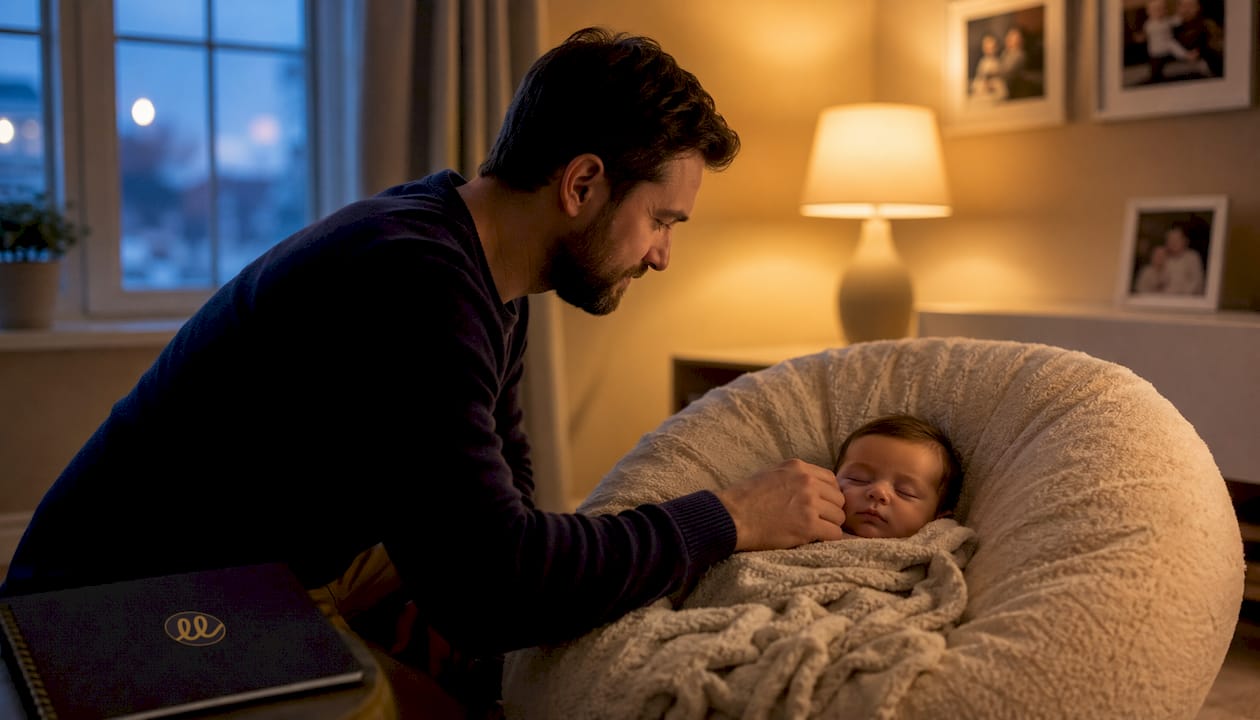
No single method is universally best. Clinicians consistently recommend matching the approach to your baby's temperament and your own capacity to stay consistent. Here's a compact view of each method and who it tends to suit.
| Method | Cry level | Best fit | Typical timeline |
|---|---|---|---|
| Pick-up/put-down | Minimal | Sensitive babies; caregivers who can't tolerate any crying | 2–4 weeks |
| Chair/fading (camp-out) | Low–moderate | Anxious caregivers; babies who settle with presence | 1–2 weeks |
| Ferber/graduated extinction | Moderate | Most families; babies who respond to check-ins | 3–7 nights |
| Cry-it-out (extinction) | High initially | Caregivers who need fast results; adaptable babies | 2–4 nights |
| Scheduled awakenings | Minimal | Predictable night wakers; pairs with night weaning | 1–2 weeks |
Gentle no-cry methods like pick-up/put-down and the chair method emphasize gradual fading and parental presence. They require more time but produce less acute distress. The Ferber method and CIO are widely used and many clinicians note that parents can combine elements of both — for example, doing check-ins for the first few nights and then fading them out.
The role of baby temperament in sleep is genuinely significant. A highly sensitive baby who escalates with check-ins may actually do better with full extinction than with Ferber, because repeated parental appearances can reset the arousal cycle rather than calm it.
How to start sleep training tonight: a practical plan
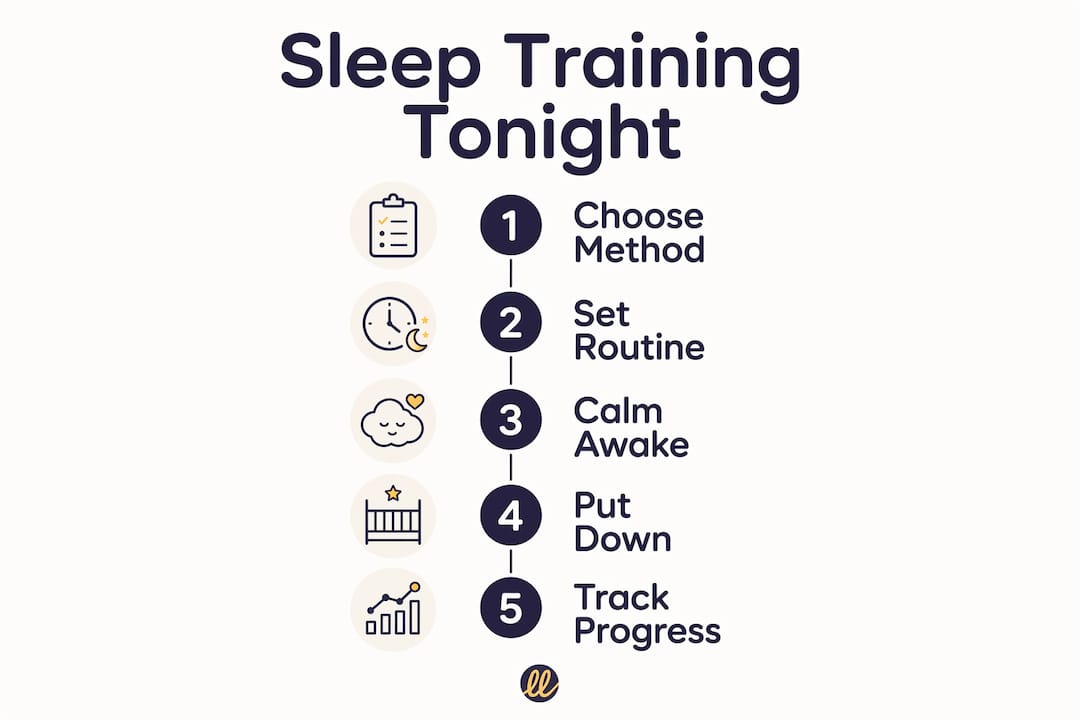
Before choosing a method, get the environment and routine right. These steps apply regardless of which approach you use.
Set up the sleep environment
- Room temperature: 68–72°F
- White noise machine running at a consistent volume (roughly 65–70 dB, similar to a shower)
- Crib clear of loose bedding, pillows, bumpers, and stuffed animals
- Room dark enough that you can't easily read
Build a 20–30 minute bedtime routine
- Feed (breast or bottle) — do this at the start of the routine, not immediately before sleep, to break the feed-to-sleep association
- Bath or warm washcloth wipe-down (optional but effective for signaling wind-down)
- Pajamas and sleep sack
- One or two short books in a dim room
- Brief song or white noise on
- Put baby down calm but awake — not drowsy, not asleep
At 8 months, "drowsy but awake" is the textbook advice, but calm but awake is a more realistic and equally effective target. Overtired babies fight the crib transition hard; watch wake windows carefully (more on that below).
Night response plan
- First wake: Wait 2–5 minutes before responding (even with gentle methods), so your baby has a chance to resettle
- Comfort wakings vs. hunger: If your baby fed within 3–4 hours and weight gain is good, the waking is likely comfort-driven
- Check-in phrasing: Keep it brief and calm — "I'm here, it's okay, time to sleep" — then leave before your baby is fully settled
- One change at a time: Don't alter the bedtime routine, night response, and nap schedule simultaneously
Pro Tip: Log your responses for the first week. Parents who track night wakings and response times often spot improvement on night 3 or 4 that they would have missed otherwise — and that data keeps you going when it feels like nothing is working.
Step-by-step instructions for each method at 8 months
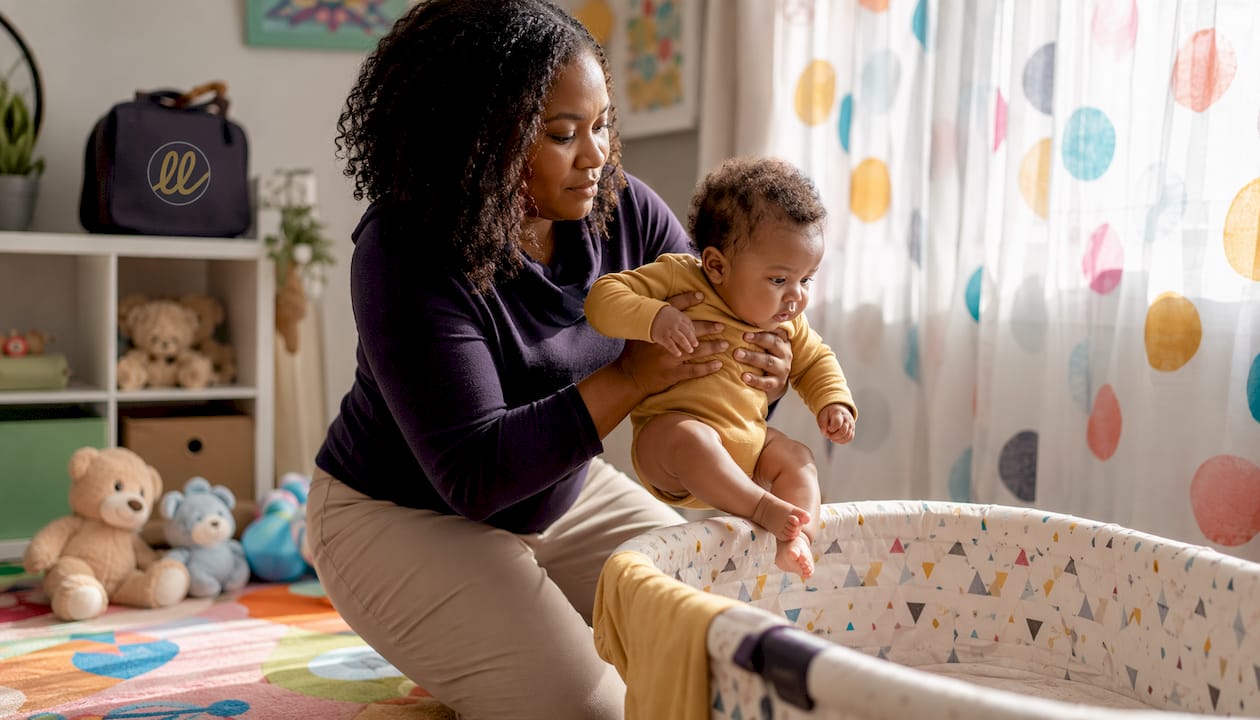
Pick-up/put-down
- Put baby down calm but awake
- When crying starts, wait 2 minutes
- Pick baby up and hold until calm (not asleep)
- Put baby back down immediately
- Repeat as needed — this can mean 20+ repetitions early on
- Over 5–7 nights, most babies need fewer pick-ups as they learn to settle
Age adjustment: At 8 months, some babies become more stimulated by being picked up. If crying intensifies after pick-up, switch to patting in the crib instead of lifting.
Pros: No prolonged crying; caregiver stays actively involved Cons: Exhausting; can take 2–4 weeks; may backfire with easily overstimulated babies
Chair method (fading/camp-out)
- Put baby down calm but awake
- Sit in a chair next to the crib — no eye contact, no talking
- Every 2–3 nights, move the chair closer to the door
- By night 10–14, you're outside the room
- Respond to distress with a brief, calm verbal reassurance from your chair position
Pros: Low anxiety for caregivers; gradual and predictable Cons: Slow; your presence can become a new sleep association if you're not consistent about moving the chair
Ferber/graduated extinction
- Complete bedtime routine; put baby down calm but awake
- Leave the room
- Night 1: Check in at 3 minutes, then 5 minutes, then every 10 minutes
- Night 2: Check in at 5 minutes, then 10 minutes, then every 12 minutes
- Night 3+: Gradually increase intervals
- During check-ins: brief verbal reassurance only — no picking up, no feeding
- Apply the same intervals to night wakings
Most families see meaningful improvement within 3–7 nights. Some babies do better when parents skip check-ins after night 3 if the check-ins seem to reset the crying cycle.
Pros: Structured and predictable; most families can sustain it Cons: Moderate crying; check-ins can prolong the process for some babies
Cry-it-out (extinction)
- Complete bedtime routine; put baby down calm but awake
- Leave the room and do not return until morning (or a pre-set feed time)
- Apply the same approach to all night wakings
- Most babies show significant improvement within the first several nights
Pros: Fastest results; clear rules reduce caregiver decision fatigue Cons: High crying in the first 1–3 nights; requires strong caregiver resolve and a partner or support person
Timeline callout: With CIO, night 1 is typically the hardest. Night 2 is often similar or slightly better. By night 4, most babies are settling in under 10 minutes. Ferber families usually see a similar arc over 5–7 nights. Gentle methods show gradual improvement over 1–3 weeks.
What to expect and what to do when things go sideways
Sleep training rarely goes in a straight line. Here's a realistic picture of the first two weeks and the most common setbacks.
| Timeframe | What you'll likely see | What to do |
|---|---|---|
| Night 1–2 | Peak crying (all methods); frequent wakings | Stay consistent; don't switch methods |
| Night 3–4 | Crying duration decreases; some babies settle faster | Note improvements in your log |
| Night 5–7 | Most babies show clear progress with Ferber/CIO | Continue; expect occasional bad nights |
| Week 2 | Gentle-method families see consistent improvement | Move chair or reduce pick-ups on schedule |
| Week 3+ | Regressions possible (teething, new skill) | Pause 1–2 nights if illness; resume same method |
Common setbacks and what they mean:
- Short naps: Often a separate issue from night training; address wake windows first
- Early morning waking (before 6 AM): Usually overtiredness or a too-late bedtime — try moving bedtime 15–20 minutes earlier
- Increased night wakings in week 2: Often a sleep regression tied to a new developmental skill; hold the routine and wait it out
- Separation anxiety spikes: Normal at 8–10 months; brief, warm check-ins during the day help more than changing your night response
When to pause or seek help:
- Active illness or fever: pause training, resume when your baby is well for 48 hours
- No improvement after 2 full weeks of consistent effort: consult your pediatrician or a certified sleep coach
- Weight loss or feeding concerns: stop night weaning and contact your pediatrician
Certified sleep coaches at programs like Boston Children's Hospital's Sleep Center offer individualized assessments and written plans with follow-up — a useful option when self-directed training isn't gaining traction.
Safe sleep and when to call your pediatrician
Safe sleep isn't optional, and it doesn't change during sleep training.
Core safe-sleep rules (AAP-aligned):
- Always place your baby on their back to sleep
- Use a firm, flat sleep surface with a fitted sheet only
- Keep the crib free of loose blankets, pillows, bumpers, and positioners
- Room-sharing (not bed-sharing) is recommended through at least 6 months, and ideally through 12 months
- Avoid smoke exposure in the sleep environment
Night feeds and weight:
Night weaning and sleep training are related but distinct. Most 8-month-olds who are gaining weight well and eating solid foods during the day can manage with one night feed or none. If your baby is still feeding two or more times per night, check with your pediatrician before eliminating those feeds. The 5-3-3 framework — a 5-hour stretch after bedtime, then two 3-hour stretches — is a commonly used informal guide for gradually spacing night feeds, though it's not a formal medical standard.
Call your pediatrician if:
- Your baby is losing weight or seems hungry after daytime feeds
- Crying during sleep training sounds different from usual (high-pitched, inconsolable)
- Fever, ear pulling, or other illness signs appear
- You have any concern that a medical issue is driving the sleep problem
A note on feeding: If you're unsure whether your baby's night wakings are hunger-driven, a quick check-in with your pediatrician about growth and daytime caloric intake will give you a clear answer before you reduce feeds.
Sample daily schedule for an 8-month-old
Most 8-month-olds need about 12–15 hours of total sleep in 24 hours, typically 10–12 hours overnight plus 2.5–3.5 hours of daytime sleep split across two naps. Wake windows usually last 2.5–3.5 hours, though some babies still need a short third nap.
Standard 2-nap day (7 AM wake)
| Time | Activity |
|---|---|
| 7:00 AM | Wake, feed, play |
| — | Nap 1 (short) |
| 10:30 AM | Wake, feed, play |
| 1:30–3:00 PM | Nap 2 (short) |
| 3:00 PM | Wake, feed, play |
| 6:30 PM | Begin bedtime routine |
| 7:00–7:30 PM | Asleep |
Bridge day (short nap 1 — add a catnap)
| Time | Activity |
|---|---|
| 7:00 AM | Wake |
| — | Nap 1 (short) |
| 12:30–2:00 PM | Nap 2 |
| 4:30–5:00 PM | Optional catnap (cap at 20 min) |
| 7:00 PM | Asleep |
Early bedtime rescue (overtired day)
If both naps were short or skipped, move bedtime to 6:00–6:30 PM. An earlier bedtime reduces cortisol buildup and usually produces a longer overnight stretch, not a shorter one.
Practical tips for daycare and travel days: On daycare days, use the same bedtime routine at home even if naps were shorter. When traveling, bring your white noise machine and maintain the routine sequence — the routine itself is the sleep cue, not the room.
Sleep training twins or multiples
Training two babies at once is genuinely harder, but the core principles don't change. The biggest practical decision is whether to train them in the same room or separately.
Most families find it easier to keep twins in the same room from the start, because separating them often creates more disruption than the crying itself. Babies who share a room typically habituate to each other's sounds faster than parents expect. Within a week, most twins stop waking each other consistently.
Sync their schedules as closely as possible before you begin. If one twin is a significantly easier settler, start with the harder sleeper's method and let the easier twin follow the same routine. Staggering bedtimes by 10–15 minutes can help if one baby's crying reliably wakes the other in the early nights.
For multiples with very different temperaments, you may need to use different response strategies for each baby while keeping the bedtime routine identical. That's a reasonable adaptation, not a contradiction.
Keeping sleep training on track during travel or disruptions
Travel doesn't have to undo your progress, but it does require a deliberate plan. The most important thing to bring is your routine, not a perfect sleep environment.
Pack your white noise machine. Recreate the bedtime sequence in the same order, even in a hotel room or at a grandparent's house. If your baby will be sleeping in a pack-and-play, practice one or two naps in it at home before the trip so the surface isn't completely unfamiliar.
During travel, it's reasonable to offer slightly more comfort than usual — an extra check-in, a brief hold — without abandoning the method entirely. The goal is to maintain the structure of the routine even when the setting changes. When you return home, expect one to three nights of adjustment. Resume your method exactly as you left it; most babies recalibrate quickly when the home environment and routine are consistent.
If a disruption (illness, a family event, a time zone change) forces a full pause, restart the method from night 1 when your baby is stable again. Restarting is not failure. It's just the process.
Key Takeaways
The most effective sleep training approach for an 8-month-old is the one you can apply consistently every night, matched to your baby's temperament and your own stress tolerance.
| Point | Details |
|---|---|
| Match method to temperament | Sensitive babies often do better with gentle fading; adaptable babies can handle Ferber or CIO. |
| Consistency is the deciding factor | Switching methods mid-week resets progress; commit to one approach for at least 5–7 nights. |
| Adjust wake windows first | Most sleep problems at 8 months improve when wake windows are timed correctly — typical wake windows are 2.5–3.5 hours. |
| Pause for illness or regression | Resume the same method once your baby is stable for 48 hours; restarting is normal. |
| Mellow's 8–10 month program | Mellow provides age-specific plans, wake-window guidance, and progress tracking to reduce trial-and-error. |
The method matters less than you think
Here's an opinion that most sleep-training content won't say plainly: the specific method you choose is probably the least important variable in this process. What actually determines whether sleep training works is whether you can hold the line on night 3, when your baby is crying and every instinct tells you to go in and pick them up.
That's not a criticism of any method. It's a recognition that the research on sleep training consistently points to parental consistency as the primary driver of outcomes. A "gentle" method applied inconsistently will take longer and feel harder than a more structured method applied with calm resolve. The families who struggle most are usually not the ones who picked the wrong method. They're the ones who switched methods on night 4 because they weren't prepared for what night 3 would feel like.
What I'd encourage any parent to do before starting is to think honestly about their own stress tolerance, their support system, and whether they have a partner or trusted person who can take a shift. Sleep training is not a solo sport, and treating it like one is where most plans fall apart. The temperament-first framing that Mellow uses matters precisely because it asks you to look at your baby and yourself before committing to a plan.
One more thing worth saying: you don't have to sleep train at all. Some families find that their baby's sleep improves naturally with schedule adjustments and consistent routines, without any formal method. If that's working for you, it counts.
Mellow makes sleep training at 8 months less of a guessing game
Sleep training an 8-month-old involves a lot of moving parts: wake windows, nap timing, night feed decisions, and a method you actually have to sustain under pressure. Mellow's 8–10 months program is built specifically for this window, with age-specific sleep plans, built-in wake-window guidance, and progress tracking so you can see what's actually changing night over night.

The plans are clinician-reviewed and designed to reduce the trial-and-error that makes sleep training so exhausting. Instead of piecing together advice from a dozen sources, you get a structured plan that accounts for your baby's developmental stage and adjusts as they grow. Whether you're just starting out or restarting after a regression, Mellow gives you the tools to move forward with confidence. Visit the 8–10 months page to explore the program and get started.
Useful sources and further reading
- Sleep Foundation — Sleep Training: Broad evidence review of sleep-training methods, including the 5-3-3 night-weaning framework and method comparisons.
- Boston Children's Hospital Sleep Coaching: Clinical sleep coaching with individualized assessment and follow-up plans; a strong referral option when self-directed training isn't working.
- Cleveland Clinic — Sleep Training Your Baby: Clinician-written overview of Ferber, CIO, and combined approaches, including night-weaning guidance.
- BabyCenter — Gentle Sleep Training Methods: Detailed descriptions of no-cry and low-cry methods including pick-up/put-down and the chair method.
- MyBabyMuse — 8-Month Sleep Schedule: Practical wake-window and nap-schedule guidance specific to 8-month-olds.
- Mellow — Sleep Training: What the Evidence Says: Evidence-focused overview linking sleep-training approaches to child development research.