
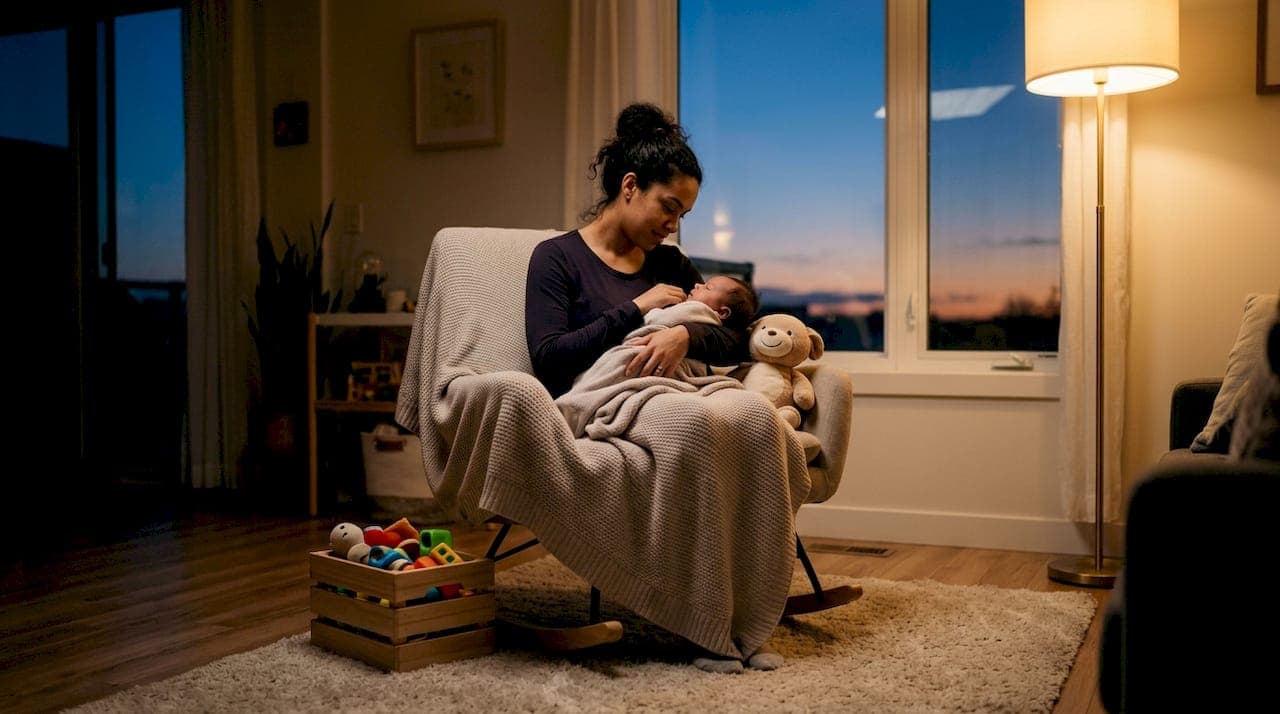
Sleep training while room sharing is the practice of teaching your baby to fall asleep independently while keeping them in your bedroom, fully in line with pediatric safety guidelines. The American Academy of Pediatrics recommends room sharing without bed sharing for at least the first 6 months, ideally up to 12 months. That recommendation does not conflict with sleep training. It means you can pursue both goals at the same time. The challenge is not whether it works. The challenge is knowing how to adapt your approach for a shared space, and that is exactly what this guide covers.
What are the key challenges of sleep training in a shared room?
The biggest obstacle in shared-room sleep training is parental presence itself. Physical proximity can prolong training because your baby may resist sleep simply to seek interaction with you. Your scent, your sounds, and even your silhouette in the dark all register as stimuli that compete with sleep onset.
Inconsistent responses make the problem worse. When you are inches away from a crying baby, the urge to intervene immediately is powerful. Inconsistent responsiveness confuses your baby and slows the development of self-soothing skills. One night of caving after three nights of holding firm can reset your progress significantly.
Environmental distractions compound the challenge. Your baby picks up on visual cues like light from your phone, auditory cues like your breathing or movement, and olfactory cues like your scent. Each one can trigger a wake cycle.
Common pitfalls to watch for include:
- Immediate intervention at the first sound, before your baby has a chance to resettle
- Inconsistent routines that shift bedtime or the order of sleep cues night to night
- Accidental eye contact when you check on your baby in the dark
- Noise from adult devices like phone notifications or TV audio bleeding through
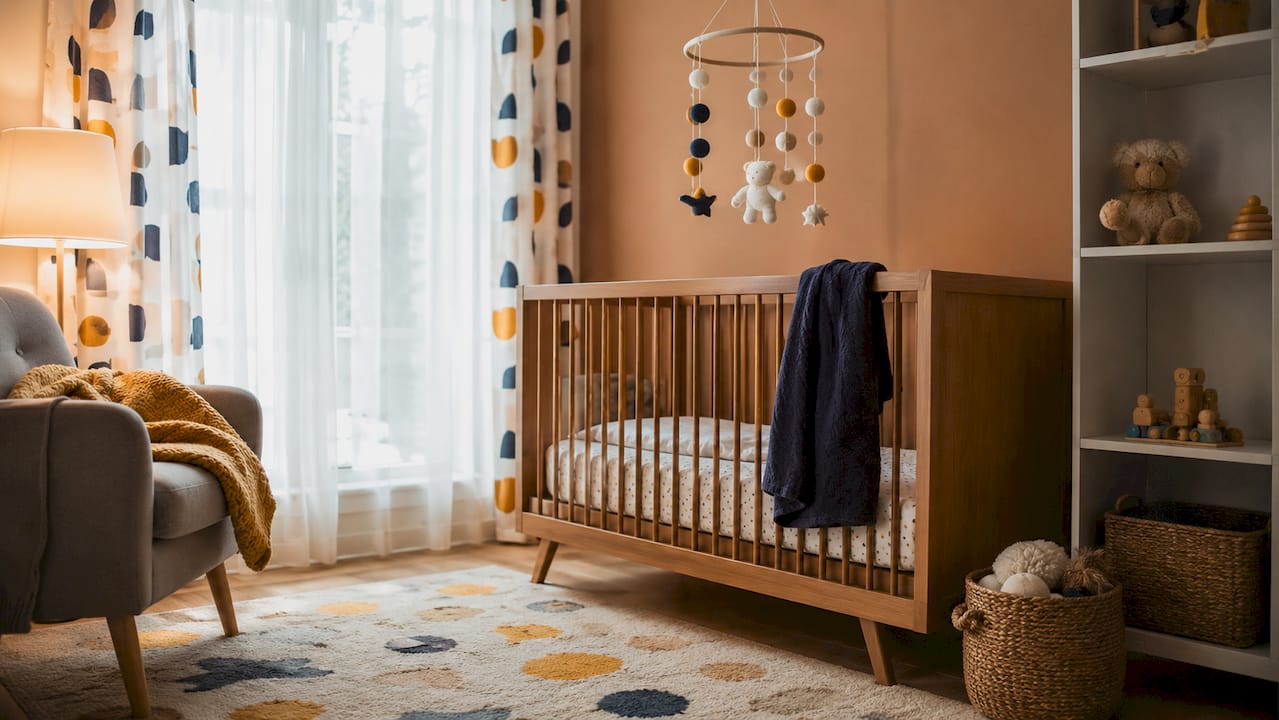
Pro Tip: Angle the crib so your baby faces the wall rather than your side of the room. This one physical change reduces the chance of eye contact and cuts down on the visual stimulation that triggers protest.
How can parents modify popular sleep training methods for room sharing?
Established sleep training methods all work in shared rooms. They require thoughtful adaptation, not abandonment. The goal stays the same: teach your baby to fall asleep without needing you to be actively engaged.
The Ferber method
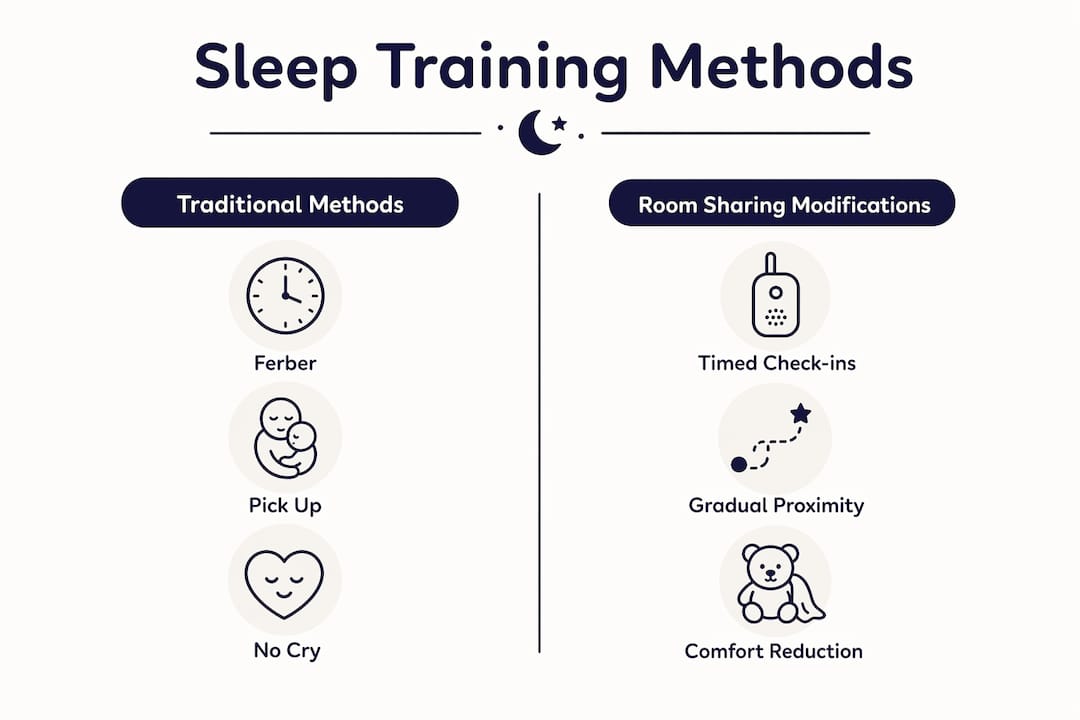
The Ferber method, also called graduated extinction, uses timed check-in intervals. You place your baby down awake, leave, and return at set intervals to offer brief verbal reassurance without picking up. In a shared room, adapting the Ferber method means stepping outside the room entirely during intervals rather than sitting in bed. Your presence in the room, even silent, signals availability and can extend crying.
The fading method
The fading method involves gradually reducing your proximity over several nights. You might start by sitting next to the crib, then move to the doorway, then just outside. This approach suits parents who find abrupt separation too stressful. The key is moving to the next stage on schedule, not waiting until your baby seems "ready," because that moment rarely arrives on its own.
The pick up, put down technique
The pick up, put down technique works well for younger infants under 6 months. You pick up your baby when crying escalates, calm them briefly, then put them down before they fall fully asleep. In a shared room, timing matters. Picking up too quickly reinforces the behavior. Waiting a moment before responding gives your baby a window to attempt self-settling.
The no-cry method offers another path. It involves staying in the room but progressively reducing comfort actions, such as moving from patting to simply placing a hand nearby, then to verbal reassurance only. This is the most compatible approach for parents who cannot leave the room.
| Method | Core approach | Room sharing modification |
|---|---|---|
| Ferber (graduated extinction) | Timed check-ins with brief reassurance | Step outside the room during intervals |
| Fading | Gradual reduction of parental proximity | Move in stages: crib side, doorway, hallway |
| Pick up, put down | Lift to calm, replace before sleep | Wait a beat before responding to allow self-settling |
| No-cry method | Reduce comfort actions progressively | Stay in room but limit physical contact over time |
What environmental changes support sleep training in a shared room?
The shared sleep environment shapes your baby's ability to self-settle as much as any method you choose. Structured routines and environmental control build strong sleep associations, and those associations do the heavy lifting once your baby is in the crib.
White noise is one of the most effective tools available. A white noise machine placed between your bed and the crib masks the sounds of your movement, breathing, and any household noise. White noise reduces startling and helps your baby stay in deeper sleep cycles longer. Set it to a consistent volume every night so it becomes a reliable sleep cue.
Blackout curtains serve a dual purpose. They block early morning light that triggers early waking, and they help regulate melatonin production by keeping the room dark during sleep hours. Pair them with a dim red-toned nightlight if you need to navigate the room safely during night feeds.
Visual boundaries reduce your baby's ability to see you from the crib. Options include:
- Angling the crib toward the wall rather than toward your bed
- Using a lightweight room divider or curtain panel between sleeping areas
- Draping a canopy over the crib to limit sightlines without restricting airflow
- Positioning a dresser or bookshelf as a soft visual barrier
Pro Tip: Set quiet hours for all adults in the household starting 30 minutes before your baby's bedtime. Dim lights, silence phone notifications, and avoid moving around the room. These 30 minutes of calm signal sleep time to your baby before they even get into the crib.
The benefits of room darkening for infant sleep are well documented. Consistent light management is one of the lowest-effort, highest-return changes you can make.
How do you protect your own well-being during shared-room sleep training?
Parental well-being is not a side issue. It is a core variable in sleep training success. When you are exhausted and emotionally depleted, you make inconsistent decisions. Inconsistency is the single biggest factor that extends sleep training timelines.
Partner alignment matters more than most parents expect. Families report better outcomes when both parents alternate nighttime interventions rather than defaulting to one person every night. Agree on your response plan before bedtime, not in the middle of the night when emotions run high.
Practical strategies that protect your sleep and your calm:
- Use low-volume audio through earbuds if you need distraction while waiting out a crying interval
- Practice slow, deep breathing when your baby cries and you are holding back from intervening
- Keep a simple log of wake times and interventions so you can see progress objectively
- Pause training during illness, travel, or major developmental leaps, then restart when conditions stabilize
Parental emotional regulation directly affects training outcomes. Stress transmits. When you stay calm, your baby is more likely to settle. When you are tense, your baby reads that signal and escalates.
Knowing when to pause is a sign of good judgment, not failure. If your baby is sick, teething intensely, or going through a major developmental shift, a brief pause protects the trust you have built. Resuming after a week is far easier than starting from scratch after weeks of inconsistency. For guidance on co-sleeping transitions and when to shift your approach, the developmental stage matters as much as the method.
Key Takeaways
Sleep training while room sharing works best when you combine a consistent method, deliberate environmental changes, and a clear partner agreement before the night begins.
| Point | Details |
|---|---|
| Room sharing and sleep training are compatible | The AAP endorses room sharing up to 12 months, and this does not conflict with teaching independent sleep. |
| Parental presence is the main obstacle | Angling the crib and stepping outside during check-ins reduces infant stimulation significantly. |
| Method adaptation is required | Ferber, fading, and no-cry methods all work in shared rooms with specific proximity modifications. |
| Environment shapes outcomes | White noise, blackout curtains, and visual barriers build sleep associations that support any method. |
| Partner alignment prevents inconsistency | Agreeing on a response plan before bedtime reduces the most common cause of extended training timelines. |
What I have learned from watching families sleep train in shared rooms
The most persistent myth I encounter is that sleep training requires a separate room. It does not. What it requires is presence without engagement. That distinction is everything. Parents who understand it stop feeling guilty for being in the room and start focusing on what actually matters: how they behave while they are there.
The families I have seen struggle longest are not the ones with the smallest apartments. They are the ones without a plan. They improvise each night based on how tired they feel, and their baby learns that persistence pays off. The families who succeed tend to be almost boring in their consistency. Same order, same sounds, same response, night after night.
One thing I wish more parents heard earlier: your baby is not manipulating you. They are learning. Every time you respond the same way, you are teaching them something. Every time you break the pattern, you are teaching them something different. The shared room makes that lesson harder to deliver, but not impossible. Small environmental changes, a clear method, and a partner who is genuinely on the same page make the difference between weeks and months of disrupted nights.
Setbacks happen. A cold, a trip, a growth spurt will interrupt your progress. That is normal. The goal is not a perfect streak. The goal is a consistent enough pattern that your baby builds a reliable expectation around sleep. You can absolutely build that expectation from the same room.
— Mauricio
How Mellow supports sleep training for room-sharing families
Mellow is built for exactly the stage you are in right now. The platform provides age-specific sleep guidance for infants from newborn through 24 months, with proactive advice that prepares you for developmental shifts before they disrupt your nights. Rather than reacting to a bad week, you get a clear picture of what is coming and how to handle it. Parents working through sleep training at 8–10 months find Mellow's structured routines and progress tracking especially useful when navigating the shared-room setup. For older babies, the 11–14 month guidance covers the next phase of independent sleep development. The Mellow Kids app gives you the tools to stay consistent, track what is working, and feel confident in your approach, even on the hard nights.
FAQ
Can you really sleep train while room sharing?
Yes. Sleep training while room sharing is fully compatible with pediatric guidelines. The American Academy of Pediatrics recommends room sharing for up to 12 months, and that recommendation does not prevent you from teaching your baby to self-settle.
What is the easiest sleep training method for a shared room?
The fading method and the no-cry method are the most practical for shared rooms. Both allow you to stay nearby while gradually reducing your active involvement, which suits the constraints of a shared sleeping space.
How do I stop my baby from waking when they see me?
Angle the crib so your baby faces the wall, and use a visual barrier like a room divider or canopy to limit sightlines. Visual separation reduces the checking behavior that leads to night waking.
Does white noise help with sleep training in a shared room?
White noise masks parental sounds and household noise, which reduces startling and helps your baby stay in deeper sleep. Place the machine between your bed and the crib at a consistent volume every night so it becomes a reliable sleep cue.
When should I pause sleep training?
Pause during illness, significant teething, travel, or major developmental leaps. Resuming after a short break is straightforward. Pushing through when your baby is unwell or overwhelmed tends to create more setbacks than the pause itself.