

Dream feeding works well for some babies and does nothing for others. The honest answer to whether you should try it depends on why your baby is waking at night, how old they are, and whether you can commit to a consistent two-week trial. If your baby wakes primarily from hunger, a dream feed offered between 10–11 PM may extend their sleep stretch and give you a longer rest window before the next waking. If night wakings are driven by sleep associations rather than hunger, dream feeding is unlikely to help.
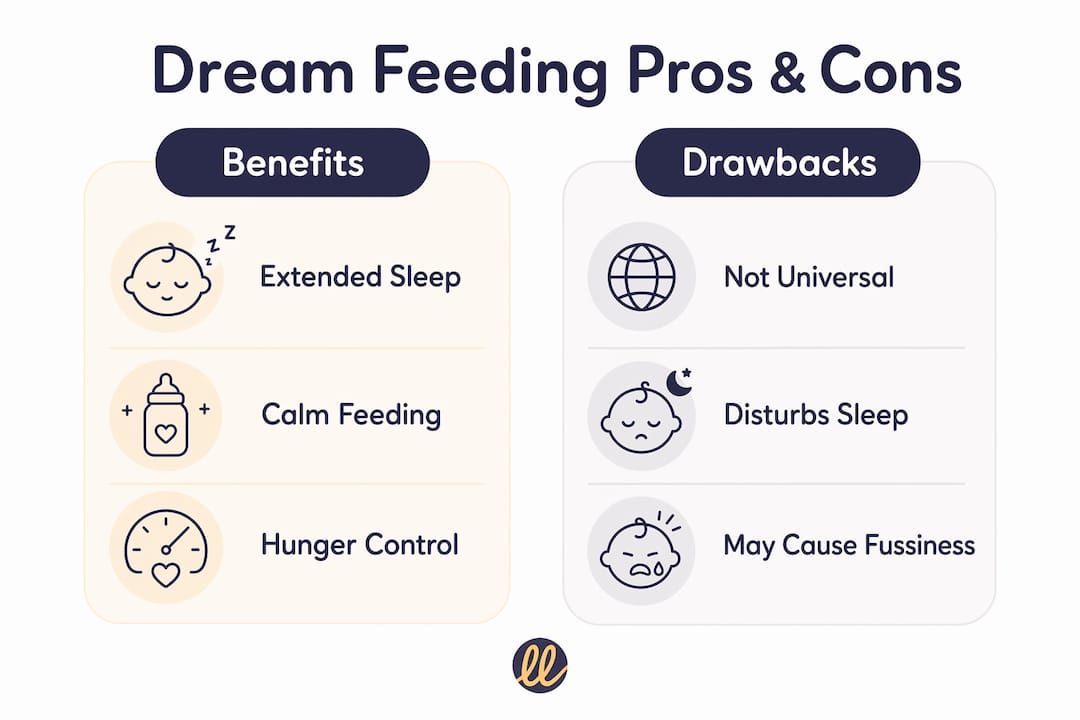
Here is a quick look at the core pros and cons before we go deeper:
Potential benefits:
- May extend the longest sleep stretch of the night
- Aligns baby's feeding schedule with parents' bedtime
- Can support breastfeeding by offering a calm, low-fuss feeding opportunity
- May help babies who feed poorly when fully awake
Potential drawbacks:
- Does not work when wakings are caused by sleep associations
- May reinforce falling asleep while feeding, which can complicate self-settling
- Babies in very deep sleep may not feed effectively
- Not appropriate for infants with gastroesophageal reflux or certain feeding challenges without pediatric guidance
Dream feeding is an optional strategy, not a biological necessity. Talking with your pediatrician before starting is always a smart move, especially for newborns or babies with any feeding or reflux concerns.
Table of Contents
- Should you dream feed? What it is and when to offer it
- Does dream feeding help babies sleep longer? What the evidence says
- How to do a dream feed: a step-by-step guide
- Does dream feeding work for every baby? Who should think twice
- How Mellow supports parents through sleep and feeding decisions
- Mellow gives you a clearer path through the early months
- Key Takeaways
Should you dream feed? What it is and when to offer it
A dream feed is exactly what it sounds like: you feed your baby while they are still asleep or in a very drowsy, semi-conscious state, typically right before you go to bed. The goal is to top off their calories so they sleep through what would otherwise be an early-morning hunger waking.
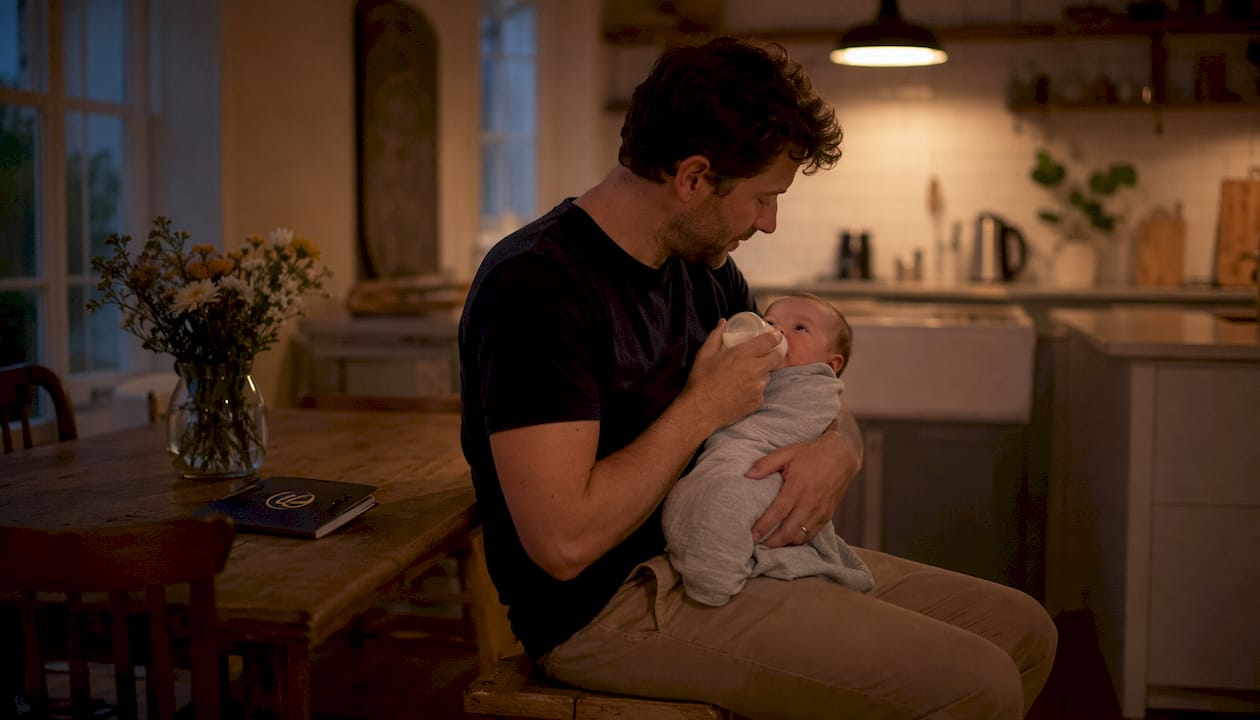
Most parents who try dream feeding offer it between 10 PM and 11 PM. This timing matters because it creates the longest possible gap between that feed and the next natural waking, which for many babies falls somewhere in the early morning hours. It is distinct from a regular bedtime feed, which happens as part of the wind-down routine, and from a reactive nighttime feed, where you respond after the baby has already woken and cried.
When dream feeding tends to make sense:
- Your baby is between roughly 6 weeks and 6 months old
- Night wakings appear to be hunger-driven rather than habit-driven
- Your baby's last feed before bed is more than 3–4 hours before your own bedtime
- You are breastfeeding and want a calmer, less fussy opportunity to nurse
- Your baby struggles to latch or feeds poorly when fully awake
Breastfeeding vs. formula considerations:
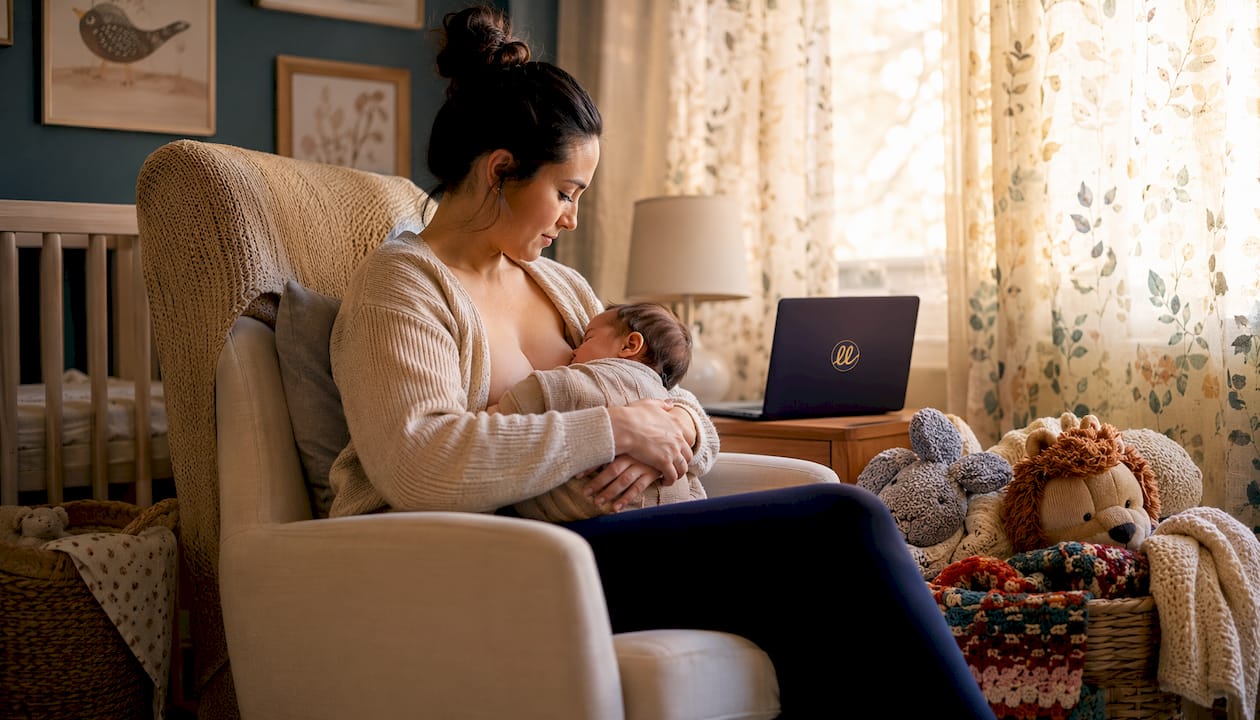
For breastfeeding parents, dream feeds can serve a dual purpose. Beyond extending sleep, they offer a calm feeding opportunity that some babies take better when drowsy than when wide awake and frustrated. They can also support milk supply by adding a late-night nursing session. For formula-fed babies, the logistics are simpler since you can prepare the bottle in advance, but the same core principle applies: offer the feed with minimal stimulation so the baby stays in a sleep state.
Does dream feeding help babies sleep longer? What the evidence says
The research on dream feeding is genuinely encouraging, though not without caveats. One study found that infants who received focal bedtime feeds at one month showed longer nighttime sleep stretches by six months, with the longest sleep bout averaging 62 minutes more compared to infants who did not receive such feeds. That is a meaningful difference for a sleep-deprived parent.
Sleep stretch improvement: Babies who received focal bedtime feeds at one month averaged a substantially longer duration in their longest nighttime sleep bout by six months compared to those without such feeds.
The catch is that dream feeding rarely exists in isolation. Studies showing improvements tend to look at multi-component sleep interventions where dream feeding is one piece of a broader approach, making it hard to attribute the gains to dream feeding alone. Large, randomized controlled trials testing dream feeding as a standalone strategy are limited.
What experts consistently agree on is this: dream feeding works mainly when night wakings are hunger-driven. If your baby is waking because they need you to help them transition between sleep cycles, a dream feed will not solve that. It addresses the caloric gap, not the sleep association.
Pro Tip: Try dream feeding consistently for 10–14 nights before deciding whether it works. One or two nights is not enough data. If your baby's wake time has not shifted after two weeks, the wakings are likely not hunger-related.
How to do a dream feed: a step-by-step guide
Getting the technique right makes a real difference. The entire point is to feed your baby without pulling them into full wakefulness, so every step is designed around minimal disruption.
Prepare before you start:
- Set up your feeding station before your baby goes to bed (burp cloth, bottle if formula-feeding, nursing pillow if breastfeeding)
- Keep the room very dim; a nightlight is fine, but avoid turning on overhead lights
- Silence your phone and remove distractions
The dream feed process:
- Approach your baby quietly around 10–11 PM, before you go to sleep.
- Gently lift them from their sleep surface, supporting the head and neck. Move slowly.
- Brush the nipple or bottle against their lower lip. Most babies will begin rooting and latching reflexively, even without waking.
- Allow them to feed at their own pace. Do not try to force a full feed; some babies take only a few minutes.
- Watch for swallowing as a sign they are actively feeding rather than just comfort-sucking.
- When feeding slows or stops, gently remove the breast or bottle.
- Hold your baby upright against your shoulder for a brief burp, even if they seem deeply asleep. This reduces the risk of gas discomfort waking them later.
- Place them back in their sleep space on their back, following safe sleep guidelines.
Getting baby back to sleep after the feed:
- Keep all movement slow and deliberate after feeding
- Avoid eye contact, talking, or any stimulation that signals "awake time"
- Place them down drowsy rather than fully asleep when possible; this supports self-settling over time
- If your baby has reflux, hold them upright for 15–20 minutes post-feed before laying them down
A note on diaper changes: Skip the diaper change unless there is a clear reason (a soiled diaper, or your baby is prone to diaper rash). The stimulation almost always wakes them more than the feed itself.
Does dream feeding work for every baby? Who should think twice
Dream feeding is not a universal fix, and recognizing when it is not working saves you weeks of unnecessary disruption to everyone's sleep.
Some babies sleep so deeply between 10 PM and midnight that they barely feed during a dream feed, taking in very little milk and gaining no benefit in terms of extended sleep. Others wake fully during the attempt, which defeats the purpose entirely. And for babies whose night wakings are rooted in sleep associations rather than hunger, adding a dream feed may actually increase nighttime arousals over time.
Signs dream feeding may not be right for your baby:
- No change in wake time after 10–14 nights of consistent attempts
- Baby wakes fully and becomes difficult to resettle after the dream feed
- Night wakings increase rather than decrease
- Baby feeds for only a minute or two and shows no signs of hunger
- Your baby has been diagnosed with gastroesophageal reflux; medical guidelines caution that feeding while lying down can worsen symptoms
- Your baby has weight gain concerns or feeding challenges that require a pediatric feeding plan
Babies with reflux or startle reflexes can respond poorly to being lifted and fed while drowsy. If your baby falls into this category, talk with your pediatrician before starting. For babies with reflux who do try dream feeding, holding them upright afterward is not optional; it is a necessary precaution.
Dream feeding also tends to lose its usefulness as babies develop longer natural sleep stretches, usually somewhere between 4 and 6 months for many infants, though this varies widely. It often phases out naturally as hunger regulation matures, without needing a formal weaning process. Understanding how baby sleep patterns shift by developmental stage helps you recognize when the strategy has run its course.
Alternatives when dream feeding does not work:
- Adjusting the timing or size of the last full feed before bed
- Cluster feeding in the evening hours to increase total caloric intake
- Focusing on evidence-based sleep training approaches that address sleep associations directly
- Consulting a pediatric sleep specialist or your child's doctor for a personalized plan
How Mellow supports parents through sleep and feeding decisions
Deciding whether to dream feed is rarely a simple yes or no. It sits inside a much larger picture of your baby's developmental stage, temperament, feeding patterns, and your own capacity as a parent. That is exactly where Mellow's approach is built to help.
Mellow offers personalized, evidence-based guidance for parents of newborns through 2-year-olds, with tools and resources designed to meet your baby where they actually are, not where a generic sleep chart says they should be. Rather than reacting to problems after they escalate, Mellow prepares you ahead of developmental shifts, including the sleep regressions and feeding transitions that make strategies like dream feeding feel either essential or irrelevant depending on the week.
What Mellow provides for parents navigating dream feeding and sleep routines:
- Age-specific sleep and feeding guidance that accounts for developmental readiness
- Temperament assessments to help you understand why your baby wakes, not just when
- Feeding and sleep tracking tools to spot patterns and evaluate whether a strategy like dream feeding is actually shifting anything
- Evidence-based educational resources on infant sleep, including guidance on safe sleep practices
- Support for parental mental health, because sleep deprivation affects your judgment and wellbeing too
Pro Tip: Use Mellow's tracking tools to log your baby's wake times for a week before starting dream feeding. Having a baseline makes it much easier to see whether the strategy is working after your 10–14 night trial.
The importance of sleep for babies goes well beyond nighttime hours. Mellow's content reflects that, connecting feeding strategies like dream feeding to broader developmental outcomes rather than treating them as isolated tricks. And when something is not working, the platform helps you pivot with confidence rather than second-guessing every decision at 3 AM.
As always, Mellow's guidance complements, not replaces, your pediatrician's advice. For any baby with reflux, weight concerns, or complex feeding history, a conversation with your child's doctor should come before any new nighttime feeding strategy.
Mellow gives you a clearer path through the early months

The early months of parenting involve a lot of trial and error around sleep, and dream feeding is a perfect example of a strategy that sounds simple but requires real context to use well. Mellow is built for exactly this: giving parents of newborns through 2-year-olds the personalized, proactive guidance that turns confusing decisions into confident ones.
Instead of searching for generic advice at midnight, you get age-specific tools, developmental milestone tracking, and feeding and sleep logs that actually show you what is working. Mellow's approach is warm, evidence-based, and designed around your baby's individual temperament, not a one-size-fits-all schedule.
Whether you are in the thick of newborn nights or navigating the transition away from dream feeds as your baby grows, Mellow meets you at your stage. Download the Mellow Kids app at mellow.kids and get the support that fits where you and your baby actually are right now.
Key Takeaways
Dream feeding can extend your baby's longest sleep stretch, but it works only when night wakings are hunger-driven, and a consistent 10–14 night trial is the only reliable way to know.
| Point | Details |
|---|---|
| Dream feeding is optional | It is a parental support strategy, not a developmental necessity, and does not suit every baby. |
| Timing matters | Offering a dream feed between 10–11 PM creates the longest possible gap before the next natural waking. |
| Evidence shows modest gains | Babies receiving focal bedtime feeds at one month averaged 62 minutes longer in their longest sleep bout by six months compared to those without such feeds. |
| Know when to stop | If wake times have not shifted after 10–14 nights, discontinue; the wakings are likely not hunger-driven. |
| Mellow supports the decision | Mellow's tracking tools, temperament assessments, and age-specific guidance help parents evaluate whether dream feeding is working and what to try next. |