
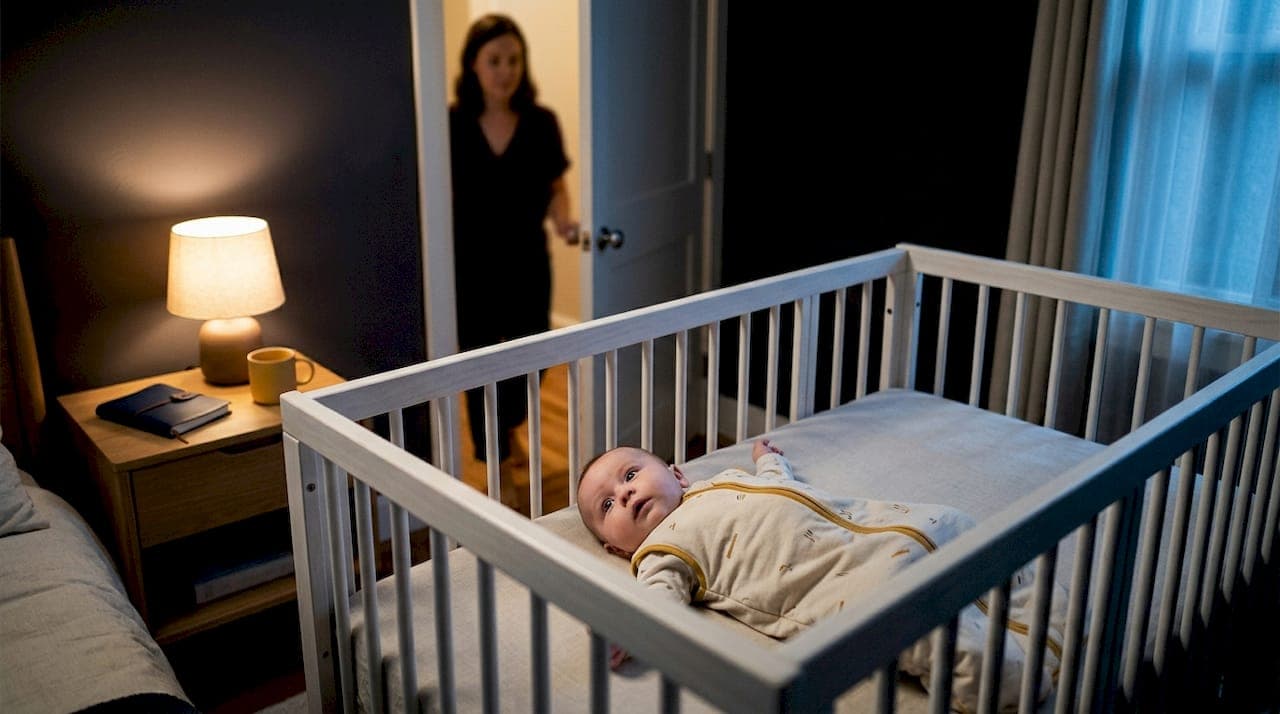
A false start at bedtime is a wake up shortly after falling asleep,, typically within the first hour, and the calmest, most effective response is to treat it exactly like a nighttime waking: keep the room dark and quiet, check the basics (diaper, temperature, hunger), and resist the urge to fully re-engage. Once you handle tonight's wake up, the sections below walk through why it happened and how to prevent it from becoming a pattern.
TL;DR:
- False starts typically occur within the first hour after lights out and are caused by sleep cycle transitions, overtiredness, undertiredness, or environmental factors.
- Proper diagnosis involves observing the baby's mood during wake-ups, with alertness indicating undertiredness and distress suggesting overtiredness or discomfort.
- Prevention relies on optimizing wake windows, creating calming pre-bed routines, timing feeds appropriately, and gradually adjusting bedtime and naps based on the baby's development.
- During a false start, keeping interventions boring, dim lighting, white noise, and brief check-ins help the baby resettle without fully waking up.
- Most false starts resolve with small routine changes over time; persistent issues after six months or signs of breathing problems should prompt a pediatrician visit.
Table of Contents
- What a False Start at Bedtime Actually Is
- Common Causes of False Starts (And How to Spot Yours)
- How to Prevent False Starts: A Step-by-Step Approach
- What to Do Tonight When a False Start Happens
- When to Call the Pediatrician
- An Editorial Take: Why Proactive Beats Reactive
- Get Age-Matched Sleep Guidance With Mellow
- Sources
What a False Start at Bedtime Actually Is
A false start is your baby waking up shortly after you've put them down, often crying as if they never actually settled into deep sleep. It's different from a short catnap or a 2 a.m. waking because of its timing: it lands squarely inside that first vulnerable stretch after lights out.
Infant sleep-cycle transitions tend to happen around 40 to 45 minutes into sleep, and that first cycle transition is exactly where false starts cluster. Babies naturally have brief arousals as they shift between sleep stages, and younger infants haven't yet built the skill of drifting back down on their own.
A few things distinguish a false start from other sleep disruptions:
- It happens close to bedtime, not deep into the night.
- Your baby may seem confused or upset rather than simply stirring.
- It often repeats at roughly the same time each night if the underlying cause hasn't changed.
- It resolves faster with a calm, low-key response than with a full reset of the bedtime routine.
Common Causes of False Starts (And How to Spot Yours)
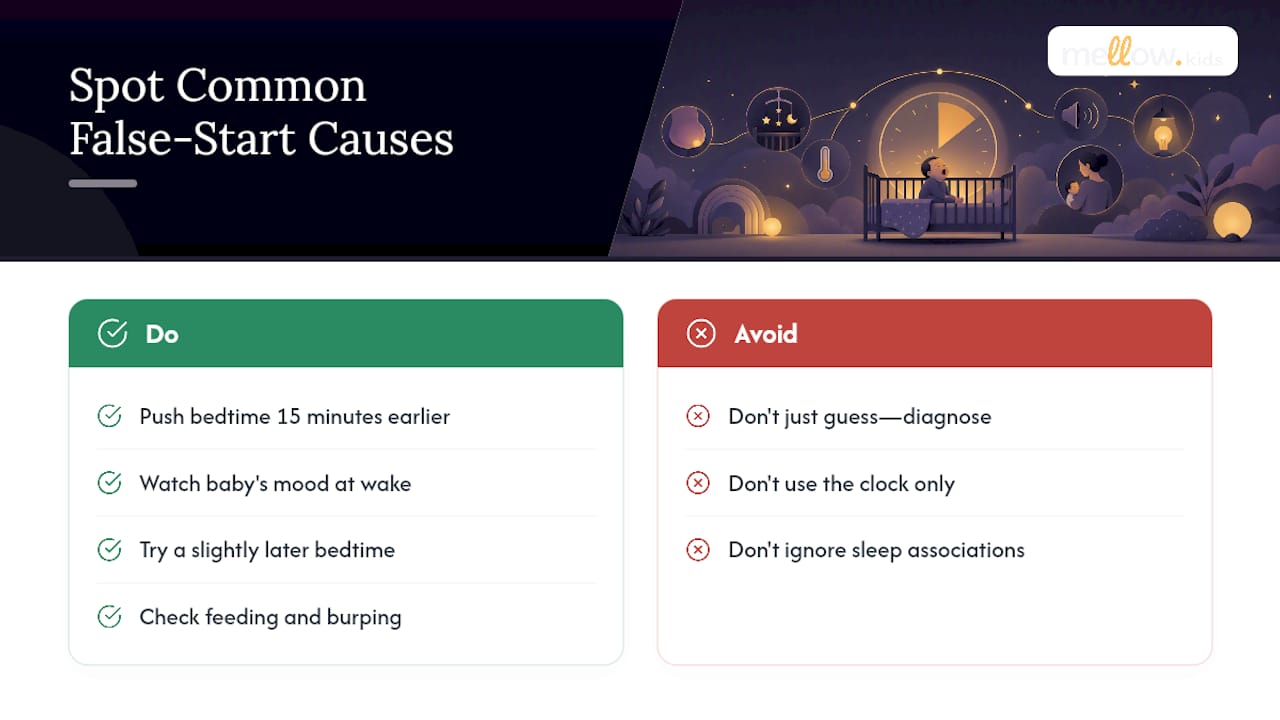
Diagnosing the cause is faster than guessing. Run through this checklist and match it to how your baby is acting when they wake.
Overtiredness shows up when a baby has been awake too long before bedtime for their age. Signs include a harder-than-usual time settling initially, more crying at put down, and short, fitful stretches once asleep. Wake windows lengthen gradually across the first year, and pushing bedtime even 15 minutes earlier can make a real difference.
Undertiredness is the opposite problem, especially common with babies under about four months. Some very young infants aren't biologically ready for an early evening bedtime and need a slightly later one to line up with their internal clock.
Sleep associations like being rocked or fed to sleep can create a mismatch: your baby falls asleep one way but wakes up in a completely different environment, with none of the conditions that got them to sleep in the first place.
Feeding and digestive issues matter too. A short feed, a missed burp, or reflux discomfort can all trigger an early wake up.
Environment rounds out the list: a room that's too warm, too bright, or too noisy (or has no noise buffer at all) makes resettling harder.
Pro Tip: Watch your baby's mood at the wake up, not just the clock. An alert, curious baby usually points to undertiredness. A distressed, hard-to-console baby usually points to overtiredness or discomfort. That single observation narrows your next move faster than any checklist.
How to Prevent False Starts: A Step-by-Step Approach
Prevention works best as a series of small, deliberate experiments rather than one big overhaul. Try these in order over the course of a week or two:
- Check your wake windows. Age-appropriate awake time between the last nap and bedtime is the single biggest lever. A wake window guide by age can help you spot whether your baby's window is running too long or too short.
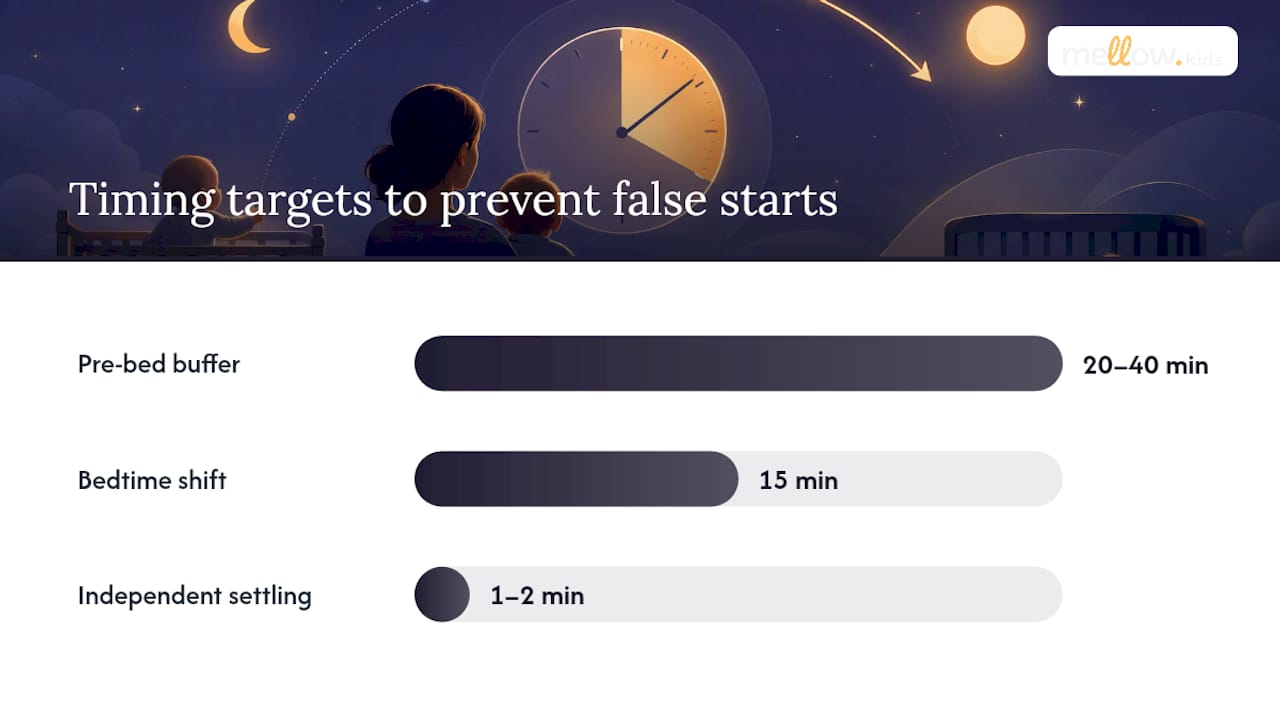
- Protect a buffer zone. A calm 20 to 40 minute stretch before bed, filled with quiet, low-stimulation activities, helps prepare the nervous system for sleep and reduces the friction of a rushed bedtime.
- Time the last feed carefully. Aim for a full feed that ends a few minutes before you put your baby down. Letting them drift into a deep doze during the feed can make it harder for them to connect sleep cycles once you transfer them.
- Introduce short independent-settling practice. When developmentally ready, give your baby a minute or two to work through mild fussing before intervening. This builds the exact skill that prevents false starts from becoming full wake ups.
- Rebalance daytime naps. A nap that runs too long or too late in the day can undertire a baby for bedtime; one that's too short can overtire them by evening.
- Change one variable at a time. Adjust bedtime by 15 minutes, or shift the last feed, then track results for three to five nights before changing anything else.
A simple nightly log (bedtime, wake time, mood at wake up, what you changed) keeps you from guessing week to week. Your baby bedtime routine is the foundation all of this sits on, and small tweaks to it usually beat starting from scratch.
Pro Tip: Keep a running note on your phone instead of a formal chart. Three lines a night, tracked honestly for a week, tells you more than a single "bad night" ever will.
What to Do Tonight When a False Start Happens
When it's happening right now, resist the instinct to rush in. A short pause before intervening gives your baby a real chance to resettle without your help becoming the thing that fully wakes them.
If you do go in, keep the visit boring on purpose:
- Keep lights off or on the dimmest setting possible.
- Speak in a low, quiet voice, or skip talking altogether.
- Use white noise, since a dark, consistent sound environment helps babies drift back down instead of fully waking.
- Do a fast check for a wet diaper, a too warm or too cold room, or obvious hunger.
- Offer a brief feed only if hunger is the clear, obvious driver, not a reflexive first move.
- Skip play entirely, even eye contact and smiling, which can signal that it's time to be awake.
Watch whether your baby is alert and content or genuinely upset. A calm, alert baby usually needs less from you. A distressed one may need a fuller reset, meaning a few extra minutes of soothing before you leave the room again.
When to Call the Pediatrician
Most false starts resolve with small routine adjustments over a week or two. Some patterns deserve a professional look instead.
- Sleep disruption that persists despite consistent changes, especially past 6 months of age.
- Signs of breathing trouble, choking, or gasping during sleep.
- Poor weight gain alongside frequent night wakings.
- Developmental concerns or unusual daytime sleepiness.
Before your visit, a short sleep diary tracking bedtime, wake ups, naps, and mood at waking gives your pediatrician real data to work from instead of a vague description of "bad nights."
An Editorial Take: Why Proactive Beats Reactive
Most advice on false starts treats every wake up as an emergency to troubleshoot after the fact. That's backwards. The parents who see the fewest false starts aren't the ones with the best emergency response. They're the ones who anticipated the stage their baby was already heading into.
A four-month-old's sleep architecture is fundamentally different from a nine-month-old's, and treating both with the same generic "just wait it out" advice wastes weeks. For a newborn, the small experiment might be shifting bedtime 15 minutes later to match a still-immature body clock. For a nine-month-old, it might mean testing a shorter final wake window because a new gross-motor skill is quietly burning more energy than it used to. The 4 month sleep regression and later shifts like the 18 month sleep regression aren't random setbacks. They're predictable enough to plan around.
That's the real gap in most bedtime advice: it treats sleep as something to fix, not something to anticipate.
— Mauricio Vargas
Get Age-Matched Sleep Guidance With Mellow
Mellow replaces one-size-fits-all sleep advice with a plan built around your baby's actual age and stage, so you're adjusting bedtime before a regression hits instead of scrambling after three rough nights in a row.

The app tracks naps, wake windows, and night wakings in one place, then flags the specific changes worth testing next, whether that's a shorter wake window for an 8 to 10 month old or a routine adjustment for an 11 to 14 month old working through a new skill. It's built for parents who are tired of generic timelines and want a plan that actually matches the baby in front of them, whether you're deep in early false starts or navigating the next stretch with a toddler nearing 15 to 24 months.
If tonight's false start has you wondering what to try next, start with the Mellow Kids app and get a plan built around your baby's actual age instead of a generic timeline.
Sources
- 5 ways to sleep better when anxiety takes hold | Northwell Health
- Sleep disorders - MedlinePlus
- PMC article on infant sleep cycles (extract)
- How sleep works: adenosine and sleep | Sleep Foundation