
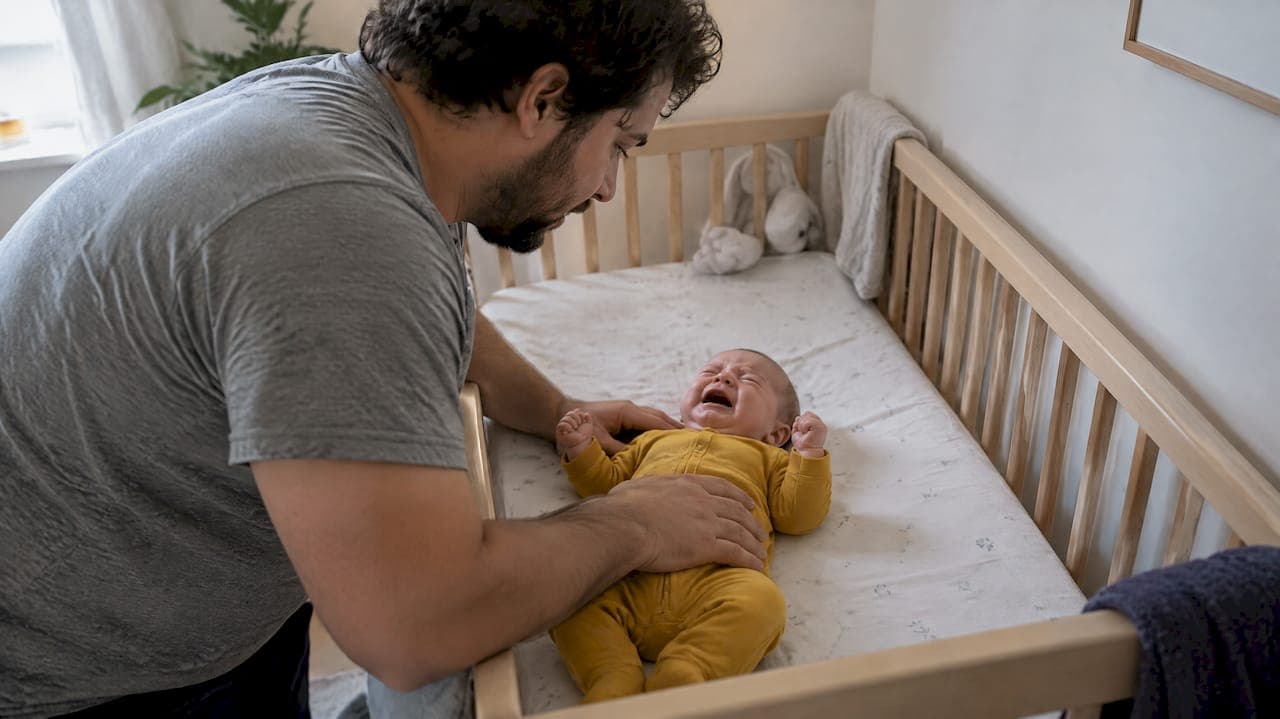
The Period of PURPLE Crying is a normal, temporary developmental phase that many healthy babies go through, marked by increased crying that can feel intense and hard to soothe. It typically starts around 2 weeks of age, peaks near 6 to 8 weeks, and eases by 3 to 5 months, according to Cleveland Clinic. You're not doing anything wrong, and there are real, practical steps that help both your baby and you get through it.
TL;DR:
- Pooled research estimates about 85 minutes of crying daily near the peak at five to six weeks, but averages vary and are not a quota.
- Check hunger, diapers, temperature, and burping first; then try one soothing method for at least five minutes before switching to avoid overstimulation.
- If you feel overwhelmed, place your baby on their back in the crib, step away, and contact a partner, relative, or support line.
- Call a pediatrician promptly for fever in babies under three months, breathing trouble, poor feeding, weight loss, persistent vomiting, bleeding, or extreme lethargy.
- Talk with your pediatrician if crying keeps escalating past three to four months or your baby is not feeding and growing well.
Table of Contents
- What is the period of PURPLE crying?
- When does purple crying start, peak, and fade?
- Breaking down the PURPLE acronym
- How to soothe your baby and manage the hard moments
- When crying signals something more than PURPLE
- Official PURPLE materials and where to find trusted guidance
- Age-tuned tips and tracking what you're seeing
- A note on getting through this stretch
- FAQ
- Sources
What is the period of PURPLE crying?
The Period of PURPLE Crying is an evidence-based education program created to help parents understand why healthy infants cry more during the early months, and to lower the risk of shaking or abusive head trauma (AHT) that can happen when a caregiver reaches a breaking point. Developed and distributed through the National Center on Shaken Baby Syndrome, the program treats increased early crying as a developmental stage rather than a medical problem to fix. That distinction matters for how parents experience this phase. Calling it a disease or a disorder, as the old term "colic" implied, can leave caregivers feeling like something is broken, either in the baby or in their own parenting. Framing it as a predictable, time-limited stage gives families something steadier to hold onto.
Health programs and pediatric offices deliver PURPLE materials in a few different forms, often in stages:
- A short video, usually 10 to 16 minutes, that walks through what to expect and how to cope
- A companion booklet, about 10 pages, covering the same material in print
- A quick-reference reminder card for the refrigerator or diaper bag
- A mobile app that puts the same guidance in your pocket
Providers typically deliver this content in what's called a "dose" model, with Dose 1, usually the video and a conversation, considered the essential piece. Some hospitals and pediatric practices add a second or third dose through follow-up visits or home health programs, according to dontshake.org.
When does purple crying start, peak, and fade?
Crying that fits this pattern tends to follow a fairly consistent arc. It starts around 2 weeks of age, builds to its most intense point between 6 and 8 weeks, and then tapers off by 3 to 5 months, according to Cleveland Clinic. That timeline holds across most healthy, full-term infants, though the exact weeks can shift a little from one baby to the next.

A large meta-analysis pooling dozens of studies found that average daily crying peaks in the first several weeks of life, with some models estimating mean high-period crying lasting about an hour and a half per day near the 5 to 6 week mark, according to research published on PMC. Other samples in the same analysis estimated totals closer to two hours on the hardest days. These are averages drawn from pooled data, not a daily quota your baby has to hit, and plenty of healthy infants cry noticeably more or less than the pooled numbers suggest.
What matters more than hitting an exact number is the overall pattern: crying that rises, peaks, and then declines over months, in a baby who is otherwise feeding and growing well. A baby whose crying keeps escalating past 3 to 4 months, or who shows other concerning signs alongside the crying, falls outside this typical pattern and is worth discussing with a pediatrician.
Breaking down the PURPLE acronym
PURPLE is a memory aid, not a literal description, your baby will not actually turn purple. Each letter names a feature that parents consistently recognize once they know to look for it:
- Peak of crying: crying increases through the early weeks and peaks around 6 to 8 weeks before declining.
- Unexpected: crying can start and stop with no obvious trigger, which is part of what makes it so disorienting.
- Resists soothing: your usual tricks, the ones that worked last week, may simply stop working during a crying spell.
- Pain-like face: a baby in this phase can look like they're in pain even when nothing is physically wrong.
- Long lasting: episodes can stretch on for a long stretch at a time, sometimes hours, even when the baby is healthy.
- Evening: crying clusters disproportionately in the late afternoon and evening hours, often right when caregivers are most worn down.
Clinicians increasingly favor PURPLE over the older label "colic" because colic suggests an illness with a cause to find and a cure to apply. PURPLE instead describes a stage that resolves on its own, which tends to lower the pressure parents put on themselves to fix something that isn't actually broken.
How to soothe your baby and manage the hard moments
When the crying ramps up, a simple sequence helps more than scrambling through every trick you know at once:
- Check the basics first. Rule out hunger, a dirty diaper, an uncomfortable temperature, or a need to burp.
- Pick one soothing strategy and commit to it for at least 5 minutes before switching, since constant changes can overstimulate a baby, according to Healthychildren.
- If it isn't working, rotate calmly to another approach rather than layering several at once.
Techniques worth having ready include swaddling for younger infants, steady white noise, rhythmic motion like rocking or a short walk, offering a pacifier, skin-to-skin contact, or simply moving to a different, quieter room. Watching your baby's sleepy cues before a meltdown even starts can also head off some of the hardest stretches; our guide to newborn sleepy cues walks through what those early signals look like.
Pro Tip: Give one strategy a real chance before trying the next, since rapid switching often adds stimulation instead of calm.
Your own safety and steadiness matter just as much as your baby's. If you feel yourself reaching your limit, it's safe and appropriate to place your baby on their back in the crib, step into another room for a few minutes, and let yourself breathe. Pediatric guidance specifically recommends this safe-place step when crying is pushing a caregiver toward the edge, and recommends leaning on a partner, family member, or support line rather than pushing through alone, according to HealthyChildren.org. Intense crying periods are also linked to higher caregiver stress and a greater risk of postpartum depression, so building in real support, not just surviving solo, is part of caring for your baby well. Our resources for tired parents cover more ways to protect your own wellbeing during this stretch. For more day-to-day coping ideas, this parent guide on constant newborn crying offers additional practical checklists.
When crying signals something more than PURPLE
Most crying in this window is typical, but some signs call for a prompt pediatric evaluation rather than a wait-and-see approach:
- Fever, especially in a baby under 3 months old
- Trouble breathing or unusual breathing patterns
- Poor feeding or refusing to eat
- Weight loss or failure to gain weight as expected
- Persistent vomiting, rather than typical spit-up
- Any bleeding
- Extreme lethargy or difficulty waking the baby
- Unusual or jerky movements
A typical evaluation for excessive crying centers on a detailed history and a physical exam, and most infants who are feeding and growing normally do not need labs or imaging. When crying fits the PURPLE pattern and your baby is otherwise thriving, this phase on its own is not associated with lasting harm. The crying itself is the hard part, not a sign of damage being done.
Official PURPLE materials and where to find trusted guidance
The National Center on Shaken Baby Syndrome's PURPLE page is the primary source for the program's video, booklet, reminder card, and app, and it explains how hospitals and home-visiting programs typically deliver this material through a tiered "dose" approach. Many hospitals hand out Dose 1 before discharge, with pediatricians or public-health nurses reinforcing it at follow-up visits.
A few other resources worth bookmarking:
- Cleveland Clinic's overview of purple crying, covering timing, symptoms, and what's typical
- CDC safe-sleep guidance, which pairs naturally with PURPLE education since a safe crib setup matters most during the exact weeks when crying and caregiver fatigue both peak
- Your pediatrician's office or local public-health program, which can usually provide printed PURPLE materials directly if you weren't sent home with them
A statewide evaluation of PURPLE education found a notable drop in parent calls to nurse advice lines about crying after the program was implemented, even though it didn't show a statistically significant change in state-level abusive head trauma rates in that particular analysis, according to CDC Stacks. That pattern suggests the education helps parents feel more confident handling crying day to day, which is worth something on its own.
Age-tuned tips and tracking what you're seeing
What helps shifts a bit as your baby moves through this phase. In the first few weeks, snug swaddling, steady white noise, and frequent skin-to-skin contact tend to do the most. By 6 to 8 weeks, many babies respond better to upright holds, rhythmic bouncing, or short walks outside, since they're a little more alert and curious about their surroundings.
A simple log can reveal patterns faster than memory alone:
- Note the time crying starts and roughly how long it lasts
- Jot down what you tried and whether it helped at all
- Track feeding and diaper changes alongside the crying entries
- Look for clusters, evening crying is common and expected
Delegating soothing shifts between partners or trusted helpers, and building in a 15-minute regroup window for whoever is off duty, measurably eases the strain of these weeks. If the fatigue or uncertainty is wearing on you more than feels sustainable, a guided consultation can help you build a schedule suited to your baby's actual patterns rather than guesswork. Our newborn sleep schedule guide is a good starting point for building that kind of routine.
A note on getting through this stretch
If you're in the thick of this phase, you are not failing, and this will not last. The crying has a shape: it rises, peaks, and falls, usually resolving by 3 to 5 months, and nothing about surviving it requires you to have all the answers tonight. Pick one safety step, keep your baby in a secure spot if you need a break, and lean on one soothing strategy before switching. Then let someone else take a shift so you can rest. When you want more structured, age-specific support, we are here for exactly that kind of guidance.
— Mauricio Vargas
This article is general information, not a substitute for advice from a qualified doctor. Consult a qualified healthcare professional about your own circumstances before acting on anything here.
FAQ
What is the purple crying period?
The Period of PURPLE Crying is a normal, temporary stage in many healthy infants marked by a predictable rise and fall in crying, not a medical condition. It typically starts around 2 weeks, peaks between 6 and 8 weeks, and eases by 3 to 5 months, according to Cleveland Clinic.
Is purple crying the same thing as colic?
They describe overlapping crying patterns, but PURPLE is the framing clinicians increasingly prefer because it presents the crying as a normal developmental stage rather than a disorder to treat. Colic historically implied an underlying problem, while PURPLE emphasizes that the crying resolves on its own as your baby matures.
How long does the crying typically last each day?
Pooled research estimates average high-period crying around 85 minutes a day near the 5 to 6 week peak, though totals vary by baby and some samples show longer stretches on harder days, according to this meta-analysis. The pattern matters more than hitting any specific number, since healthy babies vary widely around these averages.
When should I call the pediatrician about my baby's crying?
Contact your pediatrician promptly if crying comes with fever, breathing trouble, poor feeding, weight loss, persistent vomiting, bleeding, extreme lethargy, or unusual movements. Typical PURPLE crying in a baby who is feeding and growing well does not need urgent evaluation, but any of those red flags does.
What should I do if I feel overwhelmed by my baby's crying?
Place your baby safely on their back in the crib, step into another room, and give yourself a few minutes to breathe before returning. Pediatric guidance recommends this safe-place step along with reaching out to a partner, family member, or support line, since intense crying periods raise caregiver stress and the risk of postpartum depression, according to HealthyChildren.org.
Sources
- PURPLE Crying - National Center on Shaken Baby Syndrome
- Purple Crying: Symptoms, Causes & Treatment - Cleveland Clinic
- Meta-analysis of infant cry durations (PMC9541248)
- Evaluation of a statewide AHT prevention program (CDC stacks)