
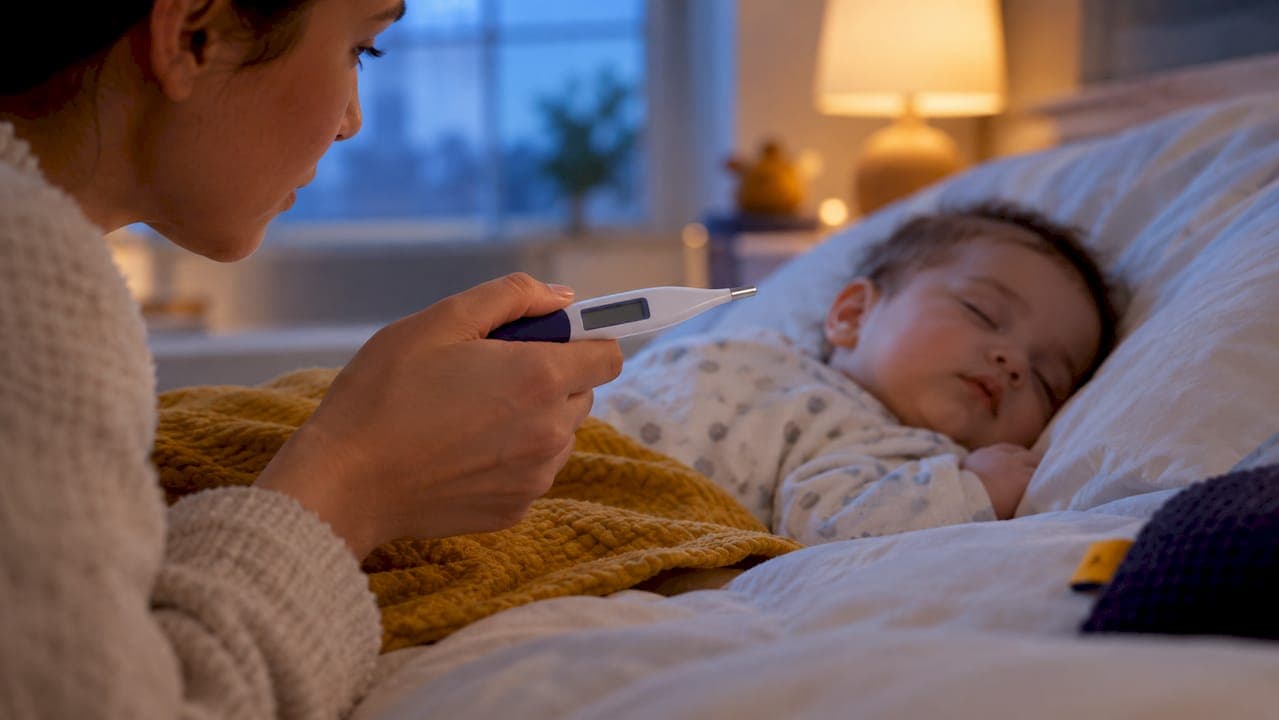
Yes, you can usually let a sick baby sleep, as long as breathing looks comfortable and they wake when you rouse them. Keep every sleep on the back, on a firm, flat surface, with nothing loose in the crib. Wake them and call the pediatrician if you notice labored breathing, bluish lips, extreme drowsiness, or far fewer wet diapers than usual.
TL;DR:
- A sick baby can usually sleep longer, but caregivers should monitor for labored breathing, bluish lips, or decreased wet diapers to decide if they need medical attention.
- Safe sleep rules remain the same during illness: place the baby on their back on a firm, flat mattress and avoid loose bedding or inclined sleepers at all times.
- If a baby shows signs like difficulty breathing, no urine for over 8 hours, or a high fever in infants under 3 months, urgent medical evaluation is necessary.
- Congestion relief techniques like saline drops and humidifiers can improve sleep comfort, but overfeeding or over-suctioning can cause irritation and should be limited.
- Short pauses in sleep training during illness are okay; resume routine after 48 to 72 hours of steady improvement using consistent cues and gentle reassurance.
Table of Contents
- Safe-sleep rules that never change when your baby is sick
- When to let them sleep longer and when to wake, feed, or call the doctor
- Practical measures to help a sick baby sleep more comfortably
- Sleep training while sick: when to pause, how to adapt, and how to resume
- Caregiver safety and fatigue: avoiding risky sleep situations when you're exhausted
- Mellow Kids expert guidance: stage-tailored tips and when to get personalized support
- Signs of dehydration during illness affecting sleep
- Advice on maintaining hydration and nutrition during sleep time when baby is sick
- What this stage of parenting actually asks of you
- How Mellow Kids can help you through illness-related sleep disruption
- Sources
- FAQ
Safe-sleep rules that never change when your baby is sick
Illness changes a lot about your days and nights together, but it does not change the basics of safe sleep. The AAP's safe sleep recommendations apply just as firmly when your baby has a stuffy nose or a fever as they do on any ordinary night. It can feel tempting to prop baby up, add an extra blanket, or let them doze in whatever spot seems most comfortable in the moment. Resist that instinct: comfort and safety are not the same thing, and the second one always wins.
A few checks keep you grounded when you are tired and worried:
- Place baby on their back on a firm, flat mattress for every nap and every night sleep, no exceptions for illness.
- Clear the crib of pillows, blankets, bumpers, toys, and positioners, and skip inclined sleepers or products flagged by the CPSC.
- Move baby out of the car seat, swing, or carrier and onto a flat sleep surface as soon as you reasonably can.
- Room-share instead of bed-sharing, and use a wearable blanket instead of loose covers to keep them warm.
Soft, cozy setups feel protective, but they raise real risk. Sleep on a couch or another soft surface carries up to 67 times the risk of a sleep-related infant death compared with a proper sleep space, a gap that does not shrink because your baby is congested or feverish. Our guide to safe sleep for newborns walks through crib setup and swaddling limits in more depth if you want a refresher before a rough night.
When to let them sleep longer and when to wake, feed, or call the doctor
There is no fixed hour limit on a sick baby's nap or night sleep. What matters more is whether they are feeding, staying hydrated, and easy to rouse when you check on them, according to guidance from AAPNews on treating infant congestion. A baby who nurses or bottle-feeds close to their usual amount and wakes normally between stretches is likely riding out a common illness safely.
Watch for these signals that mean it is time to wake baby and call for medical advice:
- Breathing looks labored, fast, or noisy, or lips and face take on a bluish tone.
- Baby is hard to rouse even with gentle handling and a diaper change.
- Wet diapers drop noticeably, or there is no urine for more than 8 hours.
- Milk intake falls below roughly half of what they usually take in a day.
- Baby is under 3 months old with a rectal temperature of 100.4°F (38°C) or higher, which calls for immediate evaluation rather than a wait-and-see approach.
During a long nap, a light-touch monitoring routine helps without waking baby unnecessarily: a quiet visual check every so often, a mental note of diaper counts across the day, and attention to how eagerly they feed when they do wake. None of that requires a timer. It requires paying attention to the baby in front of you rather than the clock on the wall.
Practical measures to help a sick baby sleep more comfortably
Congestion is usually the biggest obstacle between a sick baby and decent sleep, and a short routine before naps and bedtime can make a real difference. Saline drops followed by gentle bulb suction loosen mucus most effectively when timed about 10 to 15 minutes before sleep or a feed, giving the drops time to work without overdoing the suction, which can irritate a small nose if repeated too often.
A cool-mist humidifier running near the crib, or a few minutes sitting in a steamy bathroom before bed, can also ease breathing. Clean the humidifier daily and keep it out of baby's reach so it never becomes a bump-and-tip hazard.
- Offer the usual milk more frequently in smaller amounts rather than pushing long wake-ups to finish a full feed.
- For babies 6 months and older, follow your pediatrician's guidance on small amounts of water alongside milk.
- Skip over-the-counter cough and cold medicines for infants, and use fever reducers only at the dose and age your pediatrician recommends.
- Keep the sleep environment dim and quiet, and swaddle if your baby is still swaddle-appropriate, to lower stimulation without adding anything loose to the crib.
Dressing baby appropriately for the room also matters more than it seems when they are already running warm from a fever. Our notes on room temperature and sleepwear cover how to avoid overheating during a stretch of illness.
Pro Tip: Set out saline drops, a clean bulb syringe, and the thermometer on the nightstand before bed, so a 2 a.m. coughing fit does not turn into a scramble through dark drawers.

Sleep training while sick: when to pause, how to adapt, and how to resume
A short pause in sleep training rarely undoes progress, and it is almost always the right call when illness interferes with feeding, breathing, or a baby's need for extra comfort.
- Pause the plan as soon as illness starts affecting feeds or breathing, and expect to offer more contact and reassurance than usual.
- Adapt rather than abandon: keep the same bedtime cues, but accept contact naps or extra rocking as a temporary bridge, not a new habit.
- Resume the previous routine once your baby has shown roughly 48 to 72 hours of steady improvement.
- Restart with a simple, consistent script, the same words and same steps each night, and expect a few nights of mild pushback before things settle.
Recognizable sleepy cues help you time that restart well. Our piece on newborn sleepy cues is a useful reference for catching sleep windows again once your baby feels more like themselves.
Caregiver safety and fatigue: avoiding risky sleep situations when you're exhausted
Sick nights wear parents down fast, and exhaustion itself becomes a safety issue. Feeding or napping with your baby on a sofa or armchair is genuinely dangerous, even for a few minutes, because it is easy to fall asleep without meaning to.
- Never feed or nap with baby on a couch or armchair; keep a cleared bassinet or crib nearby for immediate placement.
- If you think you might doze off during a feed, set an alarm, ask someone to sit with you, or stay upright in a firm chair built for feeding.
- Prepare the sleep space before bedtime, crib cleared, wearable blanket ready, supplies within reach, so nothing unsafe ends up in the crib out of desperation at 3 a.m.
- Lean on a partner, family member, or short-term helper when sleep deprivation starts to cloud your judgment.
HealthyChildren.org's guidance for sleep-deprived parents recommends room-sharing for the first 6 months specifically because it reduces the temptation to bring baby into an adult bed for a "quick" feed.
Pro Tip: Text a partner or friend "I'm exhausted, can you take the next feed" before you're desperate. Asking early is easier than asking at your limit.
Mellow Kids expert guidance: stage-tailored tips and when to get personalized support
Illness looks different at every stage. Newborns need frequent feeds and may tolerate brief, supervised contact naps while you stay awake and alert. Babies from 3 to 6 months usually do best when you keep familiar cues in place but allow extra comfort without guilt. From 6 months to 2 years, short-term flexibility with a clear plan to restart the usual routine tends to work better than either rigid consistency or an open-ended free-for-all.
A few situations are worth a closer look with support:
- Feeding stays poor for more than a day despite your usual tricks.
- Breathing trouble recurs even after congestion relief measures.
- You feel overwhelmed and unsure whether what you're seeing is normal.
Our sleep challenges topic hub covers regressions and disruptions in more depth, and Mauricio Vargas draws on that same evidence-based, stage-specific approach throughout this piece.
Signs of dehydration during illness affecting sleep
Dehydration often shows up in sleep before it shows up anywhere else, because a baby who is not taking in enough fluid tends to sleep more heavily and wake less often to feed, which can quietly deepen the problem. A dry mouth, absence of tears when crying, and a noticeable drop in wet diapers are the clearest early signs, according to AAPNews's guidance on infant congestion and hydration.
A baby who goes more than 8 hours without a wet diaper, or whose milk intake falls under about half their usual amount, needs a call to the pediatrician rather than a wait-and-see nap. A soft spot on the head that looks sunken, unusually cool hands and feet, or skin that stays tented when gently pinched are also signs worth acting on quickly.

It helps to think of sleep and hydration as connected rather than separate concerns during illness. A baby who sleeps a long stretch but wakes eager to feed and produces a normal wet diaper afterward is likely fine. A baby who sleeps just as long but wakes listless, feeds poorly, and has a dry diaper needs attention sooner rather than later. The sleep itself is not the warning sign, the pattern around it is.
Advice on maintaining hydration and nutrition during sleep time when baby is sick
Keeping fluids and calories steady while your baby sleeps more than usual takes a light touch rather than a rigid schedule. Offering the breast or bottle every time your baby stirs, rather than waiting for a full wake-up, often gets more fluid in without a fight. Short, frequent feeds tend to go down easier than one long session when a baby feels congested or feverish.
For babies 6 months and older who are already eating solids, it is fine to offer small amounts of water alongside milk if your pediatrician has already introduced that step, though milk should remain the main source of hydration and calories at this age. Avoid introducing new foods during illness, since a familiar diet is easier on a sensitive stomach and easier for you to track.
If your baby is nursing, dozing off mid-feed happens more with illness, and gently rousing them with a diaper change or a change in position can help them finish enough to matter. Bottle-fed babies may take smaller volumes more often rather than their usual full amount, which is a normal adjustment as long as the total across the day stays reasonably close to typical. Track the number of wet diapers over 24 hours as your simplest at-home measure of whether intake is keeping pace.
What this stage of parenting actually asks of you
Watching a sick baby sleep more heavily than usual is unsettling, even when everything checks out fine. It helps to remember that short-term sleep disruption during illness is expected, not a sign you are doing something wrong. The goal during a rough stretch is not a perfect schedule, it is a safe surface, a watchful eye, and steady feeds until your baby feels like themselves again. When you are unsure, personalized guidance can settle the uncertainty faster than another search.
— Mauricio Vargas
How Mellow Kids can help you through illness-related sleep disruption
Sorting out whether a rough night is ordinary illness or something that needs closer attention gets easier with a second set of eyes on your baby's specific pattern. Mellow Kids' Personalized Plan starts with an assessment of your baby's age, feeding pattern, and sleep history, then builds targeted strategies for both day and night with follow-up as things change.

If you want a faster answer to one specific question, a 45-minute consultation gives you direct, individualized guidance without committing to a full plan. Either option fits best once home care feels shaky or you are past a day or two of poor feeding without improvement; for a straightforward cold with steady feeds, the practical steps above are usually enough. Visit the personal sleep support page to see which option matches where you are right now.
Sources
- AAP: Safe sleep recommendations
- AAPNews: Clearing up congestion — options to treat infants
- Healthychildren
This article is general information, not a substitute for advice from a qualified doctor. Consult a qualified healthcare professional about your own circumstances before acting on anything here.
FAQ
Is it okay to let a sick baby sleep?
Yes, it is generally fine to let a sick baby sleep as long as they are breathing comfortably and wake up when you rouse them for a check or a feed. Always keep them on their back on a firm, flat surface, following the AAP's safe sleep guidance, even during illness.
How long should I let my baby sleep if they are sick?
There is no set maximum, extra sleep during illness is common and often helpful for recovery. Focus on feeding frequency, wet diaper counts, and how easily they rouse rather than watching the clock, per AAPNews guidance on infant illness.
What to do if a sick baby won't sleep?
Try a short congestion-relief routine with saline drops and gentle suction about 10 to 15 minutes before the sleep attempt, along with a cool-mist humidifier in the room. Keep the environment dim and quiet, and offer a feed if it has been a while, since discomfort or hunger often keeps a sick baby from settling.
How long is too long for a baby to sleep when sick?
A long stretch of sleep is not itself the concern. It becomes worth a call to the pediatrician when it comes with signs like very few wet diapers, no urine for more than 8 hours, milk intake under about half the usual amount, or trouble waking your baby at all, as outlined by AAPNews.