
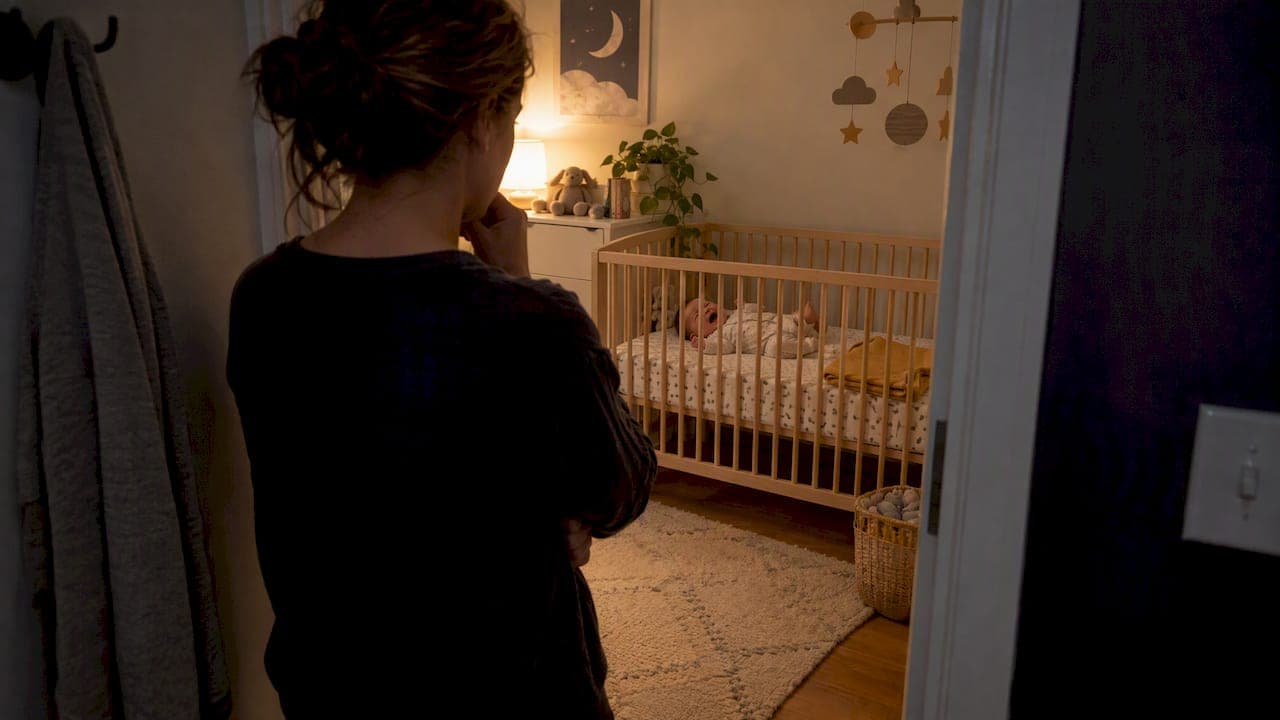
If your baby's crying has suddenly gotten worse a few nights into sleep training, you're likely seeing an extinction burst, a temporary spike that often shows up before things improve. First, rule out hunger, illness, or a diaper issue. Once you've confirmed your baby is safe, stay consistent with your plan. This phase is usually short-lived.
TL;DR:
- Primary bursts often peak during the first few nights, while secondary bursts may return on nights four through seven, even after early improvement.
- Before following the plan, check hunger, a dirty diaper, fever, vomiting, poor feeding, unusual drowsiness, hazards, or a cry that differs from usual.
- Changing course after prolonged crying can teach a baby that stronger, longer protests eventually bring comfort; choose a sustainable approach and keep responses consistent.
- Families facing stress can consider camping out, faded bedtime, or scheduled reassurance; one small trial linked responsive care to fewer wakings and lower maternal stress.
Table of Contents
- What is an extinction burst and how is it different from other crying?
- Signs, timing, and what to expect night by night
- Why extinction bursts happen: the behavior science made simple
- How to respond during an extinction burst, step by step
- Common mistakes that make a burst last longer
- Gentler alternatives if extinction feels too hard
- A note from Mauricio Vargas on supporting families through this stage
- Our take: preparation matters more than the method
- Get guided support for your sleep-training week
- FAQ
- Sources
What is an extinction burst and how is it different from other crying?
An extinction burst is a behavioral response: when a behavior that used to work, like crying to get picked up at bedtime, stops producing that result, the behavior often gets louder, longer, or more creative before it fades. We see this pattern across many kinds of learning, not just sleep. A clinical review of extinction-based sleep interventions describes it as a near-universal part of the process when parents remove a previously reliable comfort response.
There are two common patterns worth knowing. A primary burst tends to show up in the first few nights of a new routine. A secondary burst can appear later, often between nights four and seven, sometimes after parents feel the hard part is over. Both are expected, not signs that the approach has failed.
What makes this tricky for tired parents is telling a burst apart from other causes of nighttime distress. A few distinctions help:
- Extinction burst crying tends to follow a known pattern tied to the new routine and often escalates before it drops off.
- Developmental regressions (like the one often seen around four months) usually bring more frequent night wakings alongside new skills or changes in sleep cycles, not just louder protest at bedtime.
- Illness or unmet needs come with other signals: fever, poor feeding, unusual lethargy, or a cry that sounds different from your baby's usual protest.
Context matters more than volume alone. A baby who is otherwise eating, playing, and growing normally during the day, but protesting hard at bedtime, is showing behavior consistent with an extinction burst rather than something medical.
Signs, timing, and what to expect night by night
Most parents want a timeline, and the research gives us a reasonably consistent one. According to the same review of extinction-based interventions, primary extinction bursts often happen in the first few nights, while secondary bursts can occur between nights four and seven, frequently right when parents start to relax their consistency after early signs of progress.
Signs this is likely an extinction burst:
- Crying sessions that last longer or feel more intense than the night before.
- New protest behaviors: standing in the crib, calling out specific words, throwing toys, or trying new tactics to get a response.
- The escalation follows the pattern of your sleep routine rather than happening randomly throughout the day.
Red flags that call for a different response:
- Fever, vomiting, or signs of pain.
- Poor feeding or unusual drowsiness during the day.
- A cry that sounds distinctly different, weaker, or more alarming than your baby's typical cry.
Here's a general night-by-night expectation for the first week of a consistent extinction-based plan:
- Night 1: Crying is often the most intense of the week as your baby tests whether the old response still works.
- Night 2: Crying may stay similar or dip slightly; some babies protest longer out of frustration.
- Night 3: Many families see a noticeable drop in crying duration.
- Night 4: A secondary burst can appear here, sometimes catching parents off guard after night 3's improvement.
- Night 5: If a secondary burst occurred, it typically starts to ease.
- Night 6: Crying duration is usually shorter than night 1 by a wide margin.
- Night 7: Most families report settling times close to the new routine's goal.
Quick safety checklist before resuming your plan: confirm your baby isn't hungry, hasn't got a dirty diaper, isn't too hot or cold, isn't caught on anything in the crib, and shows no signs of illness. Once those are checked, safe sleep practices like a firm, bare crib and back sleeping remain the foundation no matter which method you choose.
Why extinction bursts happen: the behavior science made simple
Think of your baby's crying at bedtime as a request that has worked before: cry, get picked up, feel better. That's reinforcement. When you stop responding the way you used to, you're removing the reinforcement the behavior depended on. Extinction is simply the process of a behavior fading once it stops being rewarded, but before it fades, it often intensifies. That intensification is the burst itself.
- Reinforcement is anything that makes a behavior more likely to happen again, like being picked up after crying.
- Extinction happens when that reinforcement stops being available.
- Extinction bursts are the temporary surge in the behavior's frequency or intensity that often appears right after reinforcement is withdrawn.
This is also where inconsistency does the most damage. If you hold firm for twenty minutes and then pick your baby up because the crying became unbearable, you haven't stopped the behavior, you've taught your baby that crying longer and harder eventually works. That's intermittent reinforcement, and it's a well-documented way to make a behavior more persistent, not less.
Researchers studying this pattern have proposed the temporally weighted matching law as one explanation for why some bursts are worse than others. The idea is that a larger, more abrupt drop in reinforcement at the start of treatment tends to predict a larger burst, while approaches that preserve some reassurance, like brief check-ins, may soften the spike.
A larger decrease in reinforcement at treatment start tends to correspond to a larger extinction burst, while maintaining some reinforcement can mitigate this effect.
That single idea explains a lot about why graduated methods sometimes feel more tolerable for families than going cold turkey on all responses.
How to respond during an extinction burst, step by step
The nights during a burst are when a plan either holds or falls apart. Having a clear sequence to follow takes the guesswork out of tired, middle-of-the-night decisions.
- Run your safety check first, every time. Confirm no fever, no feeding needs, no choking hazard, and no unusual behavior before applying any sleep-training response.
- If you're using extinction or graduated extinction, stick to your timed check-in schedule. Keep visits brief, keep the lights low, and avoid feeding or picking up your baby unless there's a medical reason to.
- If you're using a responsive or camping-out approach, offer soothing that scaffolds self-settling rather than fully resolving the protest, like a hand on the back or a few quiet words, then stepping back.
- Set a visible timer for your check-in intervals so you're not relying on guesswork or watching the clock obsessively.
- Prep the room before bedtime: white noise on, blackout curtains closed, and a consistent pre-sleep routine so your baby's cues line up with the plan.
- Rotate nights with a partner where possible. Burst nights are exhausting, and trading off protects your own sleep and patience.
- Know your pause criteria in advance: a specific, limited list such as a fever, vomiting, or a cry that sounds different from the usual protest. Decide this before the burst starts, not during it.
Pro Tip: Write your check-in schedule and pause criteria on a sticky note by the crib. Decisions made in advance are much easier to follow at 2 AM than decisions made in the moment.
For families using a graduated approach, specific guidance on how long to let a baby cry during check-ins can help you set intervals that match your comfort level while still staying consistent night to night.

Common mistakes that make a burst last longer
Most delays we hear about come down to a handful of avoidable patterns.
- Waiting until the crying peaks, then comforting. This teaches your baby that escalating further eventually gets a response, which strengthens the very behavior you're trying to reduce.
- Changing the plan mid-week because night four felt worse than night one. Night four often is worse. That's the secondary burst, not a sign of failure.
- One parent holding firm while the other caves. Mixed responses on different nights create the same intermittent reinforcement problem as caving within a single night.
- Setting an unrealistic plan you can't sustain, like committing to zero contact for a full week when you know you'll break by night three. A smaller, honest commitment you can actually keep beats an ambitious one you abandon.
Picture two versions of night four. In one, a parent checks the clock, sees the crying has gone on ten minutes longer than planned, and picks the baby up out of panic. In the other, a parent checks for safety, confirms nothing is wrong, and sits on the stairs with a timer until the scheduled check-in. The second version is harder in the moment and far more likely to shorten the burst overall.
Gentler alternatives if extinction feels too hard
Extinction-based methods aren't the only evidence-backed option, and choosing a different path doesn't mean giving up on better sleep.
- Camping out involves staying in the room, gradually moving farther from the crib over several nights, offering presence without fully resolving every protest.
- Faded bedtime shifts the bedtime later to align with when your baby is naturally more tired, reducing the fight at lights-out.
- Positive bedtime routines build predictable, calming steps before sleep so your baby's body learns to expect rest.
- Controlled comforting sits between extinction and fully responsive care, offering brief, scheduled reassurance without picking the baby up each time.
A small pilot randomized controlled trial comparing a responsive method with controlled crying found the responsive group had fewer overnight wakings and lower maternal stress in that sample, though cortisol differences between groups weren't significant. Larger studies are still needed, but the result suggests responsive approaches can be a reasonable choice, not a lesser one.
Alternatives tend to make the most sense when parental stress is already high, when your baby seems especially sensitive to separation, or when your child is younger than the age typically recommended for extinction methods. If you switch approaches, do it between full nights rather than mid-protest, and keep the rest of the routine (bath, book, lights out) the same so your baby isn't relearning everything at once. Our guide to how early response styles affect sleep and development goes deeper into how these choices play out over time.
A note from Mauricio Vargas on supporting families through this stage
Extinction bursts are one of the most common reasons families abandon a sleep plan that was actually working. We built our approach around that reality: rather than handing parents a single rigid method and leaving them to interpret a hard night four on their own, we prepare them for what's coming before it happens.
Our age-by-age sleep guidance reflects how readiness and expected responses shift as your baby grows, because what works for a six-month-old rarely looks the same at fourteen months. When families come to us mid-burst, feeling like the plan has failed, a short conversation about what night four typically looks like is often enough to help them hold steady instead of switching strategies out of panic. That kind of preparation, more than any single technique, is what tends to separate families who stick with a plan from those who give up on night three.
Our take: preparation matters more than the method
Most of the advice on this topic focuses on which method to pick: extinction, graduated, responsive. That debate matters less than it's made out to be. The research we've looked at suggests multiple approaches can work, and the real predictor of success is whether parents know what to expect and can stay consistent once they've chosen a path.
The conventional wisdom oversells the idea of a single correct method and undersells the cost of switching plans mid-week out of panic. A secondary burst on night four isn't a verdict on your choice, it's a predictable part of the process, and families who know that in advance are far less likely to abandon a plan that was already working.
If you take one thing from this, let it be this: decide your approach and your pause criteria before the hard nights start, not during them. Preparation beats improvisation almost every time.
— Mauricio Vargas
Get guided support for your sleep-training week
Reading about extinction bursts is one thing. Living through night four at 2 AM, unsure whether to hold the line, is another. Our Personalized Plan gives you an age-appropriate strategy built around your child's stage, so you're not guessing which method fits a six-month-old versus a toddler. If you want support during a tough stretch, a consultation can help you talk through what you're seeing and adjust your check-in timing, and combined options are available for families who want comprehensive help from the start.

Start with a Personalized Plan built around your baby's age and stage, and get the kind of preparation that makes a hard night four feel expected instead of alarming.
FAQ
What is the cry-it-out sleep method?
Cry-it-out, also called unmodified extinction, means putting your baby down awake and not returning until morning or a scheduled wake time, letting them settle without intervention. The Cleveland Clinic notes that graduated extinction, which includes brief timed check-ins, is a common and often more comfortable variation for many families.
What is an extinction burst?
An extinction burst is a temporary increase in crying, frequency, or intensity that often happens when a baby's previous bedtime response, like being picked up, stops working. It's a well-documented pattern in behavioral interventions, not a sign that the approach has failed.
What are the signs of the 4-month sleep regression?
The 4-month regression typically shows up as more frequent night wakings tied to a shift in sleep cycle maturity, rather than a single bedtime protest pattern. For a closer look at coping strategies specific to this stage, this parent-focused explainer on the 4-month regression covers practical short-term approaches.
Is there scientific evidence that sleep training is bad?
Current evidence does not show sleep training causes lasting harm to attachment or emotional development. A randomized controlled trial published in Pediatrics found sleep benefits from graduated extinction and bedtime fading with no adverse long-term attachment outcomes in that trial, though samples were small and more research continues.
How long does an extinction burst usually last?
Primary bursts often ease within the first few nights, while secondary bursts can appear between nights four and seven before settling down. Most families see crying duration shorten significantly by the end of the first week, according to the extinction intervention literature.
Sources
- Discussion of Extinction-Based Behavioral Sleep Interventions for Young Children and Reasons Why Parents May Find Them Difficult
- What Is the Cry-It-Out Method of Sleep Training? (Cleveland Clinic)
- Behavioral Interventions for Infant Sleep Problems: A Randomized Controlled Trial | Pediatrics