
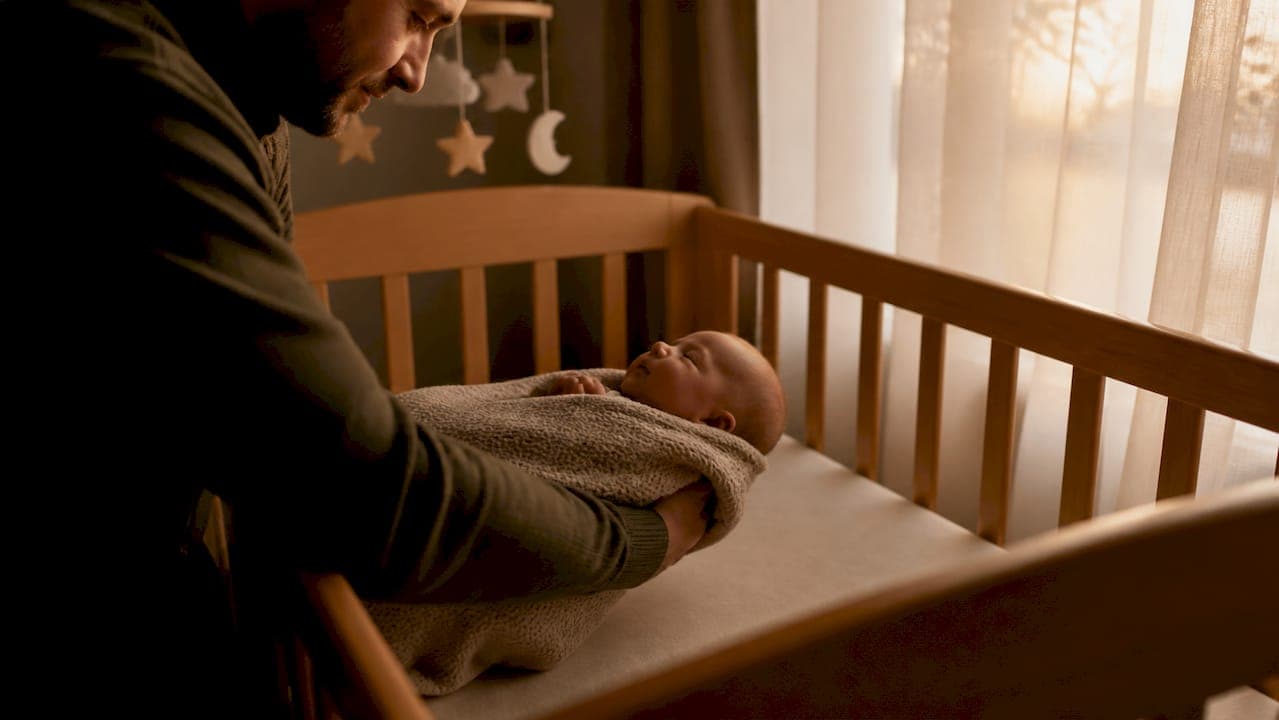
Gentle sleep training teaches your baby to fall asleep with gradually reduced parental support, rather than leaving her to cry it out alone. It works. Research on responsive approaches shows measurable drops in night waking, though the comparative evidence also shows these methods usually take longer than extinction-based training and ask more of you in the moment.
Here's what that trade-off looks like in practice:
- The upside: you stay physically present, which many parents find easier on their own nervous system, not just the baby's.
- The trade-off: progress typically takes a few weeks, not just a couple of nights.
- The support you'll want: pediatric guidance from sources like Healthychildren and Mayo Clinic for the safety basics, and a stage-based tool like Mellow for the night-to-night decisions.
If you've been searching for a version of sleep training that doesn't ask you to close the door and wait, you're not looking for a shortcut. You're looking for a method that fits how you already parent.
Key Takeaways
Gentle sleep training reduces night wakings for many families, but it typically takes one to three weeks and requires more active parental presence than cry-it-out methods.
| Point | Details |
|---|---|
| Pick one method and commit | Give any single gentle method at least a full week before switching or judging results. |
| Safety comes first | Firm surface, back sleeping, and room-sharing must be in place before training begins. |
| Match method to temperament | Sensitive babies often do better with the chair method; easily soothed babies respond faster to pick-up, put-down. |
| Pause during disruptions | Illness, teething, and developmental leaps are valid reasons to pause and resume later. |
| Use stage-based support | Mellow adjusts nightly guidance to your baby's age and progress rather than offering a fixed script. |
Table of Contents
- What Is Gentle Sleep Training, Exactly?
- How Do You Actually Do Gentle Sleep Training?
- Which Gentle Method Works Fastest?
- What Safety Rules Apply During Gentle Sleep Training?
- When Is a Baby Ready for Gentle Sleep Training?
- What Does the Research Actually Say About No-Cry Methods?
- Why Gentle Sleep Training Asks More of You Than It Advertises
- How Mellow Supports Gentle Sleep Training Night by Night
- Frequently Asked Questions
- Sources
What Is Gentle Sleep Training, Exactly?
Gentle sleep training (also called no-cry or low-cry sleep training) rests on four mechanics: gradual fading of parental help, sustained physical or verbal presence, a consistent pre-sleep routine, and a safe, predictable sleep environment. Instead of removing support all at once, you remove it in small, deliberate increments, giving your baby repeated chances to practice settling with less help each time.
That's a real departure from graduated extinction, often called the Ferber method or "cry it out." Both approaches share a goal: teaching a baby to fall asleep independently. They differ sharply in method.
- Extinction-based methods put your baby down awake and check in at timed intervals, allowing crying to run its course between checks.
- Gentle methods keep you in the room, or returning frequently, actively soothing while slowly reducing how much you intervene.
One misconception trips up a lot of parents before they even start: "no-cry" doesn't mean zero tears. It means you're not leaving your baby to cry alone for extended stretches. Babies still protest change, gentle or not. What changes is who's in the room while they work through it, and how gradually the support gets pulled back. A peer-reviewed comparison of approaches found both extinction and responsive methods reduced night wakings, with responsive groups sometimes reporting lower maternal stress. Neither one is a magic fix; they're different roads to the same destination.
How Do You Actually Do Gentle Sleep Training?
Each method below follows the same underlying logic: reduce your involvement in stages, not all at once. Pick one and commit for at least a week before judging whether it's working.
Pick-up, put-down
This method suits babies who calm quickly with touch but don't need to be held for the full settle.
- Put your baby down drowsy but still awake.
- If she cries, pick her up and soothe until calm, not asleep.
- Put her back down the moment she settles.
- Repeat as many times as needed, resisting the urge to let her fall asleep in your arms.
It's repetitive and physically demanding the first few nights. Parents who stick with it often report faster wins with younger babies (under six months) than with older, more mobile ones who protest being put down harder.
Chair method (gradual retreat)
This is the slowest-burning of the group, and often the gentlest on both baby and parent nerves.
- Nights 1 to 3: sit in a chair right next to the crib until your baby falls asleep. No picking up; verbal or hand-on-back reassurance only.
- Nights 4 to 6: move the chair halfway to the door.
- Nights 7 to 9: move the chair to the doorway.
- Nights 10 onward: sit just outside the door, visible if needed, until your baby no longer looks for you.
Practitioners who work with sensitive or intense babies often favor this one specifically because you can co-regulate the instant distress spikes, which tends to reduce the odds you'll abandon the plan halfway through.
Fading
Fading works inside your existing bedtime routine rather than replacing it, which makes it the easiest method to layer onto a schedule you already have.
- Shorten the final feeding-to-sleep window by a few minutes every three to four nights.
- Swap rocking-to-sleep for rocking-to-drowsy, then holding-until-drowsy, then patting in the crib.
- Reduce white noise volume or dim lights slightly further each week as an environmental fade, alongside the behavioral one.
Scheduled awakenings
This one is different in aim: it targets a baby who wakes at predictable times overnight, not one who struggles to fall asleep initially.
- Track wake times for three to five nights to find the pattern.
- Wake your baby gently 15 to 30 minutes before her typical waking time.
- Resettle her the way you normally would.
- Space these preemptive wakings farther apart every few nights until they're no longer needed.
For naps, compress the timeline. Home naps can use the same chair or fading approach in miniature, just over days rather than weeks. During illness or travel, most sleep consultants and Mellow's own regression guidance recommend pausing the method entirely rather than pushing through, then resuming where you left off once things stabilize.
Which Gentle Method Works Fastest?
No single method wins across the board. Fit depends heavily on your baby's temperament and your own tolerance for repetition versus stillness.
- Pick-up, put-down: high parent effort, low to moderate crying, often shows progress within a couple of weeks, best fit for younger, easily soothed babies.
- Chair method: moderate to high parent effort, low crying, generally requires several weeks, best fit for sensitive or intense temperaments who need visible reassurance.
- Fading: low to moderate parent effort, low crying, changes are incremental and may take several weeks, best fit for babies nearing independent sleep.
- Scheduled awakenings: moderate parent effort, minimal crying, often takes a couple of weeks, best fit specifically for early or predictable night waking rather than bedtime resistance.
Gentle approaches consistently demand more active parental presence and emotional stamina than extinction methods, but that same presence is often why parents report lower stress once they're a couple of weeks in. If you see zero movement after three weeks of consistent effort, that's a signal to switch methods rather than abandon gentle training altogether. Some babies respond better to stillness (chair method) than repetition (pick-up, put-down), and you often won't know which until you've tried one for a real stretch.
What Safety Rules Apply During Gentle Sleep Training?
Safe sleep isn't a separate conversation from sleep training. It's the floor everything else stands on.
- Firm, flat sleep surface with a fitted sheet only, no pillows, blankets, or crib bumpers.
- Baby placed on her back for every sleep, every time, per AAP guidance.
- Room-sharing (not bed-sharing) for at least the first six months is the AAP's recommendation.
- Room temperature comfortable for a lightly dressed adult, no overheating.
- Consistent pre-sleep cues: dim lights, white noise, the same two or three steps every single night.
Pro Tip: Keep your bedtime routine under 20 minutes. Longer routines give an overtired baby more opportunities to get a second wind, which undoes the drowsy state you're trying to protect.
Pause training during illness, teething flare-ups, or right after a big developmental leap like crawling or standing. Pushing through discomfort teaches frustration, not sleep skills. If night wakings persist beyond a few weeks of consistent gentle effort, or if you notice breathing changes, snoring, or extreme resistance to lying flat, talk with your pediatrician rather than pushing another method.
When Is a Baby Ready for Gentle Sleep Training?
Most pediatric sources point to roughly four to six months as the window when gentle sleep training tends to click, largely because that's when many babies can start consolidating nighttime calories into daytime feeds. Starting earlier isn't dangerous, but it's often less effective since younger babies genuinely need overnight feeds.
Look for these readiness signs rather than relying on age alone:
- Wake windows have stretched to roughly two hours or longer between naps.
- Feeding volumes during the day have grown noticeably, easing overnight hunger.
- Your baby can self-soothe briefly, even just a minute of fussing before resettling.
Preterm infants and babies with reflux, feeding difficulties, or other medical concerns need a pediatrician's input before starting any structured plan, since readiness looks different for medically complex babies. If you're transitioning out of bed-sharing or co-sleeping into a crib, expect that shift to add a week or two onto your timeline.
What Does the Research Actually Say About No-Cry Methods?
That gap matters. A randomized trial and subsequent reviews confirm graduated extinction reliably reduces night wakings, and responsive alternatives show similar improvements in comparative studies, sometimes with lower reported maternal stress. Neither approach has been shown to cause long-term harm to attachment or emotional development.
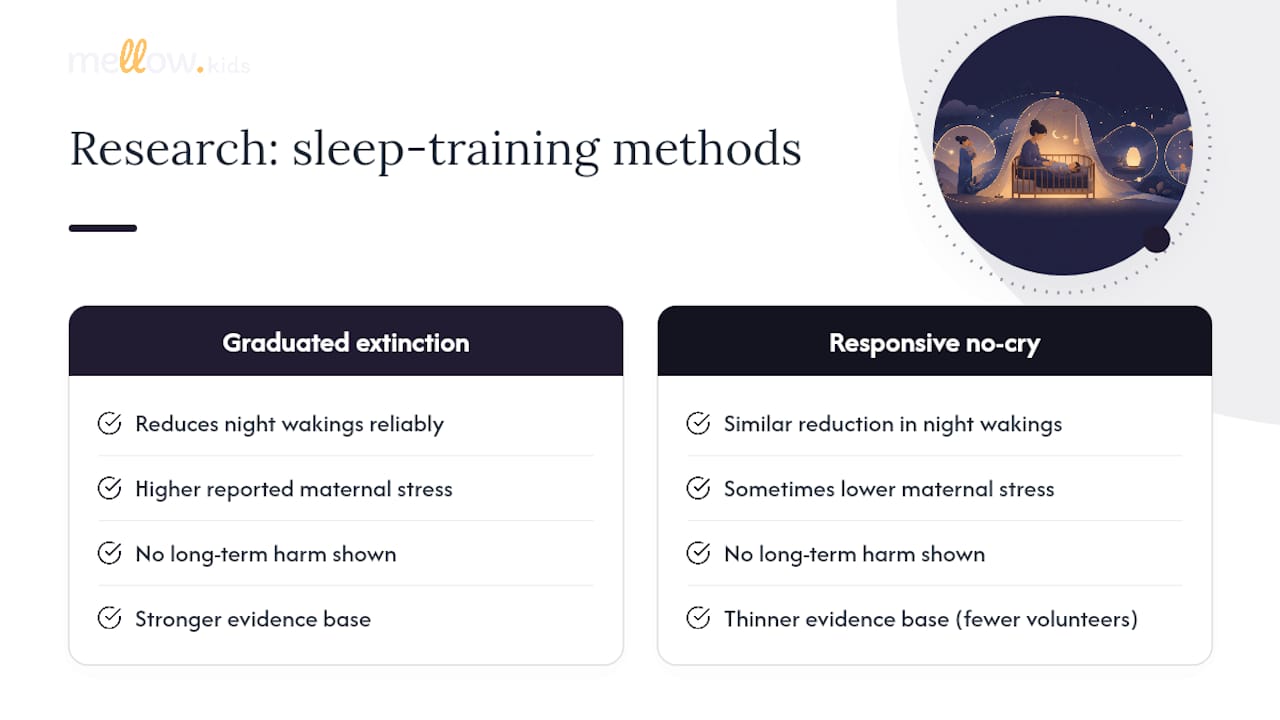
The evidence base for gentle methods is thinner mainly because fewer families volunteer for extinction-focused trials, not because the methods themselves underperform. Mellow builds its stage-based plans around this exact gap, translating what research supports into a night-by-night sequence rather than a one-size-fits-all script.
Why Gentle Sleep Training Asks More of You Than It Advertises
Nobody warns you upfront how physically tiring pick-up, put-down actually is at 2 a.m. on night four. Gentle methods get marketed as the softer option, and emotionally they often are, but they are rarely the easier one in the moment. You're trading a hard three nights for a manageable three weeks, and that trade only pays off if you're honest with yourself about which kind of hard you can sustain.
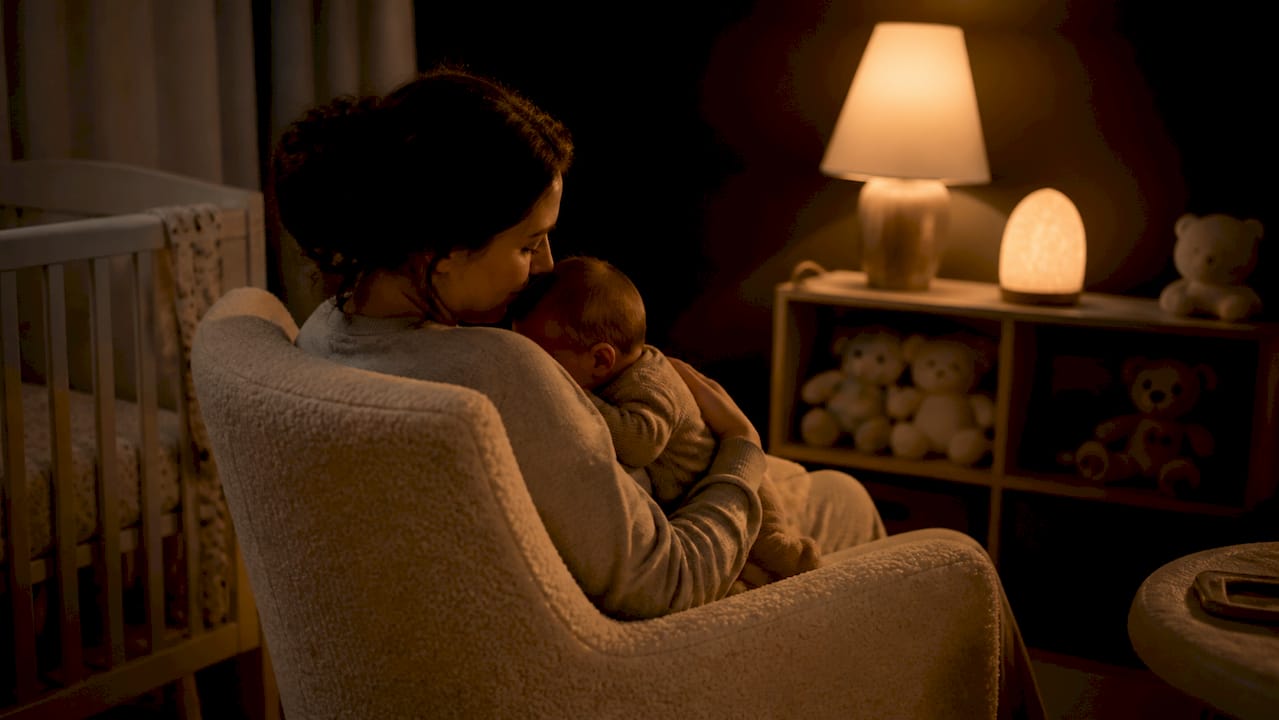
The families who succeed with gentle methods aren't the ones with the most patient babies. They're the ones who pick a single method and give it a real week before switching, rather than bouncing between three approaches out of exhaustion. Consistency beats perfection here, every time.
How Mellow Supports Gentle Sleep Training Night by Night
Choosing a method is the easy part. Knowing whether to move the chair tonight or wait another day, whether that 4 a.m. waking is a regression or a habit, whether your six-month-old is actually ready or you're a few weeks early, that's where most gentle sleep plans stall out.
Mellow was built around exactly that gap. The app tracks your baby's age and stage, then adjusts nightly guidance as sleep patterns shift, instead of handing you a static plan and leaving you to interpret it alone. If your baby is between 8 and 10 months, or you're navigating the 11 to 14 month stretch where separation anxiety often complicates gentle methods, Mellow's stage-specific programs walk you through the same fading, chair, and pick-up, put-down sequences described above, timed to what's developmentally realistic for your baby right now. Open the app tonight and start with a free assessment of your baby's current stage.
Frequently Asked Questions
Does gentle sleep training actually work, or is it just slower? It works for most babies who don't have an underlying medical or feeding issue, though results generally take one to three weeks rather than a few nights. The trade-off is more parental involvement, not lower effectiveness.
Can gentle sleep training cause attachment problems? No credible research links gentle or extinction-based sleep training to long-term attachment or emotional harm when safe-sleep basics are followed and the baby's needs are met during the day.
How do I know if I should switch gentle methods? If you've followed one method consistently for two to three weeks with no measurable change in wakings or settle time, it's reasonable to try a different gentle approach or check in with your pediatrician.
Is gentle sleep training compatible with breastfeeding? Yes. Most gentle methods work alongside night feeds, especially in babies under nine months. As feeds consolidate into the day, you can gradually fold overnight feeding cues into the same fading or chair-method framework.
What if my baby was doing well and suddenly regresses? Regressions tied to teething, illness, or developmental leaps are common and don't mean the method failed. Pause, meet the immediate need, and resume the same sequence once things settle, using resources like Mellow's regression guide to tell the difference between a phase and a habit.
This article is general information, not a substitute for advice from a qualified doctor. Consult a qualified healthcare professional about your own circumstances before acting on anything here.
Sources
- PMC5962992 — peer-reviewed sleep training research
- Healthychildren
- Baby sleep: Mayo Clinic
- No-Cry Gentle Sleep Training Methods, Explained — Parents
- AASM resource on night wakings