
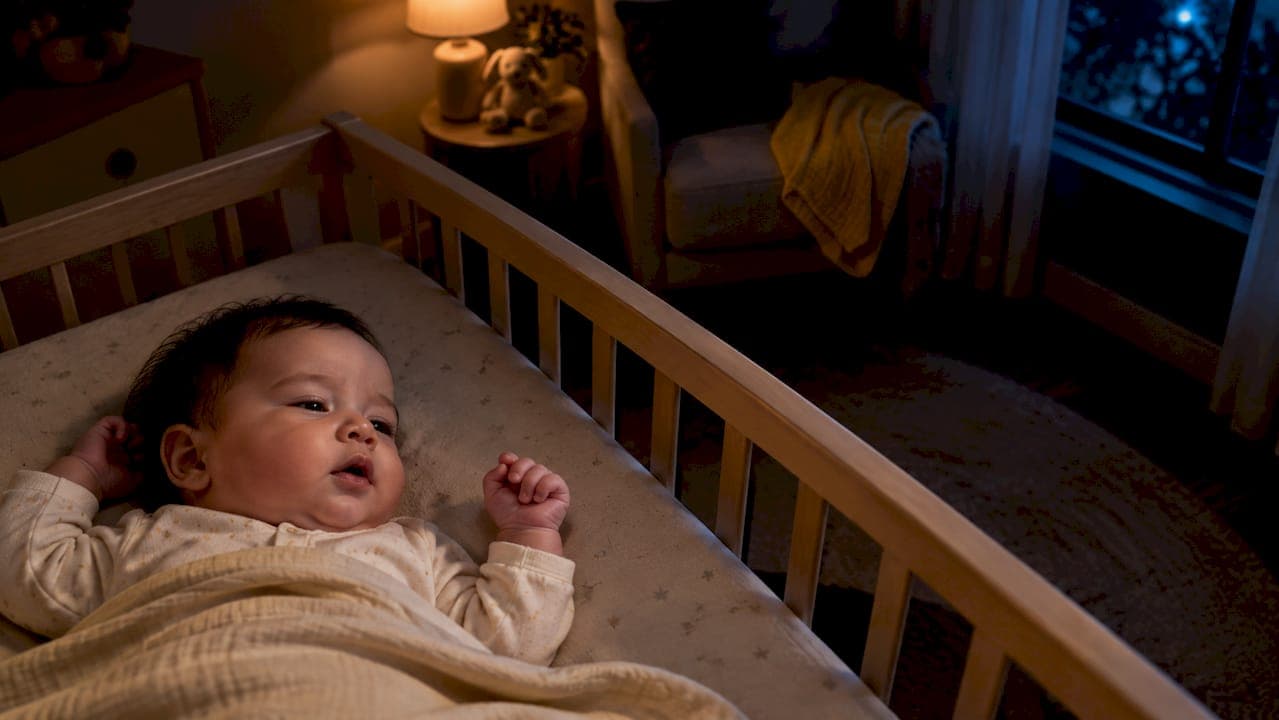
A false start happens when your baby wakes within 30 to 60 minutes of falling asleep at bedtime, often crying hard as if the whole night has to start over. The single most useful fix to try first is putting your baby down drowsy but awake after a small bedtime adjustment, since that one change addresses the most common cause: an association with being rocked, fed, or held all the way to sleep. If your baby also shows fever, feeding trouble, or labored breathing, call your pediatrician before troubleshooting sleep.
TL;DR:
- Most false starts are caused by overtiredness, undertiredness, sleep associations, discomfort, or developmental transitions, and understanding these patterns guides targeted fixes.
- Small adjustments, such as shifting bedtime by 15 minutes or practicing drowsy-but-awake placement, are effective when tested over three to seven nights with careful tracking.
- Consistent routines, proper sleep environment, and gradual weaning from feeding-to-sleep are key steps in preventing false starts, especially when tailored to the baby’s age and sleep signals.
- Persistent false starts after multiple experiments may require personalized support from a professional to identify unseen issues like subtle sleep associations or environmental factors.
- Monitoring symptoms like fever or breathing trouble and ensuring safe sleep practices remain essential during troubleshooting, and medical advice should be sought if health concerns arise.
Table of Contents
- What Is a False Start in Baby Sleep?
- What Causes False Starts at Bedtime?
- Is a False Start Caused by Overtired or Undertired Sleep?
- Step-by-Step Fixes for False Start Baby Sleep
- Safe Sleep Rules While You Troubleshoot
- Three First-Night Experiments to Try Tonight
- A Practitioner's View on Fixing False Starts
- When to Get Personalized Sleep Support
- Sources
- FAQ
What Is a False Start in Baby Sleep?
"False start" is not a medical term. You will not find it in a pediatric textbook, and no doctor will diagnose it. It is a phrase parents and sleep consultants use to describe a very specific, very frustrating pattern: your baby goes down for the night, seems to settle, and then wakes up crying somewhere in that first half hour to hour, sometimes acting as if bedtime never happened.
That timing matters. A brief stir at the two-hour mark or a squawk during a daytime nap transition is normal sleep-cycle noise, not a false start. The false start specifically clusters in that early window, right as your baby passes through the first sleep cycle of the night.
Part of why this window is so fragile is developmental. Infant sleep regulation, the balance between circadian rhythm and the buildup of sleep pressure across the day, changes rapidly in the first year, and that immaturity makes the transition into deep sleep less stable for some babies than others, as research on infant sleep regulation has mapped in detail. A false start at 10 weeks and a false start at 10 months can share a name but not a cause.
What Causes False Starts at Bedtime?
Five patterns explain most false starts, and they often overlap.
Overtiredness is the most common culprit. Past a certain point of wakefulness, a baby's body releases cortisol and other stress hormones that make falling into deep sleep harder, not easier. An overtired baby often falls asleep quickly out of sheer exhaustion, then jolts awake as that hormonal surge keeps the brain from settling into the next sleep stage.
Undertiredness works the opposite way. A bedtime that is too early, or wake windows too short for your baby's age, means your baby simply has not built up enough sleep pressure to stay under.
Sleep associations are the third major cause, especially past the newborn stage. If your baby only knows how to fall asleep while nursing, rocking, or being held, waking briefly between cycles (which every human does) means waking baby cannot get back down without the same help.
Discomfort or minor illness deserves a look too: reflux, an emerging tooth, an ear that is starting to bother them, or a room that is too warm or too cold. Developmental transitions, like the shift around four months or a nap consolidating from three to two, can also destabilize a bedtime that used to work fine.
Is a False Start Caused by Overtired or Undertired Sleep?
Run a short diagnostic before changing anything. For three to seven nights, jot down five things: the bedtime, how your baby fell asleep (nursed, rocked, or placed awake), nap lengths that day, feed times, and exactly when the false start hit.
Patterns tend to point somewhere specific:
- A false start paired with a late bedtime, short naps that day, and a fast, glassy-eyed crash into sleep usually means overtired.
- A false start paired with an early bedtime, long naps, or a fight to fall asleep in the first place usually means undertired.
- A false start where baby falls asleep easily in your arms but screams the moment they're placed down, or wakes and cannot resettle without the same help, points to a sleep association.
- A false start with unusual fussing, drawing up the legs, ear tugging, or a warm room points toward discomfort.
Once a pattern shows up across two or three nights, change one variable at a time, not everything at once.
Step-by-Step Fixes for False Start Baby Sleep
Treat each fix as a small experiment, not a permanent commitment, and give it three to seven nights before judging results.
- Shift bedtime by 15 minutes. If the diagnostic pointed to overtired, move bedtime 15 minutes earlier; if undertired, move it 15 minutes later. An exploratory actigraphy study on infant sleep timing found that earlier sleep onset correlated with longer nighttime sleep, which cuts against the instinct to push bedtime later when a baby seems tired. Small shifts, tested one at a time, beat guessing.
- Match wake windows to age. A four-month-old and a ten-month-old need very different stretches of awake time before bedtime; a mismatched window is one of the most overlooked drivers of false starts.
- Practice drowsy-but-awake. Around four months and older, when sleep-training readiness typically begins, start placing your baby in the crib while still awake but sleepy, even if it only lasts a minute at first.
- Tighten the routine sequence. The same three or four steps, in the same order, in a dim room, cue the brain that sleep is coming. Consistency in the routine and reducing feeding-to-sleep were both linked to longer nighttime sleep in infant sleep research, even at six weeks old.
- Wean feeding-to-sleep gradually. Shorten the final feed by a minute or two every few nights rather than cutting it cold, especially for younger babies.
- Check the environment. A room around 68 to 72°F, blackout coverage, and steady white noise remove a surprising number of false starts that looked behavioral but were actually environmental.
Pro Tip: Change one variable, run it for a full three to seven nights, and write down what happens before you touch anything else. Two changes at once make it impossible to know which one worked.
Safe Sleep Rules While You Troubleshoot
Whatever you're testing, safety stays fixed. The CDC's safe-sleep guidelines call for placing your baby on their back, on a firm, flat surface with nothing but a fitted sheet, no loose blankets, no weighted products, and no soft bedding of any kind. Room-sharing without bed-sharing is recommended for at least the first six months.

Keep an eye on growth and feeding alongside sleep changes. The AAP recommends checking wet diapers and weight gain when assessing nighttime waking, since frequent waking is often developmentally normal rather than a problem to solve.
Call your pediatrician if you notice poor feeding, fever, breathing trouble, persistent pain, unusual movements, or a baby who seems unusually sleepy during the day. Those symptoms fall outside a normal false start and deserve a medical opinion.
Three First-Night Experiments to Try Tonight
Age changes the plan. Under four months, focus on safety and gentle routines rather than settling practice, since most newborns simply have not developed the regularity for structured training yet. At four months and older, you have more room to introduce drowsy-but-awake attempts.
Three experiments to run, one at a time: shift bedtime 15 minutes earlier or later for one night and compare; spend a single evening practicing drowsy-but-awake placement rather than a full sleep crutch; or shave a few minutes off a feed-to-sleep session if your baby is past the newborn stage. Log bedtime, how sleep started, false-start timing, naps, and feeds each night.

A Practitioner's View on Fixing False Starts
Most parents want a single fix that works tonight. It rarely comes that fast, and that's not a failure on your part. Small, tracked experiments beat big overhauls because they tell you what actually changed things. Most babies grow out of this pattern with age and a steady routine behind them.
— Mauricio Vargas
When to Get Personalized Sleep Support
If you've run two or three of these experiments and the pattern still isn't budging, or something about your baby's waking feels genuinely unclear, that's the point where guided help earns its keep over more guessing. Expert support can provide a real look at your baby's specific age, temperament, and sleep history, then a plan built around it instead of a generic template.

Mellow's Personalized Plan, Plan + Consultation, and 45-minute consultation options meet you at different levels of support, from a done-for-you schedule to live troubleshooting with a certified consultant. A consultation can catch variables self-tracking tends to miss, like a nap schedule working against your bedtime or subtle associations you haven't noticed yet. If your at-home experiments have stalled, book a 45-minute consultation and get a second set of eyes on what's actually happening at bedtime.
This article is general information, not a substitute for advice from a qualified doctor. Consult a qualified healthcare professional about your own circumstances before acting on anything here.
Sources
- When and how to sleep train your baby | Cleveland Clinic
- Time for bed! Earlier sleep onset is associated with longer nighttime sleep duration during infancy - PubMed
- Helping Babies Sleep Safely | Reproductive Health | CDC
FAQ
How Do You Fix a False Start in Baby Sleep?
Start with one small, testable change, either a 15 minute bedtime shift or practicing drowsy-but-awake placement, and run it for three to seven nights before judging results. Track bedtime, how your baby fell asleep, naps, and feeds so you can see what actually moved the needle.
Is a False Start Caused by Overtiredness or Undertiredness?
It can be either, and the pattern tells you which. A fast, exhausted crash into sleep followed by a hard wake usually points to overtired, while a struggle to fall asleep at an early bedtime with long naps that day usually points to undertired.
What Counts as a False Start in Baby Sleep?
A false start is a wake that happens within roughly 30 to 60 minutes of falling asleep at bedtime, distinct from the normal brief stirs that happen later in the night. It's a term parents and sleep consultants use rather than a formal medical diagnosis.
Do Babies Outgrow False Starts?
Many babies do improve as sleep regulation matures and consistent routines take hold, though the timeline varies by baby. If false starts persist past a few weeks of consistent troubleshooting, options like Mellow's Personalized Plan can help pinpoint what's still off.