
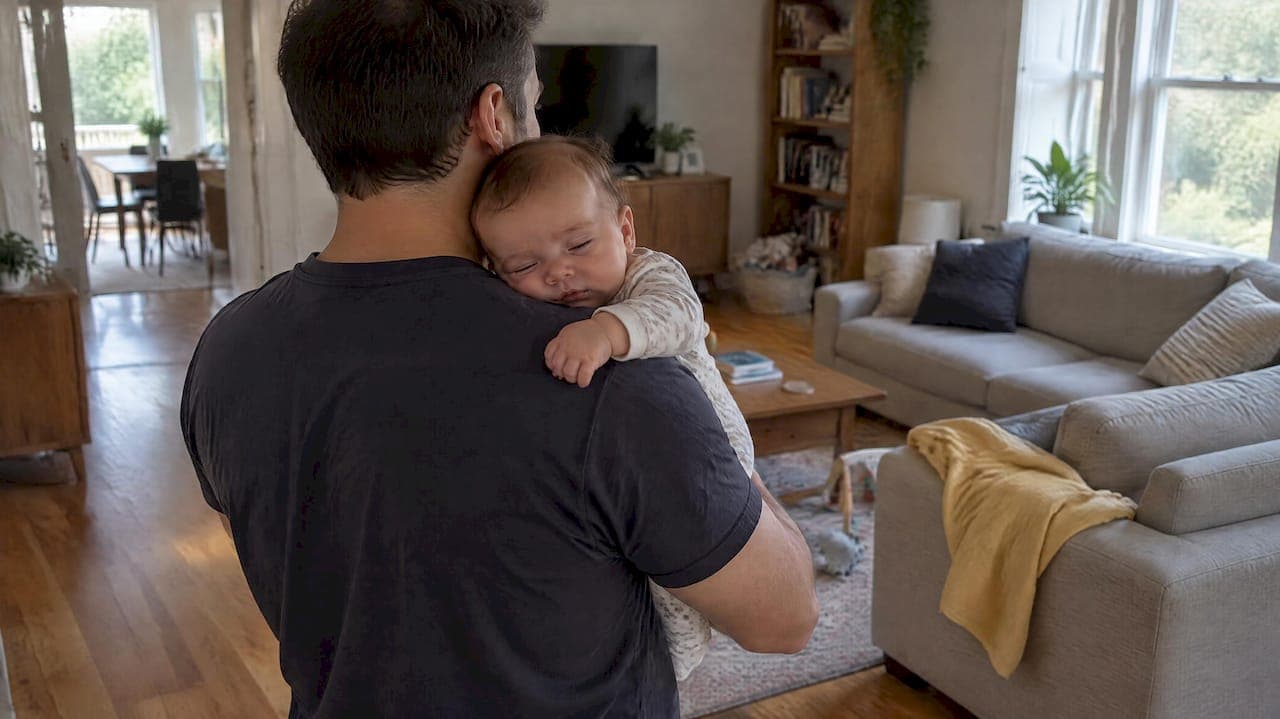
If your baby is inconsolable, arching, or suddenly wide-eyed after a stretch of fussiness, that is almost always overtiredness, not something more serious. Move them to a calm, dim, and safe space right away and prioritize soothing over trying to "fix" the behavior. The steps below walk you through exactly what to do next, plus how to prevent this cycle from repeating.
TL;DR:
- Babies often give subtle early signals like staring or losing interest that caregivers frequently miss, leading to rapid overtiredness escalation.
- Missed sleep windows increase stress hormones, causing babies to become more wired and resistant to falling asleep once overtired signs appear.
- Recognizing late-stage signs like frantic crying and arched backs and moving to a calm space with soothing routines are crucial for safe and effective soothing.
- Keeping wake windows within recommended ranges and maintaining consistent bedtime routines helps prevent overtiredness and supports better sleep.
- A personalized sleep plan and consultation tailored to your baby's age and temperament can improve sleep patterns, but routines require time and patience to establish.
Table of Contents
- Signs of an Overtired Baby: From Early Cues to Late-Stage Distress
- Why Babies Become Overtired: Wake Windows and the Stress Response
- How to Soothe an Overtired Baby Right Now
- Preventing Overtiredness: Wake Windows and Sample Schedules
- What Personalized Sleep Support Looks Like
- A Note From Our Team: Progress Takes Time
- Ready for a Routine That Actually Fits Your Baby?
- FAQ
- Sources
Signs of an Overtired Baby: From Early Cues to Late-Stage Distress
Overtiredness builds in stages, and the earliest cues are the quietest ones. A baby who suddenly stares off, goes still, or seems to lose interest in a toy is often already asking for sleep. According to Joyful Beginnings, caregivers frequently miss these early signals because they read as boredom rather than tiredness, which lets the overtired cascade begin unnoticed.
The next wave of cues is easier to catch. Clinician-backed lists of tired signs include yawning, droopy eyelids, eye rubbing, ear pulling, and general fidgeting. These are your window to start winding down, not push through "just a bit longer."
Once that window closes, the signs shift into something louder and harder to settle: frantic crying, an arched back, clenched fists, or a strange burst of hyper-alert energy that can look like a second wind. That "wired" state is not your baby finding new energy. It reflects an adrenaline and cortisol surge that happens when the natural sleep window is missed, according to Joyful Beginnings.
A simple staged checklist helps:
- Early stage: Staring, quieting, slowing down. Pause stimulating activity immediately.
- Common stage: Yawning, droopy eyes, eye rubbing, ear pulling. Start your wind-down routine now.
- Late stage: Frantic crying, arched back, clenched fists, a sudden "second wind." Move to a calm, safe space and begin active soothing.
Missing the early cues matters because the gap between "sleepy" and "overtired" can close in minutes for a young infant. Newborns need 16 to 17 hours of sleep across 24 hours, so a missed window adds up quickly over a day of short naps.
Pro Tip: Keep a loose log of wake times for a few days. It is one of the simplest ways to spot the pattern before the late signs show up, a method Parents also recommends for telling overtired apart from undertired.
Why Babies Become Overtired: Wake Windows and the Stress Response
Overtiredness is not a character trait or a bad habit. It is what happens when a baby's nervous system tips past its tolerance for wakefulness. Every age has a rough ceiling for how long a baby can comfortably stay awake between naps, and once that window closes, the body does not simply slow down. It often speeds up instead.
A 2015 physiology review describes how fragmented or delayed sleep is linked to activity in the HPA axis, the system that regulates stress hormones. Elevated cortisol is associated with fragmented sleep and a harder time self-regulating, which explains why an overtired baby often seems more wired, not more sleepy. Predictable routines appear to lower that physiological arousal by making sleep cues familiar rather than stressful.
A few common triggers push babies into this state:
- A missed or shortened nap earlier in the day.
- Overstimulation from noise, screens, or too many new faces.
- Illness, teething, or a growth spurt disrupting the usual rhythm.
If crying is unusually prolonged, your baby seems in pain, or sleep problems persist for weeks despite a consistent routine, it is worth checking in with your pediatrician rather than assuming overtiredness alone.
How to Soothe an Overtired Baby Right Now
Once you recognize the late signs, your first job is safety, not perfection. Set your baby down in a crib or bassinet, or hold them securely while seated somewhere stable. Avoid sofas, armchairs, and adult beds for settling or sleep, a point the American Academy of Pediatrics emphasizes precisely because overtired, fussy moments are when accidental unsafe sleep happens most. For more on setting up a sleep space correctly, our guide to safe sleep for newborns walks through the basics.
From there, a calm and consistent sequence works better than switching strategies every thirty seconds.
- Dim the room and cut the noise. Turn off screens, lower lights, and switch on safe white noise if you use it.
- Contain and secure. Swaddle a young infant if they are not yet rolling, or hold an older baby snugly against your chest.
- Add rhythmic movement. A gentle sway, rock, or short walk can help the nervous system downshift.
- Offer a pacifier or feed if appropriate. Sucking is calming for many babies and can ease the transition toward sleep.
- Use a low, steady voice with pauses. Short "shh" sounds or quiet humming, with brief silent pauses, give your baby a chance to settle without being overstimulated by your own effort to help.
If your baby seems to get more wired partway through, it is not a sign you are doing it wrong. Sometimes a change, like switching from bouncing to stillness, or from your voice to white noise alone, is enough to break the loop. Give any approach a couple of minutes before switching, rather than cycling through everything at once.
Pro Tip: If nothing is working after about ten minutes, it is okay to set your baby down safely in the crib for a minute while you reset. A short pause rarely makes things worse, and it keeps you steady enough to keep trying.
Preventing Overtiredness: Wake Windows and Sample Schedules
Prevention beats soothing every time, and it starts with knowing roughly how much sleep your baby needs. Newborns typically need 16 to 17 hours of sleep in 24 hours, while toddlers aged 1 to 2 years need about 11 to 14 hours. The gap between those numbers is naps, and naps only work if they land before the overtired window opens.
- Newborns: Short wake windows, often under an hour, with frequent naps throughout the day.
- 3 to 6 months: Wake windows generally stretch to 1.5 to 2.5 hours, with 3 to 4 naps.
- 6 to 12 months: Wake windows often reach 2.5 to 3.5 hours, with naps consolidating to 2 to 3.
- 1 to 2 years: Wake windows can extend to 3 to 4 hours, typically with 1 to 2 naps.
For a concrete age-specific example, our 3-month-old schedule guide breaks this down hour by hour.
A short, repeatable bedtime ritual, bath, dim lights, a quiet song, the same three or four steps every night, helps lower stress reactivity before sleep, consistent with the role of routine for newborns research cited above. Our bedtime routine guide offers a template you can adapt. During travel, illness, or developmental leaps, expect some disruption. Keep the core ritual intact even if nap timing slips, since familiarity matters more than exact timing during rough patches.

What Personalized Sleep Support Looks Like
Recognizing the signs is one thing. Building a schedule that actually fits your baby's age and temperament is another. Our Personalized Plan and consultation options map wake windows, nap timing, and bedtime routines directly to your baby's stage, so you are working from cues rather than guesswork. A consultation typically leaves you with a customized wake-window range, a routine template, and troubleshooting steps for the nights that go sideways.
Author background and any supporting case data will be added in a later editorial pass.
A Note From Our Team: Progress Takes Time
Routines rarely click overnight, and that is normal, not a sign you are doing something wrong. Give any new approach a week or two before judging it. Safety and your own rest matter as much as your baby's. If you are running on empty, ask someone for help with a single night feed or nap shift. You deserve support too.
— Mauricio Vargas
Ready for a Routine That Actually Fits Your Baby?
We built our Personalized Plan and consultation options for exactly this moment, when you know the signs but need a schedule tailored to your baby's age and temperament instead of a generic chart.

A 45-minute consultation gives you a focused session to map wake windows and troubleshoot your specific nights, while a combined plan and consultation option pairs that guidance with a written plan you can return to for weeks.
- Personalized Plan: A tailored, age-specific sleep plan built around your baby's actual patterns.
- 45-minute consultation: A focused session to map wake windows and troubleshoot current struggles.
- Plan + Consultation: Both combined, for ongoing reference and direct guidance.
Explore our personal sleep support options and book a session when you are ready for a routine built around your baby, not a generic one.
This article is general information, not a substitute for advice from a qualified doctor. Consult a qualified healthcare professional about your own circumstances before acting on anything here.
FAQ
Can adults be overtired too?
Yes, overtiredness affects adults as well, showing up as wired-but-exhausted feelings, irritability, and difficulty falling asleep despite being tired. The underlying stress-hormone response is similar to what happens in overtired babies, where cortisol and adrenaline stay elevated past the point they should settle.
What is overtiredness?
Overtiredness is a state where a baby (or adult) has stayed awake past their body's natural sleep window, triggering a stress response rather than straightforward drowsiness. In babies, this often produces frantic crying, arching, and a false "second wind" instead of calm sleepiness, as described by Joyful Beginnings.
Why does being overtired make it hard to sleep?
Missing the natural sleep window triggers HPA-axis activity and raises cortisol, which can make the body feel more alert, not less, according to research on the HPA axis and child sleep. That hormone surge is why an overtired baby often fights sleep instead of dropping off easily.
What does "eh, eh, eh" mean in a baby's cry?
A repetitive "eh, eh, eh" sound is commonly associated with a need to burp or release gas, distinct from the escalating, frantic crying typical of overtiredness. If the cry persists alongside signs like arching or clenched fists rather than settling after a burp, overtiredness or another need is more likely.
Sources
- CDC — Sleep indicator definitions / recommended sleep durations
- AAP — Safe sleep guidance
- Joyful Beginnings — Sleepy cues vs overtired signs
- PMC — HPA-axis and child sleep (2015 review)
- Cleveland Clinic — 15 signs your baby is tired