
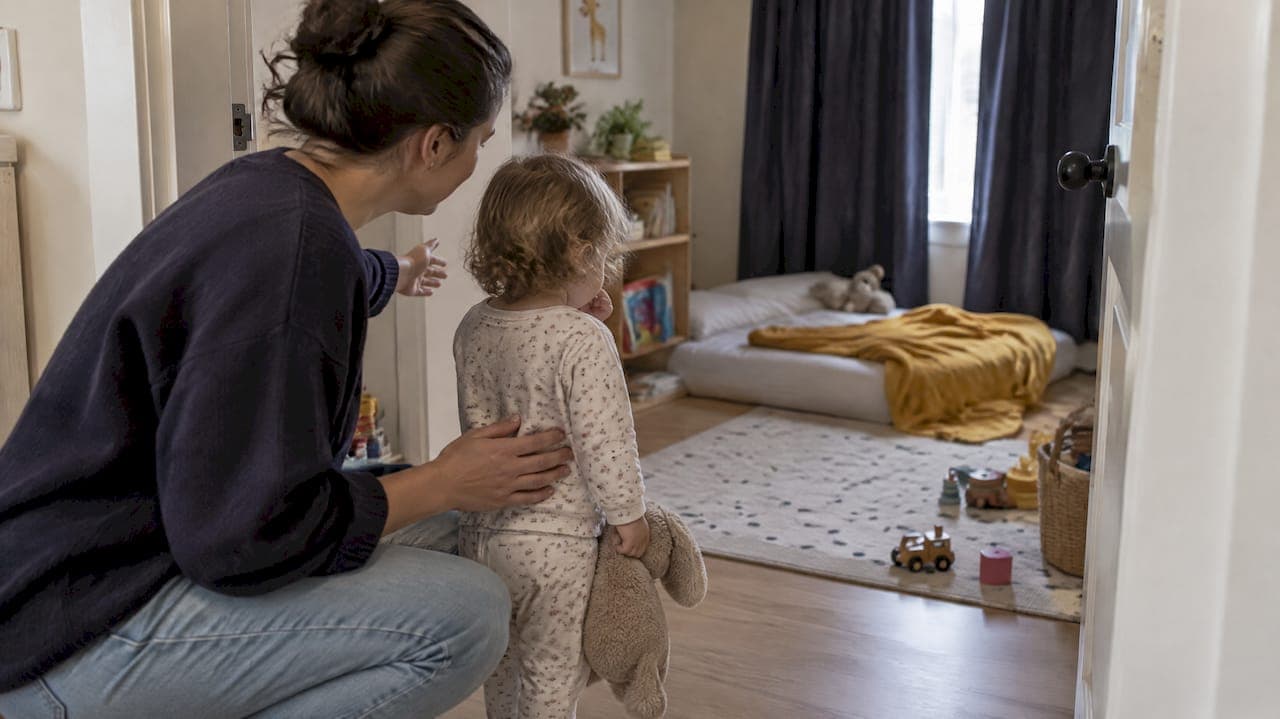
Keep a short, consistent midday nap window and hold the line with a predictable quiet time when sleep doesn't come. That one habit solves more naptime battles than any gadget or app ever will. The rest of this guide walks through why toddlers push back on naps in the first place, how to tell if your child has outgrown the nap, and the exact steps to get restful days back on track.
TL;DR:
- Keeping a consistent midday nap time between 12:30 and 2:00 PM supports most toddlers' sleep rhythm and reduces resistance.
- Short, routine wind-down activities and a dark, cool, toy-free sleep environment improve nap success.
- Naptime refusal often correlates with late or lengthy naps, or environmental disruptions, rather than actual sleep needs.
- A child's need for naps typically diminishes between ages 2 and 3, but a two-week trial helps distinguish temporary resistance from a true transition.
- Personalized sleep plans are more effective than generic advice, especially for families with irregular schedules or persistent resistance.
Table of Contents
- Why toddlers refuse naps: development, timing, and environment
- Does your toddler still need a nap, or is it time to drop it?
- Practical fixes: routines, timing, and the sleep environment
- Troubleshooting nap resistance and knowing when to shift to quiet time
- How Mellow Kids supports families through nap refusal
- Why this feels harder than it should, and why that's normal
- Get tailored help from Mellow Kids
- FAQ
- Sources
Why toddlers refuse naps: development, timing, and environment
Nap refusal rarely has one cause. It is usually a mix of a few things happening at once, and figuring out which one fits your child is the first real step toward fixing it.
- Toddlers between 18 months and 3 years are testing autonomy, and refusing a nap is often about asserting control rather than a real lack of tiredness, a pattern parenting and pediatric guidance ties to emerging independence.
- Nap timing matters more than most parents expect: naps that run long or end late in the afternoon are linked to later bedtimes and shorter nighttime sleep, according to actigraphy research on toddler sleep.
- A crib full of toys, a bright room, or a sibling playing nearby turns the sleep space into a play space, and the brain follows the cues it's given.
- Daycare and home routines often differ, so a toddler who naps fine at daycare may fight sleep at home simply because the sequence leading up to it is different.
- Teething, a cold, a new sibling, or a stretch of separation anxiety can all cause temporary nap resistance that has nothing to do with outgrowing sleep needs.
Sorting through these causes takes a little observation, but it pays off. A timing problem calls for a different fix than a boundary problem, and lumping them together usually leads to frustration for everyone.
Does your toddler still need a nap, or is it time to drop it?
Telling the difference between "overtired and fighting it" and "genuinely ready to drop the nap" takes a bit of detective work, but a few signs make it clearer.
- Watch for wired behavior in the late afternoon: a toddler who seems hyper, clumsy, or weepy right before dinner is usually overtired, not nap-free.
- Track whether naps happen reliably at daycare but not at home. If your child naps well in one setting, the nap need likely hasn't disappeared, the routine has just changed.
- Keep age in mind, but loosely. Nap transitions reflect how a child's memory and sleep networks mature, and that timeline varies quite a bit between children, as described in research on nap transitions in early childhood.
- Run a two-week trial with a consistent nap window before deciding anything permanent. One or two rough days don't mean the nap is gone.
- If refusal comes with extreme fatigue, developmental concerns, or stalled growth, loop in your pediatrician rather than guessing.
Practical fixes: routines, timing, and the sleep environment
Once you know what's driving the refusal, the fixes are mostly about consistency, not complexity.
Start with a short wind-down routine, something that takes 8 to 15 minutes and always follows the same 3 to 5 steps: close the curtains, read one short book, sing the same song, into the crib. A visual routine chart with simple pictures can help toddlers who are too young to track time but old enough to recognize sequence.
Nap timing deserves real attention. A midday window, roughly between 12:30 and 2:00 PM, tends to align best with most toddlers' circadian rhythm. If your child naps late or for too long, shift the start time earlier by 10 to 20 minutes every few days rather than making a sudden jump. Shortening or moving a late nap earlier can improve nighttime sleep onset without cutting total daily rest, based on toddler sleep research, and more frequent napping has also been tied to a later circadian phase and later bedtimes in circadian phase studies.
A few environment basics make a real difference:
- Keep the room dark, cool, and free of toys or screens that invite play instead of rest.
- Use white noise to mask household sounds that might pull attention away from sleep.
- Leave the crib as a sleep-only space, no books or snacks inside it.
Consistency is the real engine here. Many toddlers who nap well at daycare but resist at home respond once parents mirror that same sequence, a pattern noted in pediatric guidance on nap routines. Our guide on healthy boundaries for toddlers goes deeper into enforcing these limits without turning naptime into a daily fight.
Pro Tip: Build a shortened "travel" version of the wind-down routine, the same steps in miniature, so naps on the go feel familiar even without the usual room or crib.

Troubleshooting nap resistance and knowing when to shift to quiet time
When a nap routine stops working, resist the urge to overhaul everything at once. Check these in order before changing anything major.
- Confirm the nap window itself: is it still landing in that midday range, or has it drifted later?
- Check routine fidelity: is the wind-down happening the same way, every time, by every caregiver?
- Look at the environment: has a new toy, nightlight, or sibling snuck into the sleep space?
- Rule out caregiver inconsistency, since a nap enforced firmly by one parent and loosely by another sends mixed signals.
Give any single change about two weeks of faithful practice, the trial window supported by toddler sleep research, before deciding it isn't working. If naps still fall apart after that, shift to a structured quiet time: 30 to 45 minutes in the crib or a safe space with two or three quiet toys and a clear "quiet time is over when..." signal. Our piece on transitioning from nap time to quiet time walks through that shift in more detail. Extreme daytime sleepiness, flat growth, or developmental concerns warrant a pediatrician visit rather than another home trial.
How Mellow Kids supports families through nap refusal
Personalized plans can map wake windows, nap timing, and wind-down routines to a child's actual age and temperament rather than a generic chart. That matters because, as research on nap transitions shows, individual variability in when children drop naps is real and often gets flattened by one-size-fits-all advice.
A tailored plan accounts for your child's specific wake windows, temperament, and current sleep patterns, rather than applying an average schedule.
A 45-minute consultation typically includes an assessment of your toddler's current sleep patterns, a nap and bedtime schedule, and follow-up suggestions to adjust as your child grows. For families juggling a complicated daycare schedule, a toddler with higher sleep needs, or simply a lot of trial and error with no results, that kind of individualized mapping often finds the mismatch faster than another round of guessing.
Why this feels harder than it should, and why that's normal
Nap refusal feels personal when you're in it, but it is one of the most common and most temporary toddler sleep struggles out there. Most families see a routine settle within one to four weeks of consistent practice, not overnight. Give yourself permission to rest when you can, even if that just means sitting down during quiet time instead of tackling chores. If sleep loss is genuinely wearing down your health or your ability to function, that's a sign to ask for help rather than push through alone.
— Mauricio Vargas
Get tailored help from Mellow Kids
A generic nap chart can only take you so far when your toddler's schedule, temperament, and daycare routine don't match anyone else's. Mellow Kids builds a plan around your child specifically, so you spend less time guessing and more time actually resting.

If you've run a consistent two-week trial without results, or your household juggles a complicated schedule or high caregiver stress, personalized support tends to close the gap faster than another forum thread. There are options such as a personalized plan built around your toddler's current nap and bedtime patterns, a plan plus consultation combo, or a standalone 45-minute consultation for a focused assessment.
Start with the Personalized Plan and consultation options to get a schedule built around your actual toddler, not an average one.

FAQ
How long does nap refusal typically last?
Nap refusal driven by autonomy-testing, a schedule mismatch, or a temporary disruption like teething usually settles within one to four weeks once a consistent routine and timing are in place. If resistance continues well past that window despite a steady routine, it may signal a genuine nap transition rather than a temporary phase.
How do I get a stubborn toddler to nap?
Stick to the same short wind-down routine every single day, keep the nap window consistent, and make the sleep space boring on purpose, dark, cool, and free of toys. Many toddlers respond well when the home routine mirrors whatever sequence works at daycare, since pediatric guidance on nap routines points to consistency as the biggest lever.
Is it normal for a 2.5 year old to drop their nap?
Some toddlers begin transitioning away from a daily nap around this age, though the timing varies a lot from child to child based on individual development. Before assuming the nap is gone, try a two-week trial with a tightened routine and consistent timing to rule out a temporary disruption instead of a true transition.
My toddler is fighting the nap but is clearly tired. What should I do?
This "wired but tired" pattern often means the nap window has drifted too late or the wind-down routine has gotten inconsistent, so start by tightening both. If a true nap won't happen, a calm, low-stimulation quiet time still offers rest and helps avoid the overtired crash that tends to show up later in the day.
Sources
- Daytime nap controls toddlers’ nighttime sleep
- Nap routines | Boys Town National Research Hospital
- Healthychildren