
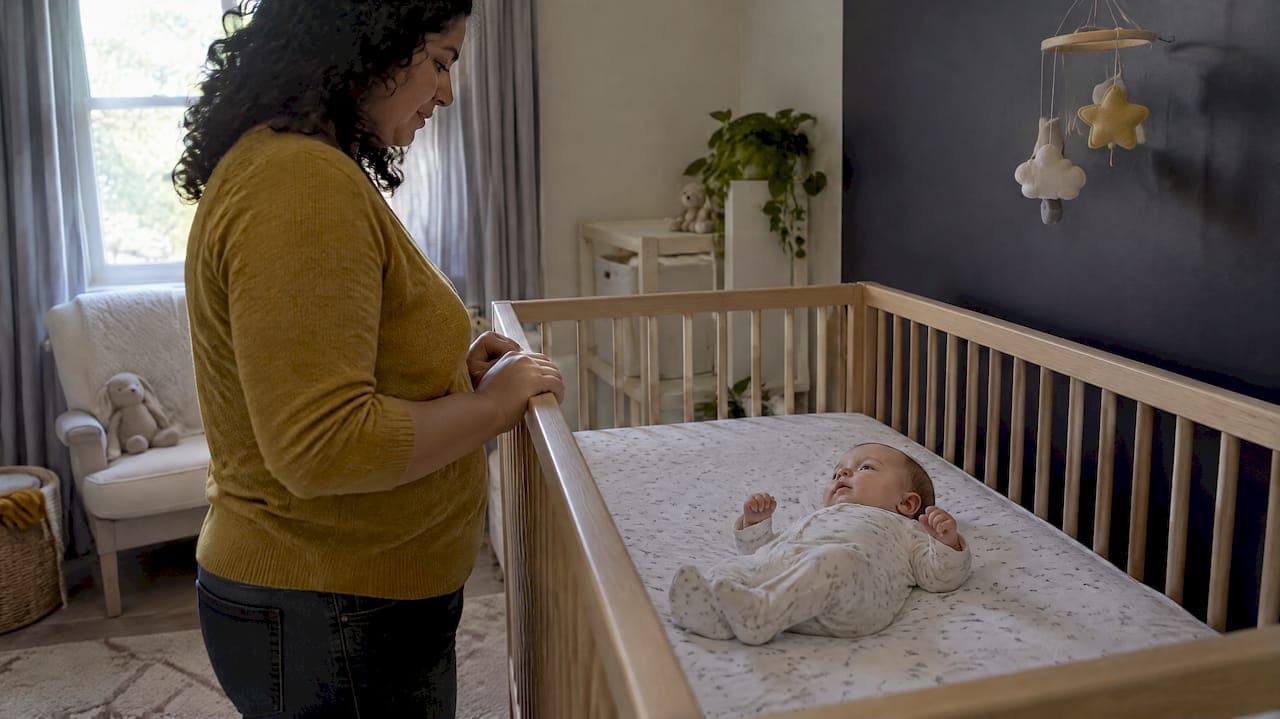
The crib hour method can help many babies lengthen short naps, because it gives them a real chance to link sleep cycles instead of waking at the first stir. It tends to work best for babies who are already on reasonable wake windows and can settle for short stretches alone. If that sounds like your baby, try it consistently for five to seven days on one nap before judging the results.
TL;DR:
- Readiness matters more than age: many babies link cycles around four to seven months, but first check settling skills, routine, and age appropriate wake windows.
- Choose the morning or second nap, keep the crib available for up to 60 minutes, and follow one approach consistently for five to seven days.
- Wait five to ten minutes before the first comfort check, then widen intervals; stop the attempt if crying remains inconsolable or continues through the hour.
- Keep the crib clear, place your baby on their back on a firm, flat surface, and avoid pillows, loose bedding, toys, and weighted sleep products.
- If naps stay short, change one factor at a time, shifting the wake window by 10 to 15 minutes for three to four days.
Table of Contents
- What crib hour is and why we recommend trying it
- When to try crib hour: age, readiness, and what to prepare
- How to do crib hour step by step
- Staying safe while you try crib hour
- What results to expect and how long it takes
- Troubleshooting when crib hour doesn't lengthen naps
- A staged plan for pairing crib hour with routine support
- Author's note: balancing method effectiveness with parental comfort
- How Mellow can help you put this into practice
- FAQ
- Sources
What crib hour is and why we recommend trying it
Crib hour, sometimes called the nap power hour, means keeping a baby in the crib for up to a full hour during a nap attempt, even if they wake early and aren't fully asleep the whole time. The idea is to protect the window long enough for a second sleep cycle to begin instead of ending the nap at the first cycle.
Infant sleep cycles typically run about 30 to 45 minutes, which is exactly why so many babies wake at the 30 or 40 minute mark and seem to be "done." Crib hour gives a baby the time and quiet space to practice linking one cycle into the next.
A few things set crib hour apart from other nap strategies:
- It is not about forcing sleep. It is about protecting the opportunity for sleep to continue.
- It works alongside independent settling skills rather than replacing them.
- It is flexible: some naps will stay short even with a full hour in the crib, and that is normal.
When to try crib hour: age, readiness, and what to prepare
Many babies start showing the capacity to link sleep cycles somewhere around four to seven months, though timing varies by child and temperament. Readiness matters more than a specific birthday. Before testing crib hour, look for a baby who can settle for even a few quiet minutes without immediate intervention, follows a short and consistent pre-nap routine, and is on wake windows that roughly match their age.
A few preparation steps make the trial more useful:
- Start with the morning nap or second nap, since sleep pressure is usually higher then.
- Commit to a five to seven day trial so you can see a real pattern instead of one lucky (or unlucky) day.
- Track nap length, wake time, and mood each day so you can compare before and after.
Checking your baby's current wake windows by age before you start helps rule out a scheduling mismatch as the real cause of short naps.
How to do crib hour step by step
Before you begin, run through a short pre-nap checklist: a recent feed, a fresh diaper, an age-appropriate wake window, and a consistent cue like a short song, dimmed lights, or white noise. These small signals tell your baby a sleep attempt is starting.
- Put your baby down drowsy but awake whenever possible, so they have the chance to practice falling asleep independently.
- If your baby wakes before the 60-minute mark, leave them in the crib rather than ending the nap immediately.
- Use scheduled comfort checks instead of constant hovering: wait five to ten minutes before the first check, then space later checks out further.
- Decide in advance how you will respond: a quiet voice and a hand on the chest for a gentler approach, or a longer wait before any check for a firmer one.
- Keep the full hour as the target window, even on days when your baby only sleeps in short bursts within it.
A monitor helps you judge fussing versus real distress without walking into the room every few minutes, which keeps the attempt consistent. Gentler variations work well for babies who get worked up quickly, while a slightly longer initial wait suits babies who settle again on their own if given a few minutes.
Pro Tip: Pick one nap and one approach, then stick with it for the full trial. Switching tactics daily makes it impossible to tell what is actually working.
Staying safe while you try crib hour
Safety comes first, no matter which nap strategy you use. The CDC's safe-sleep guidance recommends a firm, flat sleep surface covered only by a fitted sheet, with no pillows, loose blankets, bumper pads, or soft toys in the crib. Weighted sleepers and weighted blankets are not considered safe for infants, regardless of how they're marketed.
Room-sharing, without bed-sharing, for about the first six months is associated with a reduced risk of sleep-related infant death. American Academy of Pediatrics, 2022
Always place your baby on their back for every sleep attempt, and keep the crib itself completely clear. A well-fitted sleep sack appropriate for room temperature keeps your baby comfortable without the overheating risk that loose blankets bring. Room-sharing for about six months is one of the most consistently cited safe-sleep measures in current pediatric guidance, and it pairs naturally with the kind of monitoring crib hour requires.
What results to expect and how long it takes
Some parents notice longer naps within the first few days of a consistent trial, while others need a full one to two weeks before a pattern shows up. Not every baby will stretch their naps through crib hour, and that does not mean the method failed, it may simply mean the nap isn't ready to lengthen yet.
A few ways to track real progress over the trial:
- Average nap length across the week, not just the best or worst day.
- How many naps per week stretch past the original short length.
- Daytime mood and alertness, which often improve even on days naps stay short.
Even when total sleep time doesn't increase, quiet, restful time in the crib still gives your baby a break from stimulation, which matters for mood regulation and the next wake window.
Troubleshooting when crib hour doesn't lengthen naps
Short naps that resist crib hour often trace back to a handful of common culprits: a wake window that's too short or too long, an overtired or undertired state at nap time, teething or minor illness, a developmental leap, or a change in the sleep environment.
Try adjustments one at a time rather than all at once:
- Shift the wake window by 10 to 15 minutes and hold that change for three to four days before judging it.
- Test a different nap slot if the first one isn't responding.
- Adjust check intervals, either shortening them for a clingier baby or lengthening them for one who settles independently.
If crying stays inconsolable for the full hour, or you notice feeding or weight concerns, pause the trial and check in with your pediatrician before continuing. A revised sample sleep schedule can also help you reset wake windows if crib hour alone isn't moving the needle.
A staged plan for pairing crib hour with routine support
We built our approach around pairing crib hour with wake-window adjustments rather than treating it as a standalone fix. A typical staged plan starts with confirming age-appropriate wake windows, then layers in a crib hour trial on one nap, then stabilizes the pre-nap routine before expanding to other naps.

A personalized plan or consultation can help identify which piece may be off for your baby's schedule, reducing some of the guesswork involved in a trial that otherwise relies on trial and error alone.
Author's note: balancing method effectiveness with parental comfort
Sitting near a crib while your baby fusses is hard, and it's normal to feel torn between wanting more sleep and wanting to rush in. Consistency and safety matter more than perfection here. If crib hour ever feels wrong for your family, it's completely fine to stop and try a different path.
— Mauricio Vargas
How Mellow can help you put this into practice
Working out the right wake windows, check-in cadence, and routine for your baby's specific nap pattern takes real back-and-forth, which is exactly what our personalized sleep support is built for.

- A Personalized Plan maps out wake windows and nap strategy tailored to your baby's current stage.
- Plan + Consultation adds a one-on-one session to walk through your specific crib hour results.
- A standalone 45-minute consultation works well if you just need troubleshooting on one stubborn nap.
If short naps have you second-guessing every decision, our personalized sleep support gives you a plan built around your baby instead of a generic schedule.
This article is general information, not a substitute for advice from a qualified doctor. Consult a qualified healthcare professional about your own circumstances before acting on anything here.
FAQ
When should I let my baby cry during crib hour naps?
Crib hour isn't the same as full cry-it-out: the goal is to leave your baby in the crib for up to an hour while using scheduled comfort checks rather than letting distress continue unaddressed. If crying becomes inconsolable or goes on for the full hour without any settling, stop the attempt and try again another day.
What does "crib hour" mean in baby sleep terms?
Crib hour, also called the nap power hour, means keeping your baby in the crib for up to 60 minutes during a nap attempt, even if they wake early, so they have a chance to link sleep cycles instead of ending the nap at the first wake up.
Is it okay to wake my baby after a two hour nap?
Waking a baby after a long nap is generally fine and often recommended if it's pushing bedtime too late or disrupting the next wake window, though the right cutoff depends on your baby's age and overall daily sleep needs. Checking an age-based nap schedule can help you decide what nap length fits your baby's stage.
How many hours of sleep do babies typically need by age?
Total sleep needs shift a lot in the first two years, with newborns sleeping in short, frequent stretches around the clock because their sleep cycles are naturally brief. As babies grow, naps consolidate and wake windows lengthen, which is part of why crib hour tends to work better for older infants than for newborns.
Why isn't crib hour working for my baby's naps?
The most common reasons are a mismatched wake window, overtiredness, teething, or a developmental leap disrupting the usual pattern. Adjusting one variable at a time, like shifting the wake window by 10 to 15 minutes, for three to four days usually reveals whether the issue is timing or something else entirely.
Sources
- Helping Babies Sleep Safely | Reproductive Health | CDC
- Sleep-Related Infant Deaths: Updated 2022 Recommendations for Reducing Infant Deaths in the Sleep Environment | Pediatrics | American Academy of Pediatrics
- what is crib hour? | BabyCenter