
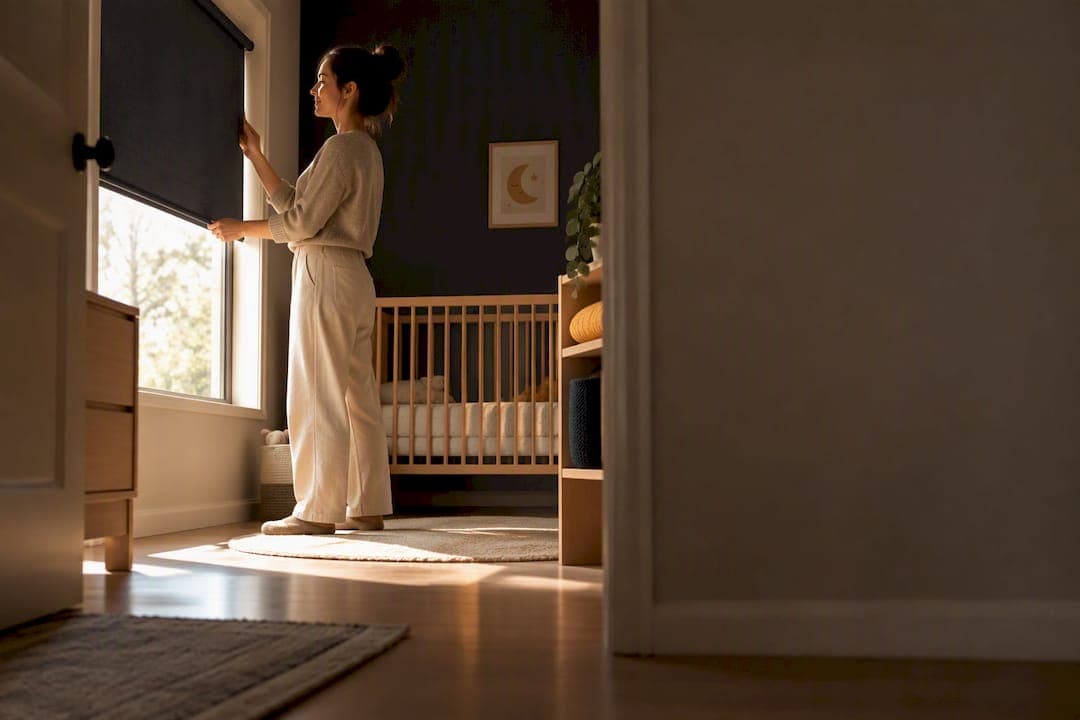
Most nap struggles trace back to timing or environment. Try shifting your baby's wake window by 10 to 15 minutes and darkening the room, then give it three days before you assume something bigger is wrong. Once you rule out simple timing issues, the next likely culprits are sleep associations, overtiredness, or a developmental leap. A short, age-specific testing plan will usually tell you which one you're dealing with.
TL;DR:
- Minor adjustments to wake windows by 10 to 15 minutes can often resolve fighting naps within a few days, without overhauling the entire schedule.
- Proper room darkness, white noise, and a consistent short wind-down routine are essential environmental tweaks to improve nap length.
- Understanding if short, broken naps result from overtiredness, sleep associations, or developmental transitions helps target solutions more effectively.
- Recognizing signs of a nap transition, such as resistance to one nap while still appearing tired, prevents unnecessary schedule changes.
- Personalized professional support can save weeks of trial and error if simple fixes do not work or underlying health issues are suspected.
Table of Contents
- Why Won't My Baby Nap? Quick Fixes to Try This Afternoon
- What's Actually Causing Baby Napping Problems?
- How Many Naps Should My Baby Take by Age?
- What Nap Routine and Room Setup Actually Help?
- Is It a Sleep Regression, Teething, or Something Else?
- How Do I Test Nap Fixes Without Guessing?
- How Mellow Kids Approaches Nap Struggles by Age and Stage
- A Note on Patience: Naps Don't Fix Themselves Overnight
- Get Personalized Help When DIY Testing Isn't Enough
- Sources
- FAQ
Why Won't My Baby Nap? Quick Fixes to Try This Afternoon
Before you overhaul anything, run through this short list. Most families find their answer in one of these five areas within a day or two.
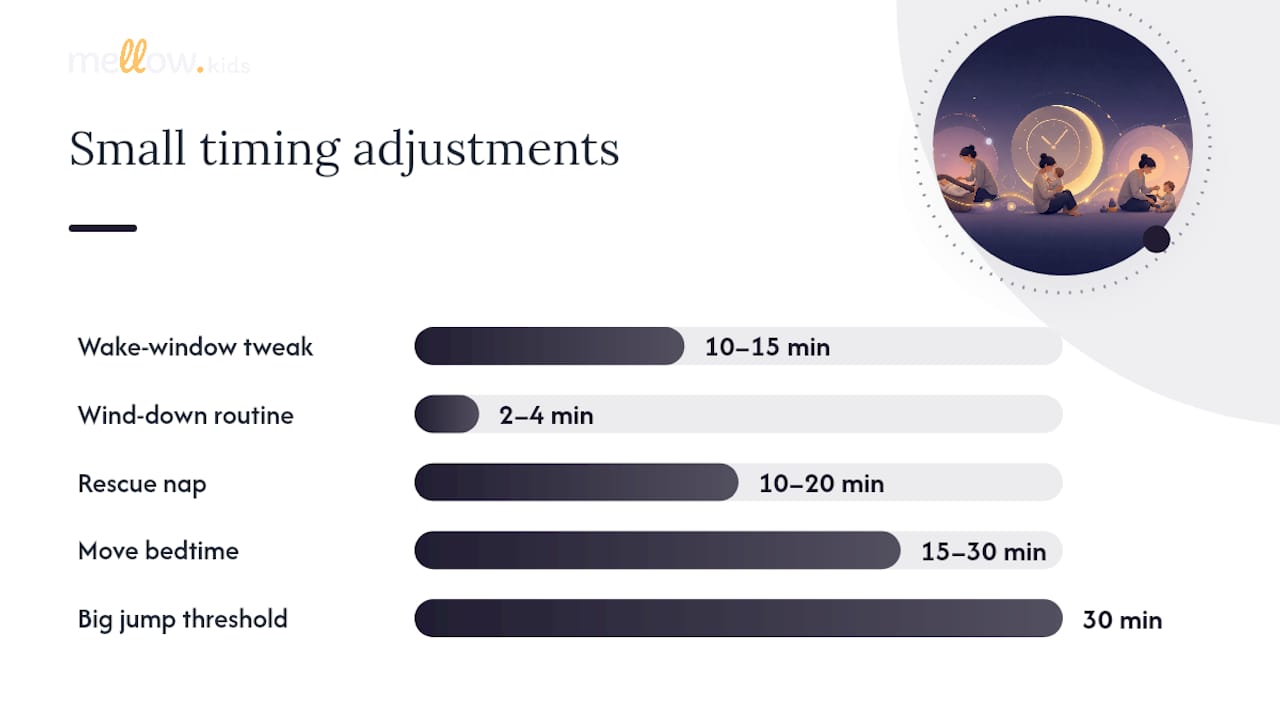
Nudge the wake window, not the whole schedule. If your baby is fighting a nap, the timing might just be off by a small margin. Adjusting wake windows in 10 to 15 minute increments is enough to shift a baby from wired-and-fighting-sleep to settled-and-drowsy. Big jumps (30 minutes or more) make it hard to tell what actually worked, so keep the change small and give it a few days.
Build a 2 to 4 minute wind-down. You don't need a 30-minute production. A short, repeatable sequence tells your baby's body what's coming next. Something like: dim the lights, put on the sleep sack, sing the same two lines of a song, then into the crib. Say the same phrase every time, something simple like, "It's nap time now. I'll see you when you wake up." The words matter less than the repetition.
Check the room like a hotel night-shift manager would. Light and sound are the two most overlooked variables in nap trouble.
- Block outside light with blackout curtains or even foil taped over a window in a pinch.
- Run steady white noise (a fan or dedicated sound machine) at a consistent, moderate volume, placed several feet from the crib.
- Keep the room comfortably cool, generally between 68 and 72°F.
- Always place your baby on their back on a firm, flat surface with nothing else in the crib, per standard safe sleep guidance.
Protect one easy nap while you work on the hard one. If your baby only naps in the stroller, the carrier, or your arms, don't try to fix every nap at once. Pick one nap per day, usually the first one, and practice a crib transfer while it's daylight and your baby's sleep drive is strongest. Let the other naps happen however they happen for now. Trying to convert every contact nap simultaneously usually backfires into overtiredness for everyone.
Cap late naps before they wreck bedtime. A nap that starts too late in the day (generally within four hours of bedtime, though this varies by age) can push sleep pressure past the point where your baby settles easily at night. If your baby is still asleep and it's getting close to that window, a gentle wake is usually the better trade than a wired 9 p.m. bedtime.
Pro Tip: If a nap gets missed entirely, don't try to cram in a full-length replacement. A "rescue nap" of just 10 to 20 minutes late in the afternoon, followed by moving bedtime up by 15 to 30 minutes, often does more good than forcing a long nap that never comes.
None of these fixes require special equipment or a dramatic schedule overhaul. They're small levers. The trick is pulling one at a time so you actually learn what your baby needed.
What's Actually Causing Baby Napping Problems?
Once the obvious stuff (timing, light, noise) is ruled out, the cause usually falls into one of five buckets. Here's how to tell them apart.
Overtired versus undertired looks nearly identical from the outside, but the cure is opposite. An overtired baby tends to ramp up rather than wind down. You'll see harder crying at the transition, a longer stretch of fussing before sleep finally arrives, and once asleep, a nap that's short and choppy. An undertired baby, by contrast, usually goes down easily (sometimes suspiciously easily) then wakes 20 to 30 minutes later bright-eyed and ready to play, because there simply wasn't enough sleep pressure built up yet. If naps are short and the wind-down was a battle, try the wake window shorter. If naps are short but falling asleep was easy, try it longer.
Fatigue cues are your best diagnostic tool here, and most parents catch them too late. Yawning, eye rubbing, and ear tugging are early signals, not last-call warnings. Starting the nap routine at that first cue, rather than waiting for glassy eyes or a meltdown, tends to produce longer, more consolidated naps because you're catching the sleep window before cortisol spikes and makes settling harder.
Sleep associations explain most of the "20 minute nap and wide awake" pattern. If your baby only falls asleep while being held, rocked, fed, or driven around the block, that's the sleep skill they've practiced, and it's the one they'll look for again the moment they hit a light sleep cycle around the 20 to 45 minute mark. This isn't a flaw in your baby. It's just a learned association, and associations can be adjusted the same way they were built: through repetition. Common reasons naps fail include exactly this pattern, alongside environmental and developmental triggers.
Rule out the boring stuff before the complicated stuff. Run through this list quickly:
- Is the room actually dark, or does a strip of daylight sneak in around 2 p.m.?
- Has the white noise machine's volume changed, or is a new household noise (a dog, a sibling, construction) breaking through?
- Is the room too warm? Babies sleep worse when overheated.
- Did a time zone change, daylight saving shift, or travel disrupt the internal clock?
- Did a daycare or caregiver change alter the usual nap environment or timing?
Hunger and illness deserve a quick check too. A baby who's genuinely hungry will often fight sleep rather than settle into it, so review whether the last feed was too far before nap time. Teething, colds, and ear infections all disrupt naps temporarily, usually alongside other symptoms like drooling, ear-tugging paired with fussiness, or congestion. If your baby seems otherwise well but naps are suddenly short, a developmental leap or regression is more likely than illness. If something feels physically off, that's your cue to loop in your pediatrician rather than keep testing schedule tweaks.
How Many Naps Should My Baby Take by Age?
Wake windows lengthen gradually as babies grow, and expecting an older baby to nap on a newborn's schedule (or vice versa) is one of the most common sources of nap fights. Use these ranges as a starting point, then adjust in 10 to 15 minute increments based on how your baby actually responds.
| Age | Typical wake window | Typical naps per day | What to watch for |
|---|---|---|---|
| 0 to 3 months | 45 minutes | 4 to 6 (often unpredictable) | Frequent short naps are normal; focus on cues, not clock time |
| 4 to 6 months | 2 hours | 3 to 4 | Naps start consolidating into a rhythm |
| 6 to 9 months | 2 to 3 hours | 3, then transitioning to 2 | Watch for the third nap becoming a fight |
| 9 to 12 months | 3 hours | 2 | Morning nap often shortens before it disappears |
| 12 months | 4 to 5 hours | 1, transitioning from 2 | Many babies drop to one nap around 12 months |
| — | 5 to 6 hours | 1 | One solid midday nap, longer wake windows before bed |
Babies between 4 months and 1 year generally need at least two naps daily, and many drop the morning nap between 10 and 12 months, consolidating to one afternoon nap by around 12 months. That transition period is famously bumpy. If your baby is resisting the morning nap but still falls apart by lunchtime, you're likely mid-transition rather than dealing with a new problem. Our wake window by age guide breaks this down further if you want the fuller picture.
Readiness signs for dropping a nap include consistently fighting one nap while the others stay easy, a nap that's taking 30 to 45 minutes to fall asleep for several days running, and one nap starting to push into the next feeding or bedtime. If you see two or more of these for a full week, it's usually time to test the transition rather than force the old schedule. Our guides on dropping to one nap and transitioning from three naps to two walk through the specific timing shifts for each stage.
When adjusting, move in small steps. A 6-month-old fighting the third nap might do better pushing the second wake window from 2 hours to 2 hours 15 minutes. A 12-month-old resisting the morning nap might need it pushed 15 minutes later, or dropped for a few days to see how the single afternoon nap holds up.
What Nap Routine and Room Setup Actually Help?
A repeatable pre-nap ritual, done the same way every time, is one of the simplest levers you have. Try this sequence: dim the lights (physically, not just figuratively; walk to the blinds), change into a sleep sack, read one short page or sing one short verse, then place your baby in the crib. Keep the whole thing under four minutes. Longer routines give an alert baby more time to catch a second wind. Consistent routines, darkness, and white noise are among the most reliable ways to help lengthen naps across age groups.
Blackout matters more than most parents expect. Even a small gap of daylight around curtains can be enough to signal "daytime" to a baby's developing circadian rhythm. Blackout curtains, blackout film stuck directly to the window, or even a dark fitted sheet clipped over the rod all work. Don't rely on regular curtains, even thick ones; test the room in the middle of the day and see if you can read a book by the ambient light. If you can, it's too bright.
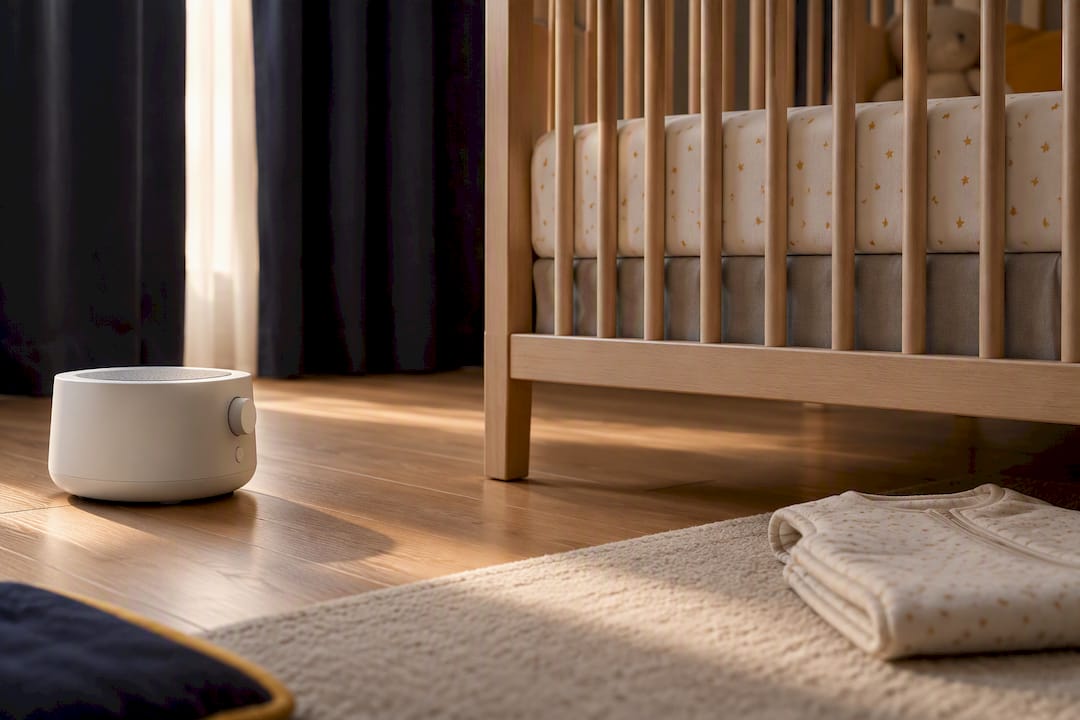
White noise placement is a small detail with an outsized effect. Keep the machine several feet from the crib, not right next to your baby's head, running continuously rather than on a timer that shuts off mid-nap. A sudden silence partway through a sleep cycle can be just as disruptive as a sudden noise. Aim for a steady, moderate volume, roughly the level of a running shower, not loud enough to need shouting over.
Feeding timing around naps deserves a second look if naps are consistently short. A full feed right before the nap can work well for younger babies, but for others it can mean falling asleep mid-suck rather than truly settling, which leads to a rough wake-up 20 minutes later. Try shifting the feed to 15 to 20 minutes before the nap routine starts instead of immediately before crib time, and see if that changes the length.
A few non-negotiables while you experiment:
- Always put your baby down on their back, on a firm surface, with nothing loose in the sleep space.
- Keep the crib free of blankets, pillows, and stuffed animals for babies under 12 months.
- Dress for the room temperature; a sleep sack rated for the season usually beats extra blankets.
Pro Tip: Putting your baby down drowsy but awake, rather than fully asleep, is one of the most repeated pieces of advice for a reason. It's how babies practice the actual skill of falling asleep independently, which is what makes naps stick past the first sleep cycle instead of ending 20 minutes in. Our pre-nap routine guide has more sample scripts if you want to build your own version.
Is It a Sleep Regression, Teething, or Something Else?
Sleep regressions are frustrating, but they're also temporary, and knowing the pattern helps you ride them out without overhauling a schedule that was actually working fine last week.
The 4-month regression is the one most parents hear about, but it's really a permanent shift, not a phase that ends. Around this age, sleep cycles mature and become more like adult sleep, with lighter stages that make waking between cycles more likely. Naps that were solid can suddenly become 25-minute ordeals. The good news: temporary regressions are normal and typically improve within days to a few weeks once you adjust the routine to match the new sleep pattern, rather than waiting for the old one to come back.
Teething and reflux both disrupt naps without necessarily looking like "illness." A teething baby may drool more, gnaw on hands, and get fussy in bursts, but usually still eats and interacts normally between flare-ups. Offering a cold teething ring before the nap routine, or a few extra minutes of upright cuddling if gums are clearly bothering them, can ease the transition without needing anything medical. A baby with reflux discomfort often does better with a slightly more upright position for 20 to 30 minutes after feeding, before attempting the nap, since lying flat right after eating can make the discomfort worse.
Some signs need a phone call, not a wake window adjustment. Contact your pediatrician if you notice:
- Fever in a baby under 3 months old.
- Refusal to feed or a noticeable drop in wet diapers.
- Labored or unusually fast breathing.
- Persistent, inconsolable crying that doesn't match your baby's normal pattern.
- No improvement in nap struggles after two to three weeks of consistent troubleshooting.
Standard guidance across pediatric and parenting resources points to these as the thresholds for prompt medical evaluation rather than a schedule issue. When in doubt, a quick call to your pediatrician costs you nothing and rules out the possibility that you're troubleshooting the wrong problem entirely.
How Do I Test Nap Fixes Without Guessing?
Changing five things at once feels productive, but it tells you nothing. A single-variable test run over 3 to 5 days is the fastest way to actually learn what your baby needed.
- Pick one variable. Choose timing (wake window), environment (light or noise), or a transfer skill (practicing one crib nap instead of a contact nap). Resist the urge to change two things at once, even if you're impatient. Mixing variables means you won't know which change actually worked.
- Hold everything else steady. If you're testing a wake window change, keep the room, the routine, and the feeding schedule exactly as they were. Consistency in the other variables is what makes the test meaningful.
- Record four things daily. Nap start time, nap length, how fussy the wind-down was (on a rough scale of easy, moderate, hard), and how the following night's sleep went. A notes app or a simple paper log works fine.
- Give it the full window before judging. Day one or two often looks messy simply because it's new. Real signal usually shows up by day three or four.
- Decide, then move on. If naps improved even modestly (10 extra minutes, an easier settle), keep the change and consider testing the next variable. If nothing changed after five days, revert and try a different lever instead.
What counts as improvement doesn't have to be dramatic. Small, single-variable changes reduce the confusion that comes from adjusting everything simultaneously, so even a modest gain, an extra nap cycle, a calmer wind-down, tells you something real about what your baby needed.
A few decision rules to keep in your back pocket:
- If a change helps within 2 to 3 days, keep it and give it another few days to fully settle in.
- If a change makes things clearly worse (more fighting, shorter naps), revert immediately rather than waiting out the full window.
- If nothing changes after 5 days, the variable you tested probably isn't the main issue. Move to the next one on your list.
How Mellow Kids Approaches Nap Struggles by Age and Stage
Most nap advice online treats every baby the same, offering one script regardless of whether your baby is 10 weeks old or 14 months old. Mellow Kids takes the opposite approach: guidance tailored to your child's actual age and developmental stage, built to anticipate the next shift (a wake window change, a nap transition, a regression) before it catches you off guard, rather than reacting after naps have already fallen apart.
That proactive framing matters because so many nap problems described above (the morning nap that suddenly won't stick around 10 to 12 months, the third nap disappearing around 6 to 9 months) are predictable if you know what to watch for. Mellow Kids' age-specific resources, including guidance for the 11 to 14 month and 15 to 24 month stages, are built around exactly these predictable turning points, with tracking tools that help you see patterns across days rather than judging a single rough nap in isolation.
Author Mauricio Vargas has written extensively on age-specific sleep troubleshooting, translating the kind of diagnostic thinking covered in this article (overtired versus undertired, sleep associations, environmental triggers) into practical, stage-specific guidance parents can apply the same day. If your baby's nap trouble matches the wake window issues covered earlier, a personalized plan can help you fine-tune timing faster than trial and error alone.
A Note on Patience: Naps Don't Fix Themselves Overnight
Nap troubleshooting is rarely a one-and-done fix, and that's worth saying plainly, because the internet is full of promises that a single trick will solve everything by tomorrow. Realistically, most changes take several days to show their full effect, and some (like a nap transition) can take two to three weeks to fully settle into a new rhythm. That's normal. It doesn't mean you're doing something wrong.
Setbacks are part of the process, not a sign of failure. A good day followed by a rough one doesn't erase your progress; it just means babies aren't machines, and sleep is affected by teething, growth spurts, and plain old bad moods just like ours is.
While you're in the thick of it, protect your own bandwidth too. A 20-minute break while someone else watches the baby, or simply asking a partner or family member to take one nap shift off your hands, isn't indulgent. It's what makes the next few days of careful testing sustainable. If the broader stretch of early parenthood is wearing on you beyond just naps, resources like LOVEDFULLY's postpartum support tools are worth a look, since caregiver wellbeing and baby sleep tend to improve together, not separately.
— Mauricio Vargas
Get Personalized Help When DIY Testing Isn't Enough
If you've run the 3 to 5 day tests above and naps are still a fight, or your baby's situation feels more complicated than a single wake window tweak can solve, one-on-one guidance can save you weeks of trial and error. Mellow's Personalized Plan gives you a schedule built around your baby's actual age and patterns, not a generic template, while the 45-minute consultation is built for parents who want to talk through a specific, stuck problem with someone who's looked at hundreds of nap charts before.

Such guided support may be most useful when short naps have persisted despite consistent testing, when nap transitions and regressions overlap, or when health or developmental factors complicate troubleshooting. For families seeking both a plan and a follow-up conversation, combined options are often available. Start by visiting the personal sleep support page to see which option fits your situation, or browse the sleep challenges hub if you want to read more before booking.
Sources
The guidance in this article draws on established pediatric and parenting resources, listed here for anyone who wants to go deeper.
- Baby naps: Daytime sleep tips - Mayo Clinic
- Reasons Your Baby Won't Nap, and How You Can Help Them Fall Asleep - Healthline
- Baby not napping: causes, wake windows & fixes by age - Heloa
- Signs of overtired newborn - Calm
- 10 Common Naptime Problems and Solutions - Parents
For any symptom that concerns you medically (fever, feeding refusal, breathing trouble), contact your pediatrician directly rather than relying on general nap advice.
FAQ
How Do I Get an Overtired Baby to Nap?
Start the wind-down at the very first fatigue cue (yawning or eye rubbing), not after crying starts, since waiting until a baby is visibly overtired makes settling harder. If a nap is missed entirely, a short rescue nap of 10 to 20 minutes followed by an earlier bedtime usually works better than forcing a long nap that won't come.
Why Is My Baby Suddenly Fighting Naps?
Sudden nap resistance usually points to one of a few things: a wake window that's grown out of date as your baby ages, a developmental leap or regression, or a nap transition (like dropping from two naps to one). Testing one variable, such as shifting the wake window by 10 to 15 minutes, for 3 to 5 days usually reveals which one it is.
My 1-Year-Old Won't Nap but Seems Tired. What's Going On?
This is a classic sign of a nap transition rather than a new problem. Many babies drop the morning nap between 10 and 12 months and consolidate to one afternoon nap by around 12 months, and fighting one nap while still seeming tired overall is a common signal that the transition has started.
Why Is My Baby Fighting Their Last Nap of the Day?
The last nap of the day is usually the first one to get pushed out during a nap transition, since accumulated wake time earlier makes the final nap less necessary. If bedtime is still going smoothly and daytime mood is fine, this is often a sign it's time to test dropping that nap rather than a sign something's wrong.
How Much Does Personalized Nap Help Cost?
Mellow's Personalized Plan is available as a one-time purchase, with a Plan + Consultation bundle and a standalone 45-minute consultation also offered for parents who want to talk through their specific situation. Current pricing details for each option are listed on the personal sleep support page.