
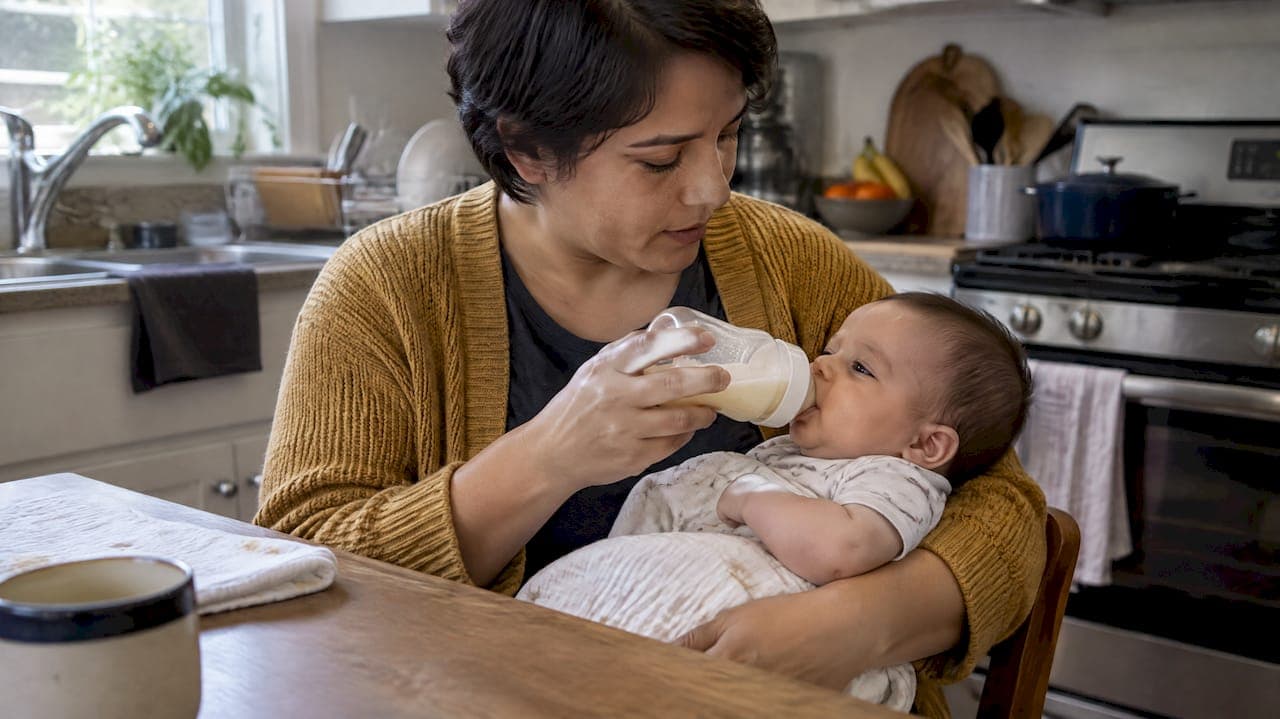
Paced bottle feeding is a caregiver-led method that lets the baby control the milk flow, slowing feeds and reducing the chance of overfeeding. Instead of tilting the bottle fully and letting gravity do the work, you hold the bottle more level and follow your baby's cues on when to suck, pause, and stop. The result is a calmer, more responsive feed that mirrors how breastfeeding naturally works. Keep reading for the exact steps.
TL;DR:
- Using slower nipples and keeping the bottle horizontal helps control flow and encourages your baby to self-regulate their milk intake.
- It typically takes about 15 to 30 minutes per feed with paced feeding, longer than standard bottles, which may be challenging for busy caregivers.
- Parents should watch for subtle fullness cues like slower sucking or relaxed hands, rather than expecting dramatic signals, to avoid overfeeding.
- Pacing reduces pressuring behaviors, such as urging babies to finish bottles, which can improve their feeding experience and promote self-regulation.
- Regular practice and patience are necessary, especially during early weeks, as caregivers learn to interpret baby cues and develop a natural rhythm.
Table of Contents
- What paced bottle feeding is and why it matters
- Benefits parents can expect from paced feeding
- Step-by-step paced bottle feeding technique parents can use right away
- Common problems and quick fixes for pacing
- How to tell when your baby is full and when to stop paced feeding
- Equipment and flow management: nipples, bottles, and angles
- Safety and common mistakes to avoid
- Applying paced feeding to real routines
- Learning this skill takes practice, and that is normal
- When extra feeding or sleep support helps
- FAQ
- Sources
What paced bottle feeding is and why it matters
Paced bottle feeding borrows its rhythm from breastfeeding, where a baby controls when milk flows and when it stops. The CDC recommends responsive bottle feeding that follows a baby's hunger and fullness cues rather than a fixed schedule or the goal of finishing a bottle. This means holding the bottle at an angle where milk only reaches the nipple when your baby actively sucks, not when gravity pulls it there.
The practice has a real evidence base behind it. The American Academy of Pediatrics notes in Pediatrics that infants fed by bottle early in life were more likely to empty the bottle later in infancy compared with babies who were exclusively breastfed, which supports pacing as a way to protect a baby's own sense of fullness.
Benefits parents can expect from paced feeding
Pacing changes more than the clock. Research on the technique points to a cluster of practical payoffs that parents notice within the first few feeds.
- Babies learn to self-regulate intake instead of being pushed to empty every bottle.
- Feeds naturally slow down, giving your baby's brain time to register fullness.
- Slower flow can reduce spit-up and the fussiness that comes with a too-full stomach.
- Families who mix breastfeeding and bottle feeding often find the transition between the two smoother.
One peer-reviewed study found caregivers using paced feeding had far lower odds of pressuring infants to finish a bottle, with an odds ratio of 0.04 reported in a small-sample trial. That is a meaningful shift in behavior, even though the sample size was small enough that the finding should be read as encouraging rather than definitive.
Step-by-step paced bottle feeding technique parents can use right away
You do not need special equipment to start, just a few minutes of attention to position and timing. Here is a sequence you can follow at your next feed.
- Pick a calm window when your baby is alert but not frantic with hunger; a baby who is already screaming will struggle to feed with intention.
- Hold your baby semi-upright, supporting the head and torso so they can turn away or adjust easily if they need to.
- Brush the nipple against your baby's lips and let them open and latch on their own rather than inserting it for them.
- Keep the bottle close to horizontal so milk fills just the tip of the nipple, a technique clinical feeding guides describe as central to pacing.
- Let your baby suck three to five times, then tip the bottle down slightly or gently remove it to create a natural pause.
- Watch for a pause your baby takes on their own. Use it as a chance to burp, then offer the bottle again if they show interest.
- Stop when fullness cues appear: slower sucking, releasing the nipple, relaxed hands, or turning the head away.
A full feed using this rhythm typically takes about 15 to 30 minutes, closer to the pace of a breastfeeding session than a quick bottle emptied in five minutes. If your baby finishes much faster than that, flow is probably too fast for pacing to work as intended.
Pro Tip: Practice pacing during a daytime feed first, when you are not rushed. It is easier to notice your baby's pause-and-restart rhythm when you are not also watching the clock.
A printable planner with paced feeding steps can help if you want something to reference during the first week of practicing this with a new baby.
Common problems and quick fixes for pacing
Most pacing struggles trace back to one of a few fixable issues.
- Flow feels too fast: switch to a slower nipple and keep the bottle flatter, pausing externally every few sucks rather than waiting for your baby to stop on their own.
- Baby is sleepy or distracted mid-feed: offer shorter, more frequent feeds, and try skin-to-skin contact or a gentle diaper change to rouse them before starting.
- Baby gags or coughs: pause immediately, check that the nipple size matches their age and that the bottle angle is not flooding their mouth, and talk with your pediatrician if it keeps happening.
- Baby still seems hungry after stopping: offer a short additional paced feed rather than a full second bottle, and keep an eye on weight gain at routine checkups.
How to tell when your baby is full and when to stop paced feeding
Fullness usually shows up as a change in rhythm rather than a dramatic signal. Watch for slower, weaker sucks, a mouth that releases the nipple on its own, hands that relax and open, or a head that turns away from the bottle. On the other end, hunger cues like rooting, hands moving to the mouth, and lip-smacking tell you when to start a feed in the first place.

There is no strict age to stop paced feeding. Most families continue the technique for as long as bottle feeding is part of the routine, adjusting pace and volume as babies grow and feed more efficiently. One useful pattern from the research: paced feeding seems to lower pressuring behaviors, like urging a baby to finish, even when it does not always change how much milk a baby takes in during a single sitting.
Equipment and flow management: nipples, bottles, and angles
Gear can help, but your technique is what actually controls the pace. A slow-flow nipple buys you more time to practice pausing, but it will not pace a feed on its own if the bottle stays tipped upright the whole time.
- Hold the bottle close to horizontal so gravity is not doing the work for your baby.
- Reassess nipple size if your baby chokes, gulps rapidly, or leaks milk from the corners of their mouth, all signs the flow may be too fast.
- Bottles marketed specifically as "paced" bottles can be a helpful training tool, though a standard bottle with a slow-flow nipple works just as well once you have the angle and timing down.
Think of the bottle and nipple as training wheels. The skill that actually protects your baby's appetite cues is the rhythm you build with pauses, not the product on the shelf.
Safety and common mistakes to avoid
A few practices undercut the benefits of pacing and carry real risk on their own.
- Never prop a bottle or leave your baby feeding unattended, a practice the CDC specifically warns against because of choking risk.
- Avoid pressuring your baby to finish a bottle once they show fullness cues, even if milk remains.
- Call your pediatrician or a lactation consultant if you notice poor weight gain, persistent coughing during feeds, or repeated choking.
- Clean bottles and nipples after every use and check nipples regularly for cracks or tears.
Bottles emptied regularly in infancy were far more common among bottle-only babies than exclusively breastfed babies, according to data from the Infant Feeding Practices Study II cited by the CDC: Infants who were bottle-fed only were much more likely to empty a bottle than those exclusively breastfed. That gap is part of why pacing matters even when a baby is thriving overall.
Applying paced feeding to real routines
Paced feeding looks different at two weeks than it does at three months. A newborn needs frequent, short pauses and a lot of patience, while an older baby who feeds efficiently may need only one or two pauses to stay in sync with their own fullness. Night feeds, including a dream feed, usually call for a gentler, quieter version of the same technique since a drowsy baby paces more slowly on their own.
Households splitting breast and bottle feeding often find that pacing helps a baby move between the two without confusion, since the bottle behaves more like a breast in terms of effort and flow.
Pro Tip: If your baby feeds differently for each caregiver, compare notes on bottle angle and pause timing. Small inconsistencies in technique are a common reason one caregiver's feeds go faster than another's.

Learning this skill takes practice, and that is normal
Pacing feels awkward at first, and that is not a sign you are doing it wrong. Most parents need several feeds before the rhythm starts to feel natural, and a baby's cues can be subtle enough that you will second-guess yourself along the way.
Give it time, watch for the small signals rather than expecting a dramatic cue, and trust that this gets easier with repetition. If feeding questions extend beyond pacing into broader patterns, our guide to feeding schedules by age is a natural next stop.
— Mauricio Vargas
When extra feeding or sleep support helps
If feeding cues still feel confusing after a few weeks of practice, or if weight gain checks are leaving you with more questions than answers, we built our personalized plans for exactly that stretch of uncertainty. We pair feeding and sleep guidance with age-specific tracking, so a confusing cue at eight weeks gets a different answer than the same cue at five months.

Our Personalized Plan gives you a tailored strategy without a long-term commitment, and our 45-minute consultation is a direct way to talk through a specific feeding or sleep concern with a certified consultant.
- Choose a one-time personalized plan when you want a clear strategy without ongoing calls.
- Choose a plan plus consultation when you want that strategy paired with a live conversation.
- Choose a standalone 45-minute consultation when you have one specific question to resolve.
Start with our personal sleep and feeding support page to see which option fits where you are right now.
This article is general information, not a substitute for advice from a qualified doctor. Consult a qualified healthcare professional about your own circumstances before acting on anything here.
FAQ
What are the disadvantages of pace feeding?
Paced feeding takes longer than standard bottle feeding, often 15 to 30 minutes instead of five, which can be hard for caregivers short on time. It also requires more attention to your baby's cues, so it can feel slower to learn at first, though most caregivers report it gets easier with practice.
At what age do you stop paced bottle feeding?
There is no fixed age to stop. Most families keep using the technique for as long as bottle feeding remains part of the routine, adjusting pace naturally as a baby grows more efficient at feeding.
Does paced bottle feeding work?
Research shows paced feeding slows milk transfer and lengthens meal duration, and caregivers who use it are far less likely to pressure a baby to finish a bottle, with one study reporting an odds ratio of 0.04 for that behavior. Short-term milk intake during a single feed does not always differ, but the reduction in pressured feeding is a meaningful benefit on its own.
Can you overfeed with paced bottle feeding?
Paced feeding is specifically designed to reduce overfeeding by letting your baby control when milk flows and when to stop. It is not a guarantee against overfeeding, but CDC data shows bottle-only infants empty bottles far more often than exclusively breastfed infants, which is part of why pacing is recommended as a protective habit.
Sources
- About Feeding From a Bottle | Infant and Toddler Nutrition | CDC
- Peer-reviewed paced feeding experimental/observational findings (PubMed entry)
- Do Infants Fed From Bottles Lack Self-regulation of Milk Intake Compared With Directly Breastfed Infants? | Pediatrics