
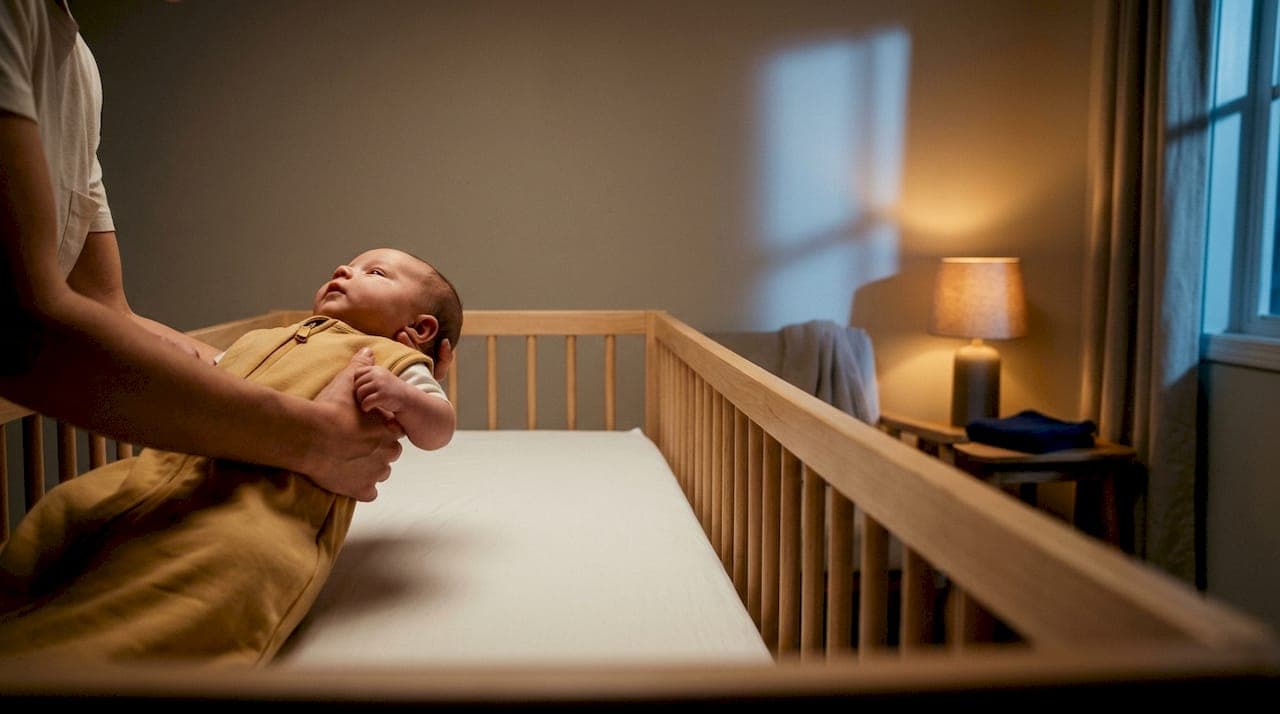
An undertired baby has not built up enough sleep pressure to fall asleep easily, usually because the awake window before that nap or bedtime was too short or too passive. The fix is simple in concept: stretch the awake time a little, add calm activity beforehand, and watch for real sleepy cues instead of the clock. This pattern is common, correctable within a few days, and never a reason to abandon safe-sleep basics.
TL;DR:
- Small, gradual increases of 10 to 15 minutes in wake windows can help an undertired baby build sufficient sleep pressure for easier naps and bedtime.
- Tracking the baby's behavior for three to five days helps distinguish calm, curious resistance from overtired fussiness, guiding appropriate adjustments.
- Proper stimulation, like active play and outdoor time during daytime, is essential to prevent low sleep pressure caused by passive, quiet periods or inconsistent routines.
- Using a consistent pre-sleep routine with dimmed lights, white noise, and cues signals sleep readiness without over-stimulating the baby.
- Adjust wake windows and routines cautiously, and prioritize safe sleep practices, such as back sleeping and a firm sleep surface, to support both sleep quality and safety.
Table of Contents
- Signs your baby is undertired
- Why undertiredness happens
- How to help an undertired baby sleep tonight
- Wake windows and sample timing anchors by age
- Safe sleep reminders and when to call the pediatrician
- A short reset plan and what to expect
- How a personalized plan turns this into a routine
- A note from the author and what to try tonight
- If you want more personalized support
- Sources
- FAQ
Signs your baby is undertired
An undertired baby usually looks alert, not exhausted, when you try to put them down. You will notice a specific cluster of behaviors that separates "not ready yet" from "overtired and fighting it."
- Wide-eyed alertness at the nap or bedtime attempt, with little to no eye rubbing or fussiness.
- Playing, babbling, or kicking in the crib instead of settling, sometimes for 20 minutes or more.
- Lying quietly but awake, calm rather than distressed, which is a giveaway that this is not overtiredness.
- Long, low-drama settling time without heavy crying, just resistance to actually closing their eyes.
Overtiredness looks different and often gets confused with it. An overtired baby tends to arch their back, rub eyes hard, cry with an edge of frustration, or seem wired and jumpy right before a meltdown. Undertiredness is calmer and more curious. The baby is not upset, just not ready.
If you are not sure which pattern you are dealing with, track it for three to five days. Write down the time you started the pre-nap routine, how long it took to settle, and whether the baby seemed calm or distressed while resisting sleep. A short pattern usually emerges fast: consistently calm resistance points to undertiredness, while consistently distressed resistance points the other way. This log also makes it much easier to know whether the changes you make later in the day or week are actually working.
Why undertiredness happens
Newborns and young babies do not run on adult sleep biology. Their circadian rhythms and sleep regulation are still maturing, which is why frequent wakings and irregular timing are normal in the early months, according to Children's Hospital of Philadelphia. Sleep pressure, the biological drive to fall asleep, builds gradually across the awake period and needs enough time and enough stimulation to reach the level required for an easy transition into sleep.
In practice, three things usually cause undertiredness. The most common is an awake window that is simply too short for the baby's current age and stage, so they are put down before enough pressure has built. The second is inconsistency: naps and bedtimes that shift around from day to day make it harder for a baby's internal clock to predict when sleep is coming. The third is low daytime stimulation, quiet, low-activity stretches that do not tire a baby out the way active play, tummy time, or a walk outside would.

Developmental leaps matter too. A baby who is close to rolling, crawling, or babbling more is often mentally stimulated in ways that shift how much awake time they now need. What worked last month may quietly stop working this month, not because something is wrong, but because the baby has changed.
How to help an undertired baby sleep tonight
Small, deliberate changes work better than a full schedule overhaul. Here is the order to try them in.
- Stretch the awake window slightly. Add 10 to 15 minutes before the next nap or bedtime attempt rather than jumping straight to a much longer stretch.
- Add calm stimulation in the last 30 to 45 minutes. A feeding, a short stretch of quiet play, or gentle movement helps build sleep pressure without overstimulating.
- Dim the lights and lower the noise as you move into the pre-sleep routine, so the environment starts signaling sleep before you even pick the baby up.
- Use low-volume white noise consistently at the same point in the routine so it becomes a reliable cue rather than background clutter.
- Watch for real sleepy cues such as slower blinking, less eye contact, or a brief lull in activity, and put the baby down when you see them rather than by the clock alone.
- Put baby down drowsy but still awake whenever possible, which gives them practice settling on their own instead of relying on being rocked or fed all the way to sleep.
- If baby resists for more than 10 to 15 minutes with calm, non-distressed protest, try a brief activity change, a short walk, or a few minutes of quiet talking, then attempt again.
- If resistance continues past that, stop and shift the plan to the next nap window rather than forcing the current one.
Practitioners generally recommend adjusting wake windows in small increments and watching how the baby responds before changing anything else, which keeps you from swinging into overtiredness while chasing the fix.
Pro Tip: Keep a consistent "wind-down" sequence, even just three steps in the same order every time, so the baby learns to recognize sleep is coming before you ever lay them down.
A few tools make this easier without complicating it. An age-appropriate swaddle can help younger infants feel secure during settling, but should be dropped once the baby shows signs of rolling. A pacifier can support self-settling for many babies and is generally considered safe to offer at sleep times. White noise at a steady, moderate volume supports the sleep cue without needing to be loud. Beyond that, keep the sleep space consistent: same room, same light level, same sound, night after night, so the environment itself becomes part of the routine.

Wake windows and sample timing anchors by age
A wake window is simply the stretch of time between one sleep period and the next. Getting it right matters more than almost anything else in this process, because too short and the baby is not ready, too long and they tip into overtired territory. Small adjustments, generally 5 to 15 minutes at a time, are far less likely to overshoot than big jumps.
These are general anchors, not a rigid schedule, since every baby varies.
- Newborn to 6 weeks: roughly 45 to 60 minutes of awake time between sleep periods.
- 2 to 4 months: roughly 1 to 2 hours, often stretching as the baby gets closer to 4 months.
- 5 to 7 months: roughly 2 to 3 hours, with two to three naps typically remaining.
- 8 to 12 months: roughly 3 to 4 hours, often narrowing to two naps.
- 12 to 18 months: roughly 4 to 5 hours, frequently transitioning toward one nap.
Total daily sleep needs also shift with age. The American Academy of Sleep Medicine's consensus statement recommends infants 4 to 12 months get about 12 to 16 hours of sleep across 24 hours, which includes naps, not just overnight sleep. If a baby's total sleep consistently falls well outside that range, it is worth a conversation with a pediatrician rather than more schedule tweaking.
For readers who want fuller sample schedules instead of anchors, Mellow Kids has a wake window by age breakdown and an age-by-age nap schedule guide that go into more depth.
Safe sleep reminders and when to call the pediatrician
Every adjustment you make to timing or routine should sit inside the same safe-sleep basics, no exceptions while troubleshooting. The CDC notes that room-sharing without bed-sharing for at least the first 6 months reduces the risk of Sudden Infant Death Syndrome, alongside other key practices.
- Always place baby on their back to sleep, for every nap and every night, no exceptions.
- Use a firm, flat sleep surface with nothing loose in the crib: no pillows, blankets, or crib bumpers.
- Room-share, do not bed-share, keeping the baby's sleep space close to yours but separate.
- Avoid letting an undertired baby fall asleep on the sofa, in a car seat, or an armchair while you try to extend awake time.
- Skip unsafe props like propped bottles or unapproved positioning devices, even during a rough settling stretch.
Following AAP guidance on back sleeping, room-sharing, and a bare crib is one of the most reliable ways to reduce SIDS risk while you work on timing and routine.
Most undertired patterns resolve with small, patient adjustments and do not need medical attention. Call the pediatrician if you notice breathing trouble, poor weight gain, extreme lethargy that seems different from normal tiredness, or feeding difficulty that persists across several days. Those signs point to something beyond timing and deserve a professional look.
A short reset plan and what to expect
Most undertired patterns respond within a few days of consistent, small adjustments. Overshooting into a much longer awake window rarely speeds this up and often backfires into overtiredness instead.
- Day 1: Add 10 to 15 minutes to the awake window before each nap and bedtime, and start a brief written log of settle times.
- Day 2: Keep the same pre-nap routine every time (feed, quiet play, dim lights, white noise) and note whether settling time is shortening.
- Day 3: If naps and bedtime are still slow, add another 10 minutes to the window; if settling has improved, hold steady at the new timing.
Improvement usually looks like shorter settling time, longer stretches of actual sleep once down, and an easier bedtime overall. If a change makes things worse rather than better, back off by 5 to 10 minutes rather than reversing the whole plan.
How a personalized plan turns this into a routine
A personalized plan takes these same principles, wake windows, pre-sleep routines, troubleshooting steps, and tailors them to your baby's exact age and stage rather than a general anchor range. For a 5-month-old that might mean a specific two-and-a-half-hour wake window with a defined wind-down sequence; for a 13-month-old, a one-nap transition plan with built-in flexibility. When the small DIY adjustments above do not resolve the pattern after a few days, a consultation can help pinpoint what is different about your baby's situation.
A note from the author and what to try tonight
If you take one thing from this guide, let it be patience paired with small steps. Tonight: stretch the awake window slightly, run a calm, consistent pre-sleep routine, and keep every sleep space back-to-sleep safe. If concerns about breathing, feeding, or lethargy come up, talk to your pediatrician.
— Mauricio Vargas
If you want more personalized support

Some parents work through undertiredness fine on their own with the steps above. Others want a plan built around their baby's specific age, temperament, and history instead of general anchors, and that is where Mellow Kids' personalized sleep support comes in.
- Personalized sleep and wake-window strategies.
- Consultation options for direct guidance.
- Sessions for focused troubleshooting on specific sleep patterns.
This is an alternative for parents who want faster, tailored answers, not a required next step after reading this guide.
Sources
- CDC: How to sleep safely for infants
- Recommended Amount of Sleep for Pediatric Populations: A Consensus Statement - AASM
- Newborn sleep patterns - Children's Hospital of Philadelphia (CHOP)
This article is general information, not a substitute for advice from a qualified doctor. Consult a qualified healthcare professional about your own circumstances before acting on anything here.
FAQ
How long does it take to reset an overtired baby?
Most overtired patterns start to improve within a few days once wake windows and a calm pre-sleep routine become consistent. Some babies need a few extra days if the overtiredness has built up over a longer stretch, so steady patience matters more than speed.
What are signs of high IQ in babies?
There is no reliable way to identify a baby's future IQ from early behavior, and alertness or curiosity at sleep times reflects wake windows and temperament, not intelligence. Undertiredness specifically shows up as calm alertness or playfulness when a baby is put down, not a marker of cognitive ability.
How to help an undertired baby sleep?
Stretch the awake window by 10 to 15 minutes, run a calm pre-sleep routine with dim lights and quiet activity, and put the baby down drowsy rather than fully asleep. Small, incremental changes work better than a big jump in timing.
Will an overtired baby eventually go to sleep?
Yes, an overtired baby will eventually fall asleep, but settling tends to take longer and involve more fussiness or crying along the way. A consistent, calm routine and appropriate wake windows going forward make each subsequent sleep period easier than the last.